By
25 min ago 2 min read
The Hydrogen Council is pressing governments to accelerate hydrogen deployment as renewed instability in the Middle East revives concerns over energy security and fossil fuel dependence.
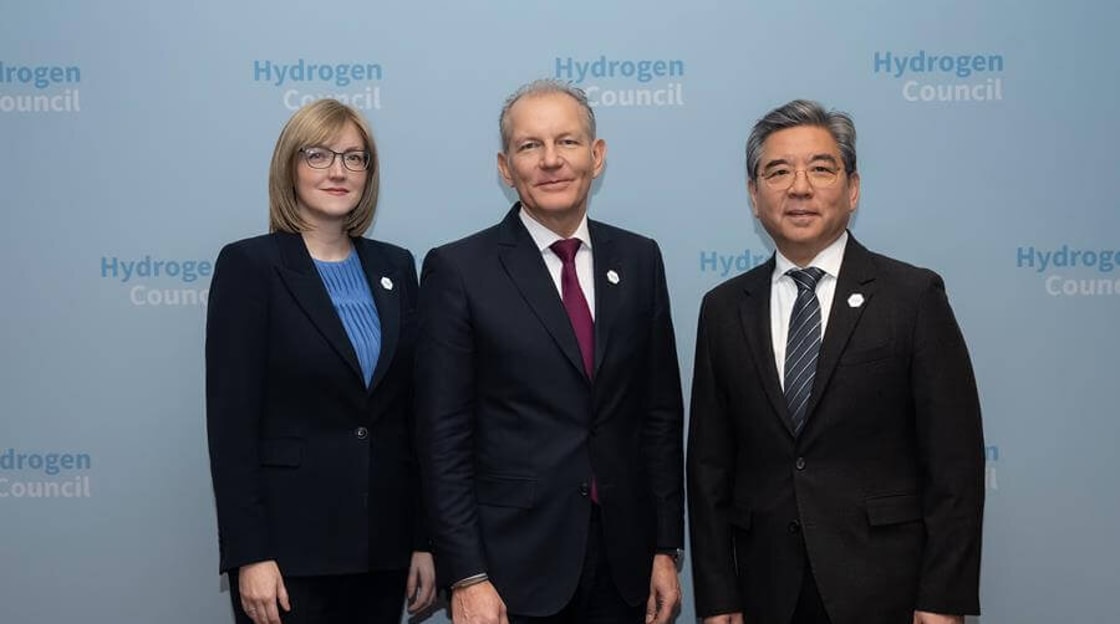
In a new call-to-action, Air Liquide CEO and Council Co-Chair François Jackow described the crisis as a “wake-up call” for policymakers to embed hydrogen into emergency energy measures and industrial resilience strategies.
The CEO-led group urged governments to support both green and blue hydrogen through demand-side subsidies, infrastructure spending and technology-neutral support schemes.
It argued that hydrogen could help countries diversify energy imports, strengthen industrial supply chains and reduce exposure to volatile fossil fuel markets.
The intervention comes as hydrogen developers face mounting pressure from slow demand growth, regulatory uncertainty, and delayed final investment decisions.
In the EU, the group urged Brussels to “urgently adapt” its green hydrogen production rules to “reflect market reality.” The European Commission has already said it would of the criteria by Q2 this year.
It also called on South Korean policymakers to maintain support for hydrogen mobility, finalise hydrogen import schemes, and develop domestic electrolyser manufacturing.
However, critics argue that the industry’s renewed energy-security framing is complicated by the sector’s continued reliance on gas-derived hydrogen pathways and imported ammonia.
While the Council has promoted “technology-neutral” support for both green and blue hydrogen, opponents say large-scale deployment of hydrogen produced from natural gas risks locking countries into long-term import dependence.
Analysts have also questioned whether hydrogen’s current political momentum can be sustained in a lower commodity price environment.
Much of Europe and Asia’s support for hydrogen accelerated following the 2022 gas crisis, when record fossil fuel prices sharpened concerns over industrial competitiveness and energy security.
With gas prices having since eased from crisis-era highs, some developers have warned that governments may become less willing to absorb the high-cost premiums associated with early hydrogen deployment.
Several executives speaking at the World Hydrogen Summit in Rotterdam said the latest Middle East conflict had reinforced expectations of a more volatile and fragmented global energy system, strengthening the case for domestically produced hydrogen and alternative fuel supply chains.
On Tuesday, the International Energy Agency’s Keisuke Sadamori said hydrogen will be to longer-term security measures across fertilisers, shipping, and aviation.