By
42 min ago 2 min read
South Korea’s Lotte Fine Chemical has completed what it claims is the first commercial fuelling of an ammonia-powered vessel using green hydrogen-based fuel made by Envision Energy in China.
In March, the green ammonia was into South Korea from Envision’s Chefeng 320,000-tonne-per-year project in Inner Mongolia.
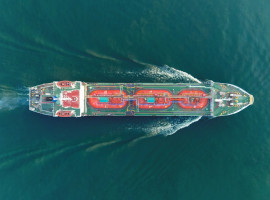
On Thursday (23 April) at the Port of Ulsan, Lotte bunkered the fuel into an ammonia dual fuel vessel built by HD Hyundai Heavy Industries (HHI), which is set to begin commercial operations.
While various ammonia bunkering demonstrations and pilot projects have taken place, Lotte claims this to be the first commercial event. It is unclear whether the bunkering represents a one-off operation or the start of regular supply.
Hyejeong Kim, Director General for Shipping and Logistics at the Ministry of Oceans and Fisheries, said South Korea hoped the fuelling would serve as a “catalyst” for introducing clean fuels into ports.
The 190-metre vessel was one of two ammonia-fuelled ships completed by HHI , which will be operated as gas carriers by the French subsidiary of shipping group Exmar.
Named Antwerpen and Arlon, the ships use HHI’s high-pressure ammonia injection engine, allowing up to 95% ammonia to be used alongside fossil fuel. They are due to be delivered to Exmar LPG France in May and June.
The bunkering milestone after Lotte became South Korea’s first registered ammonia marine fuel supplier in 2025. Ulsan was designated as a “regulatory-free” special zone the same year for ammonia bunkering to help spur development.
With zero carbon emissions when combusted and established port infrastructure, ammonia is increasingly viewed as a one of the major future fuels for shipping. Various shipping firms have placed orders for ammonia-fuelled vessels.
However, the fuel faces criticism for energy losses accrued in the production process as well as its toxicity to humans and aquatic life.
It comes as global shippers face increasing pressures to decarbonise, with emissions levies now placed on most ships docking in EU ports. Despite delays to a crucial vote on a global carbon pricing framework set out by the International Maritime Organization, many believe the pressure to switch to clean fuels will only rise in the coming years.