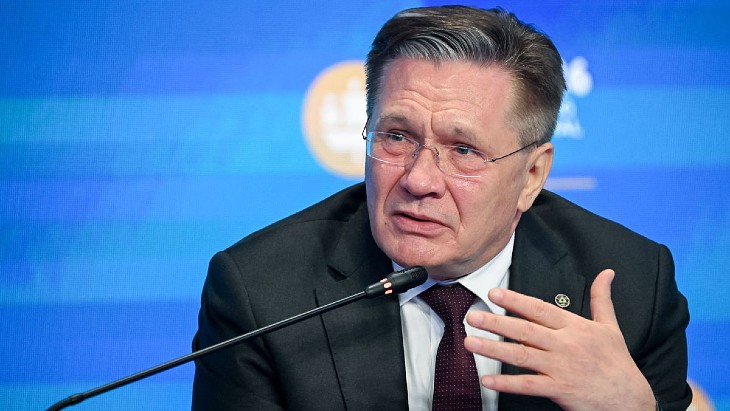
In comments carried by Russia’s state nuclear corporation’s Strana Rosatom publication, Likhachev said: “The rapid activation of the US administration and developers is a clear example that forecasts for accelerated development of nuclear energy worldwide are not empty hypotheses, but a real process unfolding before our eyes. We congratulate our American colleagues … at the same time, we understand that these are more experimental setups than fully-fledged power plants. Based on our experience, we can confidently say that refining these designs to commercial implementation will take years.”
He said that with a range of new small and micro modular reactors being developed, featuring new technologies, regulatory caution was understandable. But he said “excessive conservatism is declining globally … the success of the American nuclear industry is not only the result of individual developers and manufacturers, but also of a national regulator that is accommodating to companies. As for Russia, if we want to continue to win the competition in the nuclear energy market, now in the small and medium-sized sectors, we also need to take a fresh look at licensing approaches for such installations. This is a task of national importance”.
He also gave an update on the development work on the Shelf-M microreactor, an integral nuclear power plant with a pressurised water reactor capable of generating 10 MWe/35 MWt and designed to supply power for the Sovinoye gold deposit in Chukotka in Russia’s far east. It would need refuelling every eight years and have a 60-year design life. In 2022, the aim was for it to enter commercial operation in 2030.
“Currently the … construction schedule has been developed, engineering surveys for the site have begun, and the nuclear fuel lifespan testing phase has been completed. The project’s investment justification is nearing completion,” he said.
Likhachev added that “around a dozen reactor designs for small nuclear power plants are at various stages of development and implementation. Our most advanced technology, our best-selling product, is the RITM family of reactors for floating and land-based nuclear power plants of varying capacities. We already have 13 RITM reactors of varying capacities under our belt for the country’s nuclear icebreaker fleet. One reactor – the 14th – has already been produced for the lead new floating power unit for the Baimskoye field, and a second is in the final stages of production”.
The US microreactor programme
The US Department of Energy’s Reactor Pilot Program, announced in June 2025, aimed to expedite the testing of advanced reactor designs that will be authorised by the Department at sites located outside of the national laboratories. Part of the Reforming Nuclear Reactor Testing at the Department of Energy executive order signed by President Donald Trump in May last year, its goal was “to construct, operate, and achieve criticality of at least three test reactors using the DOE authorisation process by July 4, 2026”.
Criticality means that the reactor has achieved a sustained nuclear chain reaction, with each fission event – when an atom of uranium in the fuel is split – releasing a sufficient number of neutrons to sustain an ongoing series of reactions. In a nuclear power reactor, the heat energy from those fission reactions is used to produce steam and generate electricity. Zero-power – or “cold” – criticality is a self-sustaining chain reaction of uranium-235 within a nuclear core, but without reaching full operating temperatures or actively removing heat with a working fluid.
In June Antares Nuclear’s Mark-0 reactor completed a zero-power fuelled criticality demonstration, to become the first of the programme’s reactors to meet the pre-4 July deadline. That was followed later in the month by Valar Atomics’ Ward 250 advanced reactor completing a zero-power fuelled criticality demonstration. And then last week Deployable Energy’s Unity demonstration reactor achieved initial criticality at the National Reactor Innovation Center located at Idaho National Laboratory.