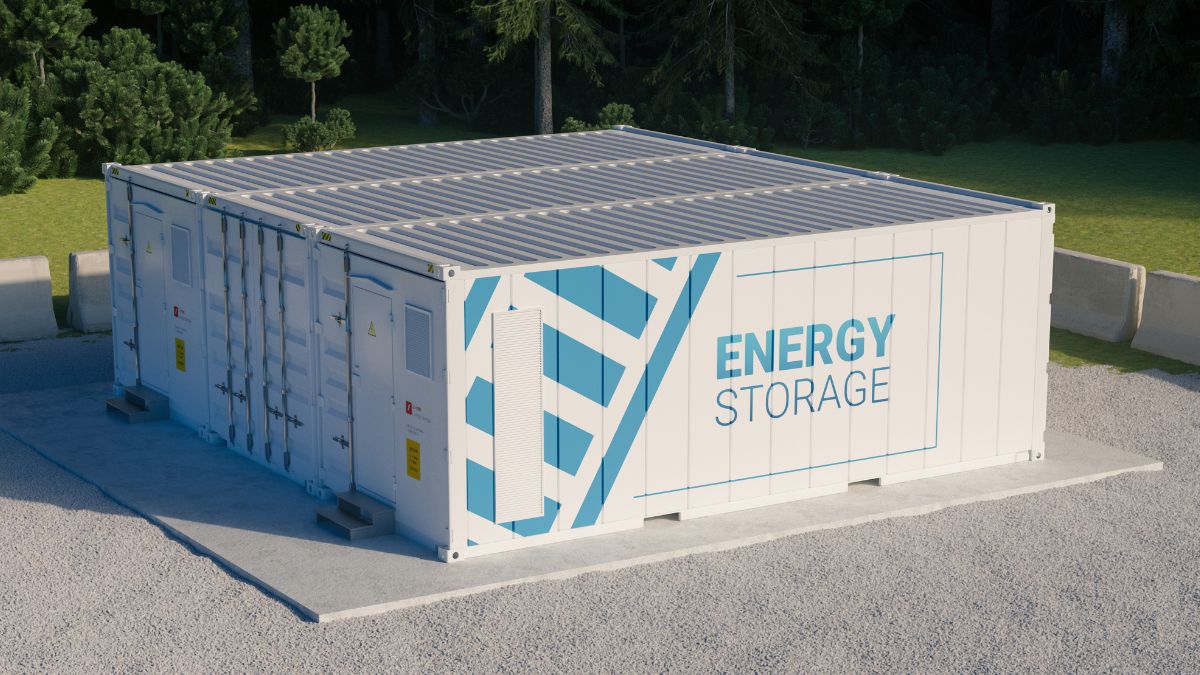
The Georgia Institute of Technology, in collaboration with Stryten Energy LLC, has successfully completed the installation of a Lead Battery Energy Storage System (BESS) at the university’s Carbon Neutral Energy Solutions Laboratory (CNES). Stryten Energy, a U.S.-based provider of energy storage solutions, worked closely with Georgia Tech to deploy the system at the CNES facility, which is located within the North Avenue Research Area of the campus and houses the Strategic Energy Institute (SEI) as well as several research groups focused on renewable energy and energy infrastructure.
This installation serves as a foundational step toward establishing a living-learning laboratory on campus—supporting both academic research and real-world exploration of medium-duration energy storage technologies. The decision to use a lead battery system was driven by its affordability, high power discharge capability, and proven recyclability, supported by extensive performance data.
Christine Conwell, SEI’s interim executive director, said in a statement, “Georgia Tech’s strategic plan envisions our campus as a dynamic laboratory and experimental test bed, where sustainable practices are seamlessly integrated into our operations. Through enduring partnerships with organizations like Stryten, we are creating mini ecosystems that yield valuable situational data to help chart a path for innovative energy research well beyond the campus.”
Scott Childers, vice president of essential power at Stryten Energy, stated, “As solar and other renewables hit the market years ago, large utility-scale implementations were clearly the focus. With the introduction of this BESS powered by lead batteries, we see behind-the-meter applications getting their day in the sun. We are particularly excited about deploying this unit in commercial and industrial microgrids and paired with EV charging stations to help the U.S. achieve its energy goals. Georgia Tech has been a tremendous partner, and we are excited about demonstrating the advantages of lead BESS from cost savings, technology, environmental, and safety perspectives.”
The newly installed BESS integrates renewable energy sources with the existing power infrastructure of the CNES lab. It offers a reliable backup power source and contributes to reducing dependence on the grid during periods of high demand. The system is equipped with smart software and hardware that support bi-directional energy flow, meaning it can store energy during off-peak periods and discharge it back to the grid or a microgrid when needed.
Simmons mentioned, “It is our hope that the lead BESS will be one of several living lab battery pilots at Georgia Tech. Along with regional partners, our researchers are exploring similar R&D and testing projects involving flow batteries that can facilitate longer-duration storage, as well as lithium-ion BESS that may integrate second-life EV battery modules for grid resilience, driving advancements in sustainable energy research.”
Richard Simmons, Director of Research and Studies at the Strategic Energy Institute, emphasized the importance of the Stryten system as a key component in Georgia Tech’s broader Distributed Energy Resources (DER) research efforts. The lab can now manage the battery’s charge and discharge cycles in conjunction with an existing solar photovoltaic array and a recently added electric vehicle (EV) charging test bed. This enables researchers to explore methods for time-shifting solar energy, ensuring that solar power generated during the day can be used to meet late afternoon building energy demands or stored for overnight vehicle charging.
The use of DERs like this BESS is a growing area of study as institutions and industries look to understand their potential to enhance grid reliability, manage energy costs, and support the clean energy transition. This installation marks an important step in advancing Georgia Tech’s mission to contribute practical solutions and research to the evolving field of sustainable energy.