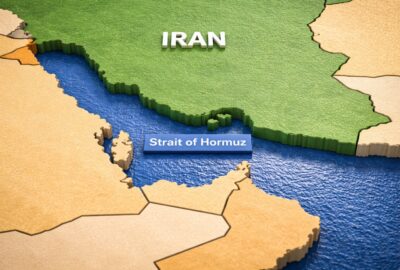
Middle East oil producers face a reckoning. The Iran war exposed the dangers of relying on a single chokepoint for vital oil and gas exports, leaving Gulf governments with a clear strategic imperative: diversify – at all costs. An Iranian blockade of the Strait of Hormuz had long been viewed as a “Doomsday” event that would never happen. Experts assumed it would require a massive military effort and that Tehran would be reluctant to choke off its own exports.
Those assumptions were proven painfully wrong. Iran imposed a near-airtight blockade using cheap drones, small vessels and mines, while continuing to export its own oil, at least until the U.S. Navy imposed its own blockade on Iranian shipping.
This stranded a fifth of the world’s oil and liquefied natural gas supplies, triggering unprecedented turmoil across the region’s vast energy industry, with repercussions felt worldwide.
Get the Latest US Focused Energy News Delivered to You! It’s FREE:
Countries lost vital export revenues and were forced to shut down around 11 million barrels per day (bpd) of oil production, along with multiple refineries and LNG facilities.
While Washington and Tehran have agreed to negotiate a permanent peace deal, the “Hormuz genie” cannot be put back into the bottle. Future closures are now a real and persistent risk for the region and the global economy.
As a result, developing alternative routes for exports of energy, chemicals and fertiliser has become a matter of economic survival for Gulf nations.
PIPELINE DREAMS
Saudi Arabia offers the clearest example of the benefits of building pipelines that circumvent Hormuz.
Before the war, the world’s largest oil exporter diverted around 60% of its shipments to the Red Sea port of Yanbu, using a cross-country pipeline from the Gulf coast. State-owned built the 1,200-kilometre (745-mile) route in the 1980s precisely to hedge against this type of scenario.
That strategic foresight paid off.
The International Monetary Fund said in April that it expects Saudi Arabia’s economy to grow by 3.1% in 2026, down just 1.4 percentage points from its pre-war forecast.
By contrast, Qatar, which had no alternative routes for its oil and LNG exports, could see its economy contract by 8.6% this year, after growing by 2.8% in 2025, according to the IMF.
Other regional players have taken note.
The United Arab Emirates was able to partially bypass Hormuz using its pipeline to the Fujairah oil terminal, located just outside the Strait. Fujairah was disrupted after it came under Iranian fire, but the UAE was still able to export around 1.8 million bpd, roughly half of its pre-war output.
Abu Dhabi, which left OPEC in May to pursue an ambitious growth strategy, is now accelerating construction of a second pipeline to double export capacity via Fujairah by 2027.
Iraq remains in an unenviable position. It is heavily reliant on Hormuz because most of its production is concentrated in the south. Authorities and companies operating in Iraq are thus examining ways to upgrade and expand northern export routes through Turkey and Syria. However, security and political concerns remain significant obstacles.
THE QATARI CONUNDRUM
Qatar and Kuwait face a far more complex challenge. Lacking alternative export routes within their own territories, both countries will effectively be forced to rely on neighbours to circumvent Hormuz.
The predicament is especially acute for Qatar, the world’s leading LNG exporter. To gain access beyond the Strait, the emirate would need to build a pipeline through the UAE to Fujairah or Oman, or across Saudi Arabia to the Red Sea. Each option is fraught with geopolitical and commercial complications.
Such projects would likely require constructing new liquefaction capacity outside the Gulf, driving costs sharply higher.
Taking this route would also leave Qatar heavily dependent on Saudi Arabia or the UAE – countries whose relations with Doha have been strained in recent years. This creates political and strategic risks that the country has long sought to avoid.
Kuwait faces a similar dilemma. Developing alternative export routes would almost certainly require deepening energy integration with Saudi Arabia, further underscoring how geography may reshape regional alliances moving forward.
OVERSEAS DIVERSIFICATION
Another response gaining traction is geographic diversification beyond the Middle East.
Gulf national oil companies are increasingly looking to expand overseas operations, effectively creating a hedge against future regional disruption. QatarEnergy and Abu Dhabi National Oil Company (ADNOC) have led the way, building international portfolios spanning oil, gas and renewables.
This trend is now apt to accelerate. Acquiring stakes in upstream assets, refineries, LNG facilities and storage terminals abroad would provide valuable income streams that are insulated from Gulf risk. In a world where Hormuz can no longer be taken for granted, such investments offer the promise not just of growth, but also resilience.
As Middle East producers begin the gradual recovery process, the race for diversification will reshuffle international alliances, shake up long-term government strategy and redirect investment. In other words, it could reshape the region for decades to come.
(The opinions expressed here are those of Ron Bousso, a columnist for Reuters.)
Enjoying this column? Check out Reuters Open Interest (ROI), your essential new source for global financial commentary. Follow ROI on LinkedIn, and X. And listen to the Morning Bid daily podcast on Apple, Spotify, or the Reuters app. Subscribe to hear Reuters journalists discuss the biggest news in markets and finance seven days a week.
(Ron Bousso Editing by Marguerita Choy)
Share This:
More News Articles