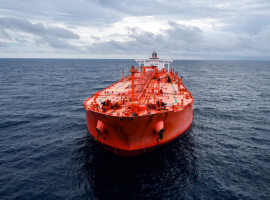
Oil volumes moving out of the Persian Gulf have recovered to about two-thirds of the typical levels from before the Iran war, Goldman Sachs says, noting that the jump in exports could cap oil prices even if the Middle East conflict drags on further.
As many as 15 million to 16 million barrels per day (bpd) of crude and petroleum products are now leaving the whole Middle East region, about 5 to 6 million bpd above the March trough, Goldman Sachs analysts said in a note carried by Bloomberg.
The total Middle Eastern volumes are still about 7-8 million bpd below the levels from February, but they have materially increased in recent weeks and could keep oil prices in check, according to the investment bank.
Oil volumes leaving the region through the Strait of Hormuz alone are likely close to the U.S. estimate of 8 million to 10 million bpd, Goldman’s analysts noted.
“The rise in dark crossings by specialized shippers, and in ship-to-ship transfers, shows that producers and shippers are adapting to the Mideast conflict,” the investment bank said.
The dark-move transits “moderate the upside to crude oil prices even if Mideast disruptions last longer,” it added.
Earlier this week, anonymous traders told Bloomberg that Qatar and Kuwait have managed to boost their crude oil exports from the Strait of Hormuz to 70% of pre-war levels as they followed the United Arab Emirates in shuttling oil through the chokepoint and using ship-to-ship transfers in the Gulf of Oman.
Thanks to the shuttle services and dark activity, total oil flows through the Strait of Hormuz have now risen to about 7-8 million bpd, up from about 4 million bpd in the middle of July, according to Bloomberg’s trading sources.
The under-the-radar operations and the Gulf states’ creative solutions to the threats in the Strait of Hormuz and the Red Sea have helped keep oil flowing, even if at much reduced rates compared to February levels.
By Tsvetana Paraskova for Oilprice.com
More Top Reads From Oilprice.com
- China’s Solar Boom Hits a Wall as Industry Losses Mount
- Hormuz Tanker Traffic Drops Despite Recovery in Oil Flows
- Oil Prices Head for a Weekly Loss Despite Escalating Iran Tensions