The US and Iran said they reached an interim agreement to reopen the Strait of Hormuz, halting a war that killed thousands of people and setting the stage for 60 days of negotiations on the fate of Tehran’s nuclear program.
Officials from the two countries will meet in Switzerland on June 19 to formally sign the agreement, a decision that suggests aspects of the deal remain unresolved. Neither side has released a text, leaving key sticking points for the next stage of talks.
But Trump on Saturday had promised an agreement would be reached on Sunday – his 80th birthday – and he had pushed hard for it to go ahead.
“This Great Deal will bring Peace and Security to the whole Region,” Trump said in a post on social media. He said the strait would open on June 19, after the agreement is signed and mines are removed from the waterway.
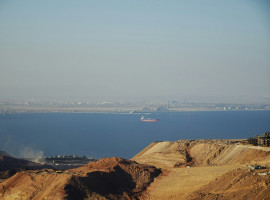
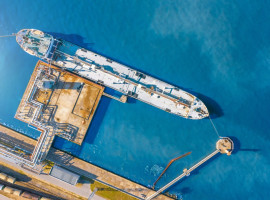
Before the effective blockade, the strait handled around a fifth of all oil supply in a global market of more than 100 million barrels a day. Nearly 600 vessels are still stuck in the Persian Gulf awaiting departure, while hundreds more are waiting on the other side, according to data intelligence firm Kpler.
The announcement came first from Pakistani Prime Minister Shehbaz Sharif, and was followed by Trump and Iranian state media, which depicted the deal as a capitulation by the US. Iranian officials said the text would be published after the agreement is signed.
“Iran officially forced the US-Israeli enemy to end the war on all fronts,” Iranian state television said.
Oil dropped after the news, even as details of the deal remained unresolved. Brent fell more than 4 percent toward $83 a barrel, after closing last week at the lowest in more than three months. A gauge of Asian shares jumped more than 3 percent amid broad gains across the region, with Japan’s Nikkei 225 heading for a record close.
As policymakers around Asia discuss the possibility of raising interest rates, the interim agreement could strengthen the hands of doves at central bank meetings this week in Taiwan, Indonesia and the Philippines, economists at Barclays Plc said in their Emerging Asia research note.
A deal will help dispel fears of an immediate return to a conflict that wreaked havoc on global energy markets and raised risks of an inflationary wave. It will also ease some of the political pressure Trump will face ahead of midterm elections in November. Polling shows the war is deeply unpopular among Americans.
Even as he celebrated the deal, Trump told the New York Times in an interview Sunday that if an agreement on Iran’s nuclear program isn’t reached, he could restart military attacks.
Both sides were already casting the deal in different lights minutes after it was announced – underscoring how difficult it may be to resolve the outstanding issues. Iran said ships passing through the strait would be regulated by Iran and Oman – suggesting Tehran would seek to retain some control over the waterway.
Iran said during the 60 days of negotiations it would seek “the removal of all primary and secondary sanctions, as well as resolutions against Iran.” Any such move would require approval from Congress, which imposed some of the most punishing sanctions, and would likely provoke an outcry from Iran hawks in the US who have worried Trump would give up US leverage.
Also unclear is the financial incentives Iran will receive. A senior US official who spoke to reporters on Friday said the two sides were circling around an agreement where Iran would earn economic rewards each time it met a set of US demands. There may also be an element where Iran gets help rebuilding from the US and Israeli bombing campaign that targeted thousands of sites across the country.
The US and Iran remain deeply distrustful of each other, and grave questions persist about their ability to reach a broader accord. Another complication is Israel, where Prime Minister Benjamin Netanyahu’s government jeopardized a signing at the last minute with new attacks on Lebanon.
Trump may face severe blowback from Iran hawks at home who worry he’s just punting on the issues such as Iran’s nuclear capability and its ballistic-missile program that were the reasons he began the war in the first place.
But Iran has also demanded access to billions of dollars in funds frozen in overseas bank accounts, as well as long-term relief from sanctions. Several European nations, including the UK, France, Germany and Italy, said Sunday they were prepared to lift relevant sanctions if a deal is finalized.
The announcement was the result of weeks of indirect negotiations that have dragged on between Washington and Tehran since a ceasefire came into force in early April, with intermittent clashes threatening to jettison diplomatic efforts to end the war.
Iran shut the Strait of Hormuz shortly after bombardments by the US and Israel triggered the war, disrupting the conduit for what’s typically a fifth of the world’s supply of oil and liquefied natural gas. The way-point for vessels entering and exiting the Persian Gulf remains heavily impeded, with crossings only a small fraction of prewar levels.