By
Welcome to the award-winning newsletter. I’m . Every week day I look at the biggest stories in markets and economics, and explain what it all means for your money.
An under-rated geopolitical revolution
Here’s a point that I never tire of making. If you’re a long-suffering reader, you may even have heard me make it before. (Don’t worry, it’s not the one about crystal balls.)
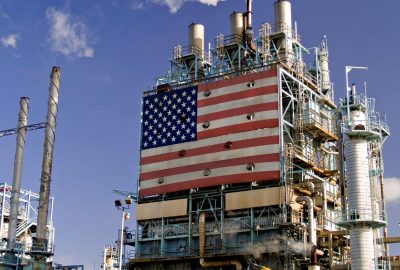
In my view, the most under-reported and under-appreciated geopolitical story of the last 20 years is the rise of the US as an energy superpower.
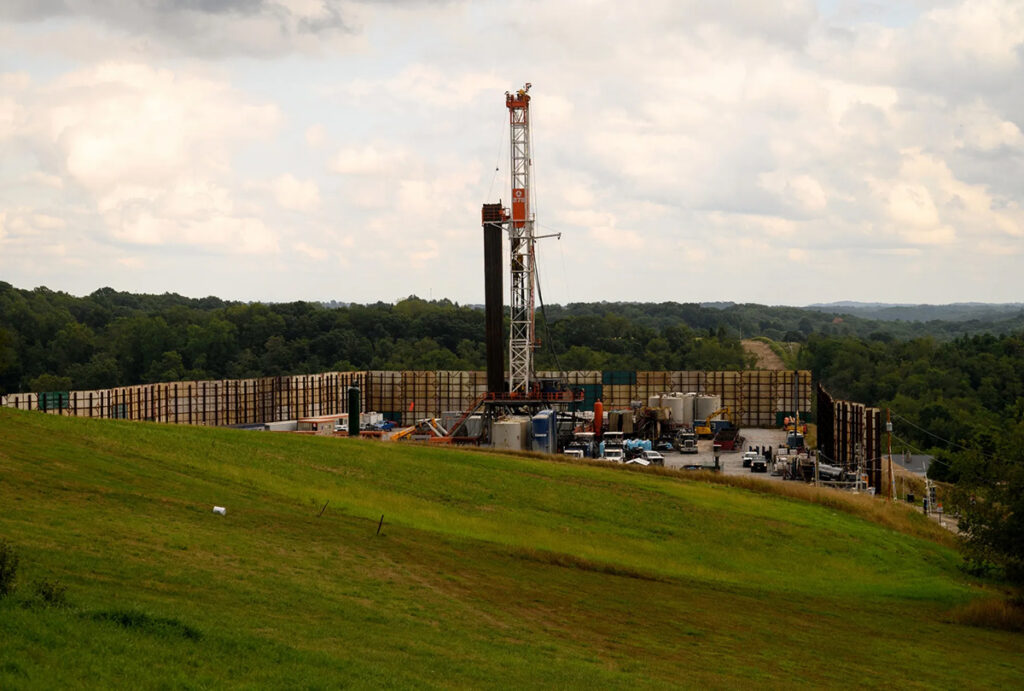
When I say this, I don’t mean that it’s unknown. People are generally aware that the US now produces a lot of oil and gas and that at some point in the past, it did not. They’re aware that a technology called “fracking” is involved.
But outside of those who concern themselves with energy, and oil, and theories about petrodollars, and “in the weeds” topics like that, I don’t think people fully appreciate how much this has changed the global balance of power, or how it has led to where we are right now.
There’s an excellent primer on all this on Bloomberg.com today. The piece deals specifically with natural gas and its role in enabling US president Donald Trump to rip up what many took for granted as the global order. I .
Again though, I’d point out that while Trump has been the most aggressive proponent of “America First,” you don’t have to be a Trump fan or apologist to recognise that the fact that the US is currently a bigger oil producer than Saudi Arabia, and thus less reliant on the Middle East. That’s been influencing its foreign policy approach for over a decade now.
It may not be a good idea, but a country can certainly afford to adopt a more isolationist foreign policy when it is no longer dependent on what some might describe as “the kindness of strangers” for its oil imports, for example.
This state of affairs may not continue forever. Shale oil in particular is only viable at certain oil prices (though the “floor price” keeps getting lower) and it is also subject to faster depletion rates than traditional sources (though, again, this has been a constant risk hanging over shale, and may change with technological improvements).
But the point is that the US now has a lot of clout as a producer rather than a consumer in the global energy sphere, and it’s not shy of using it.
Firstly, Trump says that he wants low oil prices. He’s currently getting them, with the price of Brent dipping below $70 a barrel briefly last week. That, though, may be more due to fears that tariffs and turbulence, plus weak-looking demand in China, are going to result in an oversupplied market, rather than about Trump’s direct demands.
Of course, there’s low and then there’s “too low.” As Javier Blas pointed out in a column last week, there’s probably a sweet spot at which Russia, Saudi Arabia, and the US would all be broadly happy with the oil price, . But for now at least, the oil price is behaving itself.
Secondly, the US wants to become an even bigger global supplier of natural gas. One of the biggest problems facing Europe (which very much includes the UK) has been an over-reliance on natural gas supplies from Russia. By contrast, the US has enjoyed cheap gas, which has helped it to avoid the extent of de-industrialisation seen in Germany, for example.
Let’s Hope The US Keeps Pumping Gas
Moving away from the geopolitics of all this, what’s it all mean for you?
If oil prices remain acquiescent or even fall from here, that would be very good news for the UK. Petrol and fuel price inflation is volatile and the Bank of England might prefer to “look through” it.
But clearly, higher transport costs have a nasty stagflationary effect on a net consumer country like the UK. Consumers spend more on a “need” (petrol) so they have less to spend on “wants,” which is recessionary. But companies with higher costs have to cover them somehow — through higher prices, job cuts, or both.
In the shorter term, a well-behaved oil price can make all the difference between a headline inflation print that shocks or pleasantly surprises markets (and then feeds into corresponding newspaper headlines). So here’s hoping it continues.
As for natural gas — the more that the US tools up for the export of liquefied natural gas (LNG), the more pressure there will be on prices over time. That would be good news for the UK, because we’re going to need gas for some time.
There are larger lessons of course. There’s a benefit to having energy independence. It means you get to choose what you want to do. That may or may not have good outcomes but it’s a nice position to be in.
The US decision to pursue energy independence through the continued exploitation of fossil fuels while simultaneously pursuing a renewable grid (some of the biggest advances on this are in Texas, hardly the natural home of the bleeding heart environmentalist) strikes me as a much more secure and sustainable way to go about eventually getting to Net Zero.
By contrast, the UK approach has involved remaining dependent on external sources for our reliable baseload energy (both the dirty stuff and the nuclear stuff), while building out “homegrown” (as Ed Miliband likes to say) but intermittent (and thus unreliable) energy.
This appears to be damaging our productivity and entails a great deal of cost, for potentially little or no gain towards the wider stated goals, in practical terms. For more on this, check out the latest podcast (also mentioned in the “recommended reading” list below).
Send any feedback to and I’ll print the best. Or ping any questions to .
What I’ve been reading this morning
- The evidence is mounting that the rush to Net Zero has harmed the UK economy. Merryn Somerset Webb explains why we need to . And don’t miss the accompanying podcast with Peel Hunt’s Kallum Pickering — I genuinely think it’s one of the most important interviews .
- Will a robot steal your job? If you’re reading this at a desktop in an office, then you should certainly be considering a Plan B. . Personally speaking I’m not worried, you soft-minded fleshy humans have yet to work out that I replaced Stepek 1.0 weeks ago. Haha, just kidding! Or am I? Etc.
- I loved this story about a gambling syndicate roughly doubling its money overnight by buying up every single lottery ticket combination in a Texas state lottery. It’s such a fun real-life example of how statistics and logistics and market inefficiencies and legal arbitrage combine to provide opportunities in the weirdest places. .
Mid-day markets
Looking at wider markets — the FTSE 100 is down 0.7% at around 8,620. The FTSE 250 is down 0.8% at 19,980. The 10-year gilt yield is sitting at 4.62%, lower on the day, while yields on its German and French equivalents are sharply lower on concerns that Germany transformational spending plans won’t survive .
Gold is down 0.1% at $2,905 an ounce, and oil (Brent crude) is up 0.7% at $70.80 a barrel. Bitcoin is up 0.2% at $83,300 per coin, while Ethereum is up 3.7% at $2,100. The pound is up 0.1% against the US dollar at $1.293, and flat against the euro at €1.192.
Follow for up-to-the-minute news and analysis that move markets.
Quote of the day
“Be prepared for more ‘Trump pumps’ and ‘Trump dumps’. The president never stops talking. It feels like my head is on a swivel.”
Dennis Dick
Head of markets structure and a proprietary trader at Triple D Trading
It’s not easy being a trader with Donald Trump in charge.
Putting a number on… Britain’s sick note bill
25%
The jump in the amount of UK taxpayer money spent each year on sickness benefits since the start of the pandemic. The bill currently sits at £65 billion, and is forecast to rise to £100 billion by 2030 if nothing changes. As Martin Ivens points out for .
Before you go…
Don’t miss the . Every week, Bloomberg’s Francine Lacqua and David Merritt go behind the scenes in the Square Mile.
The main stories to watch out for on Tuesday include:
- In economic news, we get the latest update on UK retail sales from the British Retail Consortium.
- On the corporate front, reports are due from housebuilder Persimmon, broadcaster STV Group, fast food retailer Domino’s Food Group, and infrastructure services specialist Kier Group, among others.
Sign up for Bloomberg UK’s daily morning market newsletter, The London Rush. It’s all you need to get you up to date on the most important UK market-moving stories every morning. .
And if you want up-to-the-minute news commentary with the odd joke flung in, follow me on .
Share This:
More News Articles