Monday, 30 June 2025
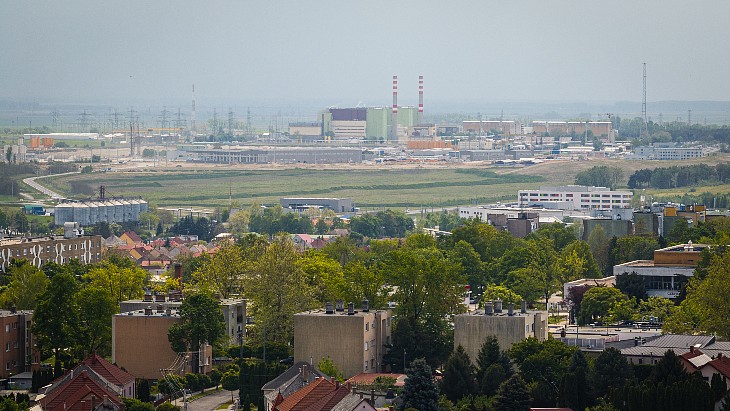
In a statement issued by the Hungarian ministry, Szijjarto said that the previous US president had made several “politically-motivated decisions … one of these sanctions had aimed to make Hungary’s long-term energy security impossible by introducing restrictions related to the construction of the Paks nuclear power plant that had made it practically impossible to continue the construction work”.
“Fortunately, since January, there is a president in the White House who considers Hungary a friend … we are grateful to President Donald Trump and the Republican administration for this, because the Paks upgrade project guarantees Hungary’s long-term energy security and maintains regulated utility prices,” he added.
The US Department of the Treasury Office of Foreign Assets Control issued , dated 27 June 2025, which is titled “Authorizing Certain Transactions Related to Civil Nuclear Energy”.
It lists sanctioned entities and details the which last until until 19 December 2025 for transactions related to civil nuclear energy – which it adds “means transactions undertaken solely to maintain or support civil nuclear projects initiated before 21 November 2024”.
The exemption – which includes the Central Bank of the Russian Federation – covers civil nuclear energy in general, rather than a specific mention of the Paks II project.
The Frequently Asked Questions part of the Office of Foreign Assets Control website includes a 27 June update which explains that General License 115B “generally authorises certain transactions related to civil nuclear energy involving certain entities that are sanctioned pursuant to Executive Order 14024. Civil nuclear energy means the following activities when undertaken solely to maintain or support civil nuclear energy projects and operations initiated or under construction as of 21 November 2024: the extraction, production, refinement, conversion, enrichment, fabrication, transport, or purchase of uranium in any form; the production, generation, transmission, or exchange of nuclear power, fuel, or waste; and the operation of civil nuclear energy projects. However, does not authorise, for instance, transactions involving certain sanctioned Russian financial institutions related to the development of new civil nuclear energy power plants after 21 November 2024. Non-US persons generally do not risk exposure to US sanctions for engaging in transactions with blocked persons, including transactions related to existing civil nuclear energy as described in GL 115B, where those transactions would not require a specific licence if engaged in by a US person.”
Szijjarto said that the production of large-scale equipment for the Paks II project continues in Russia and France and added that “construction can now gain new momentum”.
The Paks II project
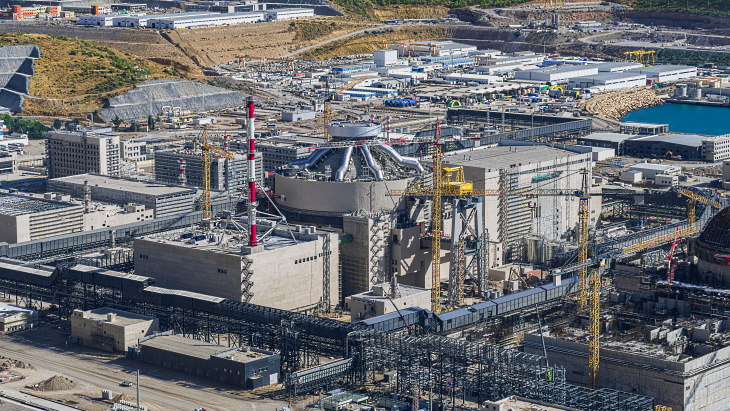
The Paks plant, 100 kilometres south of Budapest, currently comprises four Russian-supplied VVER-440 pressurised water reactors, which started up between 1982 and 1987. An inter-governmental agreement was signed in early 2014 for Russian enterprises and their international sub-contractors to supply two VVER-1200 reactors at Paks as well as a Russian state loan of up to EUR10.0 billion (USD10.5 billion) to finance 80% of the project.
The construction licence application was submitted in July 2020, the construction licence was issued in August 2022 and a construction timetable agreed in 2023, including first concrete this year, with a target to connect the new units to the grid at the beginning of the 2030s.
However there has been a delay to first concrete – which is now due to be poured in 2026 – after Hungary’s Atomic Energy Authority called a halt to work on parts of the working pit after an incident on 30 January in which, Paks II told a parliamentary session in March, “two corners on the prominent ‘peninsula’ in the southern section broke off, affecting half a percent of the more than 700-metre perimeter wall”.
The Atomic Energy Authority said last week that Paks II had reviewed the condition of all the pit boundary walls and “identified potentially dangerous zones, and removed damaged, unstable parts where similar risks of block separation and collapse had arisen”.
HAEA said that after reviewing submitted documents and carrying out a site inspection it lifted the work ban subject to the installation of “a slope protection network on the affected sections of the internal boundary walls” and said that “during the construction activity, continuous monitoring must be carried out in order to track and document the movements of the groundwater level, the internal boundary walls of the working pit, and the surrounding buildings”.