Oil is moving lower today because markets are reacting to signs that U.S.-Iran talks may still prevent deeper escalation, Naeem Aslam, CIO at Zaye Capital Markets, said in a market analysis sent to Rigzone on Wednesday.
Aslam highlighted in the analysis, however, that oil prices “remain elevated because the supply risk premium has not disappeared”.
“At Zaye Capital Markets, we see crude trading in a fragile range where every headline on Iran, shipping security, inventories, and policy expectations can quickly shift the balance between fear buying and profit taking,” Aslam warned.
In the analysis, Aslam said U.S. President Donald Trump’s Iran comments are directly shaping the oil ecosystem.
“His remark that ‘we were getting ready to do a very major attack tomorrow, and I’ve put it off for a little while’, reduces immediate strike risk, but it does not remove geopolitical danger,” Aslam noted, referring to a statement Trump made at a Healthcare Affordability Event on May 18, which was streamed live by the White House YouTube page.
“His warning that the U.S. may need to hit Iran again keeps a floor under crude because traders still have to price in possible disruption to Middle East supply routes, tanker insurance, refinery feedstock, and fuel costs,” he continued.
“If tensions cool, oil can lose part of its war premium; if the tone hardens again, Brent can quickly reprice higher,” Aslam highlighted in the analysis.
Aslam went on to note that yesterday’s economic data created a mixed demand signal for crude.
“The manufacturing index jumped to 19.6, pointing to stronger industrial activity and possible fuel demand, while the services index improved to -5.8 but stayed in contraction,” he said.
“The NAHB Housing Market Index rose to 37, current sales reached 40, future sales expectations moved to 45, and buyer traffic improved to 25, but all remain below the neutral 50 level,” he pointed out.
“Household spending growth slowed to 4.8 percent, while U.S. large-cap ETFs attracted … $11.91 billion and small-cap ETFs saw US $2.87 billion in outflows. This tells us demand is not collapsing, but investors are still cautious about broad economic strength,” he said.
Aslam stated in the analysis that today’s GBP CPI year on year, monetary policy report hearings, and USD FOMC Meeting Minutes can decide whether oil trades more on demand risk or inflation risk.
“Hotter inflation or hawkish policy language would support the dollar and yields, which can pressure crude by weakening demand expectations,” he said.
“Softer data or more flexible policy language would support risk appetite and help oil hold elevated levels,” he added.
Looking at supply, Aslam said the latest International Energy Agency data showed global oil supply fell by 1.8 million barrels per day in April to 95.1 million barrels per day, “taking total losses since February to 12.8 million barrels per day”. He noted that OPEC linked demand comparisons “still show a more constructive demand view than some other agencies”.
“For crude, the next move depends on which force dominates first: geopolitical supply risk or slower demand pricing,” Aslam projected.
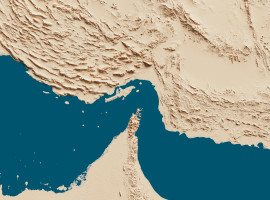
In a report sent to Rigzone late Tuesday by the Standard Chartered team, Standard Chartered Bank Energy Research Head Emily Ashford warned that “every day that passes with no resolution on the Strait of Hormuz brings us closer to the point when supply adjustment mechanisms such as releases from strategic reserves are no longer viable”.
Ashford noted in the report that the latest two weekly releases from the U.S. Strategic Petroleum Reserve were the largest on record at 9.9 million barrels and 8.6 million barrels, respectively.
“Once operational limits (such as the minimum SPR volume of 150 million barrels) are approached, incremental supply from global producers will be low and slow to arrive, and the loss of Gulf supply will likely force crude and refined products prices higher once more,” Ashford warned.
The Energy Research Head pointed out in the report that another week had passed “with little breakthrough in negotiations between the U.S. and Iran”.
“Comments from the White House suggest that a planned escalation on 19 May had been stepped down at the request of various GCC countries who remain keen to push for diplomacy,” Ashford said.
“There does appear little appetite for a return to military action and talk of ‘boots on the ground’ seems to be diminished,” Ashford continued.
To contact the author, email