Both Ukraine and Russia have said they are ready to repair damage to external power lines in the territory they control but are unable to currently do so because of military activity in the area, the International Atomic Energy Agency (IAEA) said.
Grossi said: “Europe’s largest nuclear power plant has been without external power for more than a week now, which is by far the longest-lasting such event during more than three and a half years of war. I’m in constant contact with the two sides with the aim to enable the plant’s swift reconnection to the electricity grid.
“While the plant is currently coping thanks to its emergency diesel generators – the last line of defence – and there is no immediate danger as long as they keep working, it is clearly not a sustainable situation in terms of nuclear safety. Neither side would benefit from a nuclear accident.”
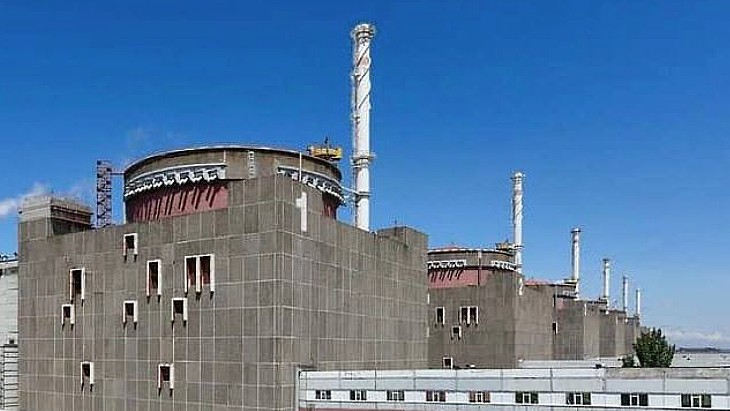
The six-unit plant, which has been under Russian military control since early March 2022, is located close to the frontline of Russian and Ukrainian forces. Its reactors have been shut down for more than three years, which the IAEA says has helped to cool the nuclear fuel and reduce the amount of radioactive material in the fuel.
But Grossi warned: “The current status of the reactor units and spent fuel is stable as long as the emergency diesel generators are able to provide sufficient power to maintain essential safety-related functions and cooling.
“Based on the plant’s information, we can conclude that the emergency diesel generators have been able to reliably provide the power needed for cooling the nuclear fuel in the reactor cores and spent fuel pools.
“Nevertheless, it is extremely important that off-site power is restored. I strongly encourage both sides to work with us and enable these essential repairs to take place. As I have repeatedly stated, a nuclear accident is in no-one’s interest and all efforts must be made to prevent that from occurring.”
The IAEA has had a team of experts at the site since September 2022 and their monitoring – and the plant’s own monitoring – continue to show radiation levels remain within their normal levels.
The Zaporizhzhia Nuclear Power Plant (ZNPP) has a series of emergency diesel generators at the site which have been operating since the loss of external power, which was the result of damage caused to the last remaining power line about 1.5 kilometres from the plant.
Before the war it had 10 external power lines, but most of those lines are no longer operational and since 7 May it has had to reply on a single 750 kV power line. This is the tenth time there has been a loss of external power to the site since the war began, but is by far the longest, having continued for more than a week.
The IAEA has been informed that fuel reserves for 10 days was stored at the site, with offsite supplies able to help maintain these levels. The agency said that team members had observed the generators in action and were able “to confirm that the sprinkler ponds that provide cooling water for the reactor units and spent fuel remain full”.