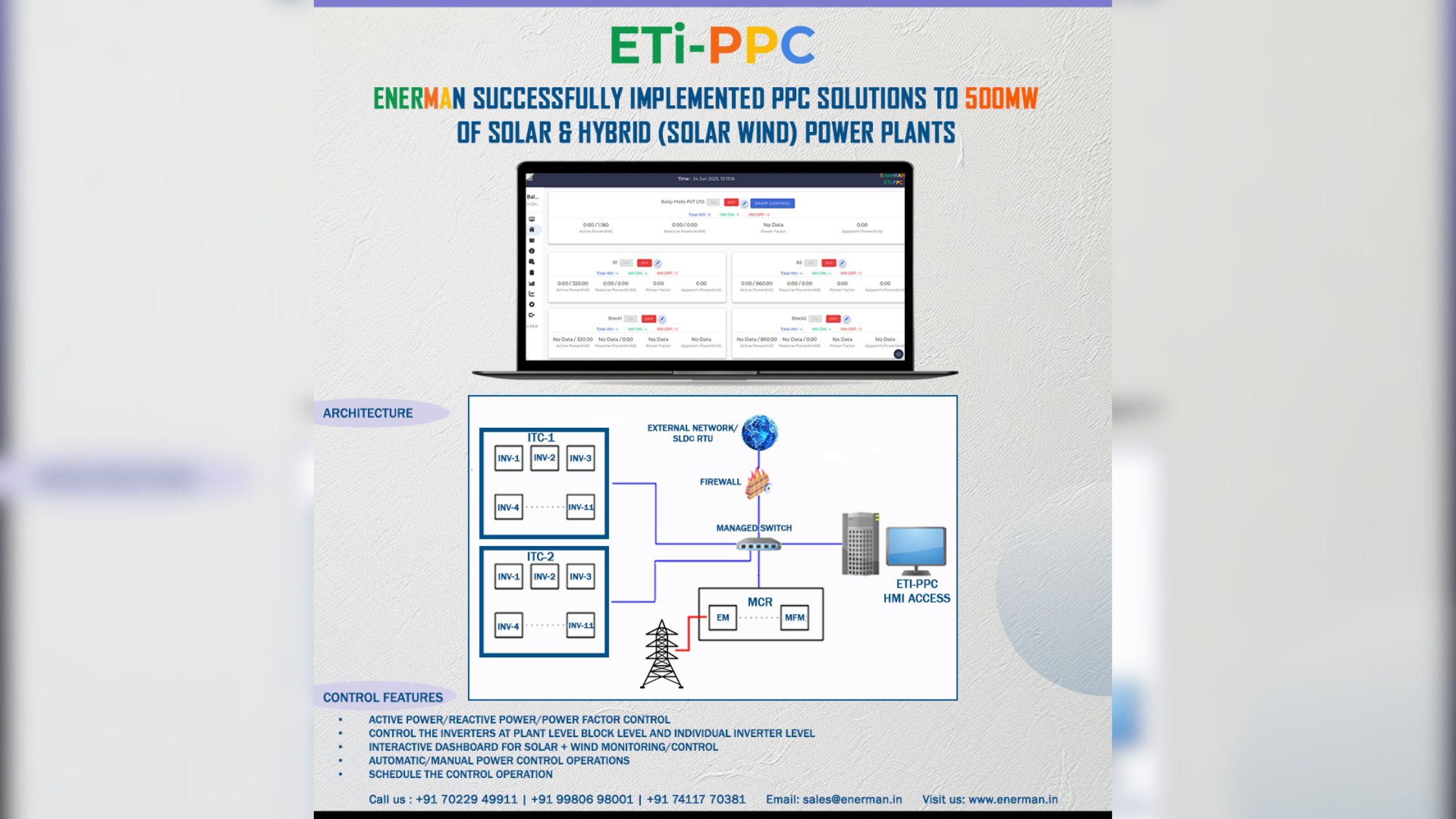
Power Plant Control (PPC) is the only solution to Monitoring and controlling of a Solar PV plant’s power generation to meet State Electricity Load Distribution Company’s regulatory requirements. It is essential for preserving steady voltage, frequency, load balance and operational safety of all T&D (Transmission & Distribution) equipment which are basic necessary for reliable and stable power grid. EnerMAN’s PPC Product (ETi-PPC) offers intelligent, automated, and scheduled power control operations, going beyond simple control functions. In managing active power, reactive power, voltage ramp, and power factor all crucial metrics for energy management and power stability our solutions guarantee complete adherence to electricity board regulations. EnerMAN’s PPC system help prevent power fluctuations that can result in equipment wear, downtime, or grid penalties by stabilizing grid supply and offering real-time control. ETi-PPC maintains its dependability throughout unmanned shifts, guaranteeing continuous performance and compliance. By lowering operating costs, improving energy efficiency, and optimizing power usage, PPC not only safeguards the plant and grid but also yields quantifiable savings.
Any facility hoping to improve electrical reliability, satisfy compliance requirements, and support long-term energy sustainability goals must take this crucial step. Inverters are cleverly controlled in Plant Power Control (PPC) to guarantee compliance, power quality, and the best possible grid interaction. Power Factor (PF) Control is a crucial technique in which the inverter modifies its output to sustain a particular PF by controlling the phase angle between voltage and current. This lowers losses and increases energy efficiency. Another crucial feature is Reactive Power Compensation, in which the inverter injects or absorbs reactive power to lower transmission losses and stabilize voltage levels.
This is particularly important when using unsteady or weak grids. The ETi-PPC framework has been developed in strict adherence to the latest Central Electricity Authority (CEA) guidelines, ensuring compliance with technical, safety, and operational standards as prescribed under the Indian Electricity Act.For electrical generation and distribution systems to operate steadily, effectively, and reliably, Plant Power Control (PPC) are essential. PPC makes it possible for better voltage regulation, lower T&D losses, and improved power quality & stability by precisely controlling active power, reactive power, and power factor. Reactive power compensation in response to grid voltage deviations and dynamic power factor adjustment based on load conditions are examples of advanced control strategies that enable smooth integration with the utility grid and statutory grid code compliance. Reliable performance is further ensured, even during unmanned operation, by the use of scheduled and autonomous control functions. PPC systems continue to be an essential part of contemporary power system infrastructure as the need for grid stability and energy efficiency grows, particularly in industrial and renewable-integrated plants.