- US oil prices slump over 20% to four-year lows since Jan. 20
- Trump’s trade policies muddle US oil outlook, cutting growth forecasts
- LNG fares better under Trump, with increased export approvals
- Coal struggles to regain market share despite policy support
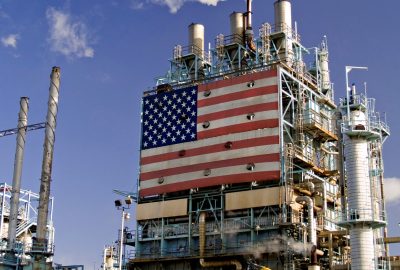
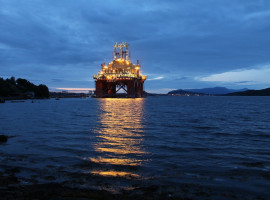
(Reuters) – Just 100 days into President Donald Trump’s second term, oil prices have slumped over 20% to below many U.S. producers’ breakeven costs as investors lose confidence amid tariff and policy uncertainty – undercutting Trump’s push for U.S. energy dominance.
Trump campaigned on the often repeated refrain of “drill, baby, drill” and moved on his first day in office on January 20 to maximize output in the U.S., the world’s top oil and gas producer.
His protectionist trade policy, however, has reduced oil demand growth forecasts, and lower international energy prices have soured the outlook for the industry.
Benchmark U.S. crude prices have plummeted to around $60 a barrel, a low not seen since the COVID-19 pandemic, and below the $65 level that many oil producers say they need to make money.
Over half of the decline occurred since Trump’s “Liberation Day” on April 2 when he declared a minimum 10% tariff on U.S. imports, prompting expectations that the global economy would slow.

“The macro environment has gotten much worse, thanks to the tariffs and policy uncertainty,” said Ben Cahill, director at the Center for Energy and Environmental Systems Analysis at the University of Texas at Austin.
“Energy dominance requires investor confidence,” he added.
The Trump administration has also imposed sanctions targeting Iranian oil sales, including on China-based energy facilities, in an attempt to help prevent Tehran from developing a nuclear weapon and funding militant groups across the Middle East. While the sanctions provided some support to oil prices, they added to market uncertainty.
Citing U.S. tariffs, forecasters across the board, including the U.S. Energy Information Administration, the International Energy Agency, OPEC and major banks, have cut their oil price and demand growth outlooks.
OPEC+’s decision to speed up output hikes this spring exacerbated the price fall. Yet, Trump had called on Saudi Arabia and OPEC to bring down the cost of oil just days after he took office.
As a result of the price slump, U.S. crude producers – who were pumping some 13.4 million barrels per day (bpd) in April and are expected to pump 13.5 million bpd in 2025, down from previous forecasts – are already putting the brakes on drilling new wells.
“Trump and his energy team seem to think U.S. producers will drill through the uncertainty that’s been created. They won’t, and hoping they will is a poor calculus,” Roe Patterson, former CEO of oilfield company Basic Energy Services and managing partner at Marauder Capital, wrote in a LinkedIn post.
A Department of Energy spokesperson said Trump and Energy Secretary Chris Wright are committed to expanding American energy infrastructure, in response to a request for comment for this story.
LNG COMES OUT ON TOP
Natural gas, and its liquefied state, LNG, have fared better than oil under Trump.
On his first day in office, Trump ordered the resumption of LNG export approvals – something former President Joe Biden had paused – and has started rolling back environmental regulations that slowed projects.
Several companies have announced investments in recent months, including Australia’s Woodside Energy, which gave final approval to build a $17.5 billion LNG project and cited Trump’s desire for “American energy dominance.”
The EIA in April forecast average U.S. LNG exports would reach 15.2 billion cubic feet per day in 2025, up from a record 11.9 bcfd in 2024 and higher than the outlook before the Trump administration.
Tariffs on steel and aluminum, however, will increase project costs, adding to labor, financing and equipment inflation, said Jason Feer, the head of business intelligence at Poten and Partners.
CLEAN ENERGY HIT
Trump’s policies have favored the fossil fuel sector over the low-carbon energy industry. On his first day, he ordered the U.S. to withdraw from the Paris climate agreement and suspended new federal offshore wind leasing, casting doubt on the viability of dozens of planned developments.
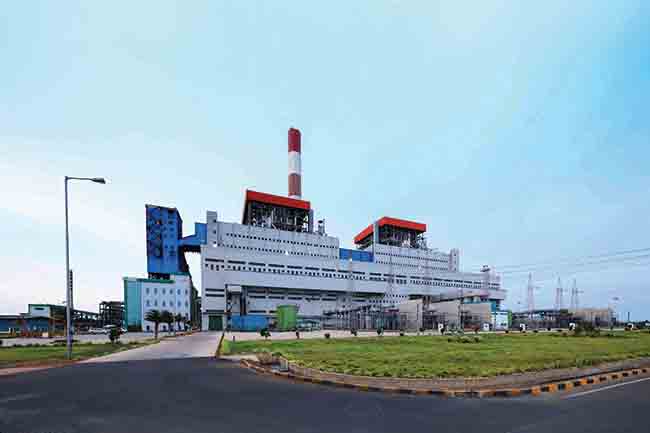
Trump has also attempted to expand electricity generated by fossil fuels through deregulation and executive actions that loosen power plant emissions rules.
Boosting coal-generated electricity, which now makes up less than 20% of supplies versus an over 50% share in 2010, will be difficult and does not make economic sense. Coal has lost market share to gas, wind and solar power. The average coal power plant is around 50 years old, and big utilities have no plans for new ones.
“Federal policy now clearly favors oil, gas, and other fossil energy sources, while disfavoring renewable energy sources that had enjoyed incentives and other favorable treatment under the prior administration,” said David Amerikaner, partner at law firm Duane Morris.
Reporting by Stephanie Kelly, Tim Gardner, Curtis Williams, Scott DiSavino and Laila Kearney; Editing by Liz Hampton and Marguerita Choy
Share This:
More News Articles