By
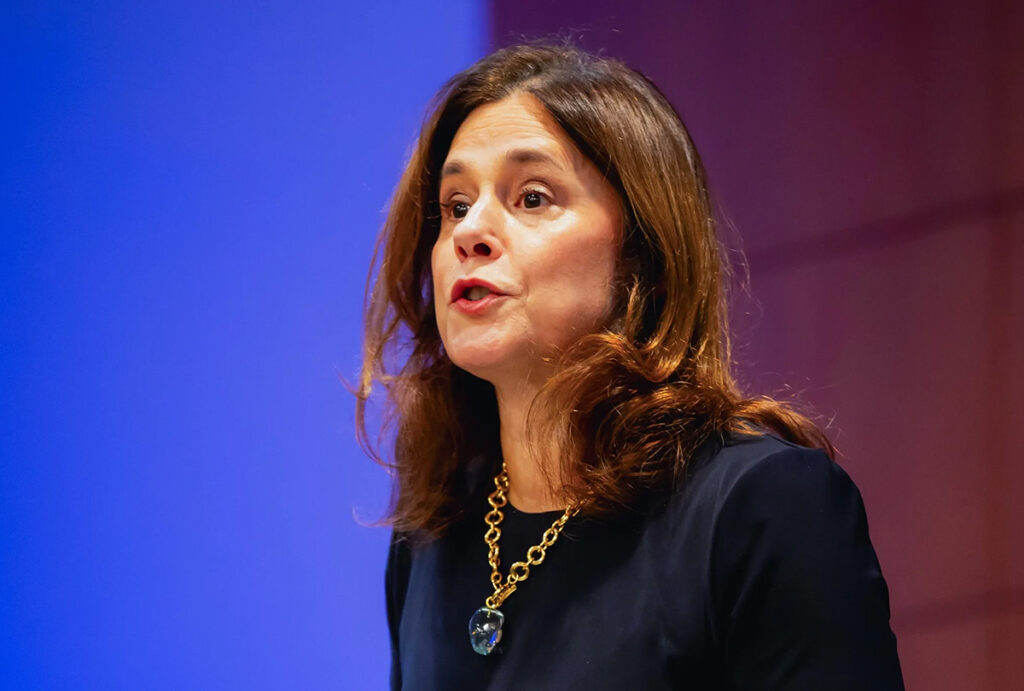
Lorie Logan Photographer: Desiree Rios/Bloomberg
Get the Latest US Focused Energy News Delivered to You! It’s FREE:
Federal Reserve Bank of Dallas President Lorie Logan sounded a warning signal that the world’s supply of oil and natural gas may start to dwindle if shipping through the Strait of Hormuz doesn’t return to normal soon.
Logan, whose district includes the Permian Basin — the world’s largest shale-oil field — said US production won’t be able to fill the gap in global oil supplies driven by the war in Iran. Capital, labor and other input constrains — combined with the physical limitations to piping natural gas out of West Texas fields — mean consumers may face a new reality where critical sources of fuel are not as widely available, Logan said Wednesday at a Bank of Japan conference in Tokyo.
About 10% of global oil supplies have been trapped in the Persian Gulf by the war. So far, Logan said, reserve drawdowns have helped fill the gap, but, she added, inventories are finite.
“With supplies highly constrained, if shipping through the strait does not soon return to prewar levels, world oil and natural gas consumption could need to fall more meaningfully than it has so far,” Logan said. “The economic consequences would depend on the degree to which end users can switch to other energy sources or use energy more efficiently, versus curtailing economic activity.”
Logan, who before taking the helm of the Dallas Fed spent her career on the markets desk of the New York Fed, repeated calls for improving the resilience of the US Treasury market in times of crisis. The Fed should centrally clear its open market operations, she said, and should look for better ways to distinguish its asset purchases made to support market functioning versus those intended to stimulate the economy.
“Developing a richer toolkit in calm times would support a more nimble and targeted response to any future stresses,” Logan said.
The Dallas Fed chief also spoke about declining birth rates and aging populations, and said central bankers will need to re-frame what healthy labor-force and economic growth look like in such an environment.
Share This:
More News Articles