

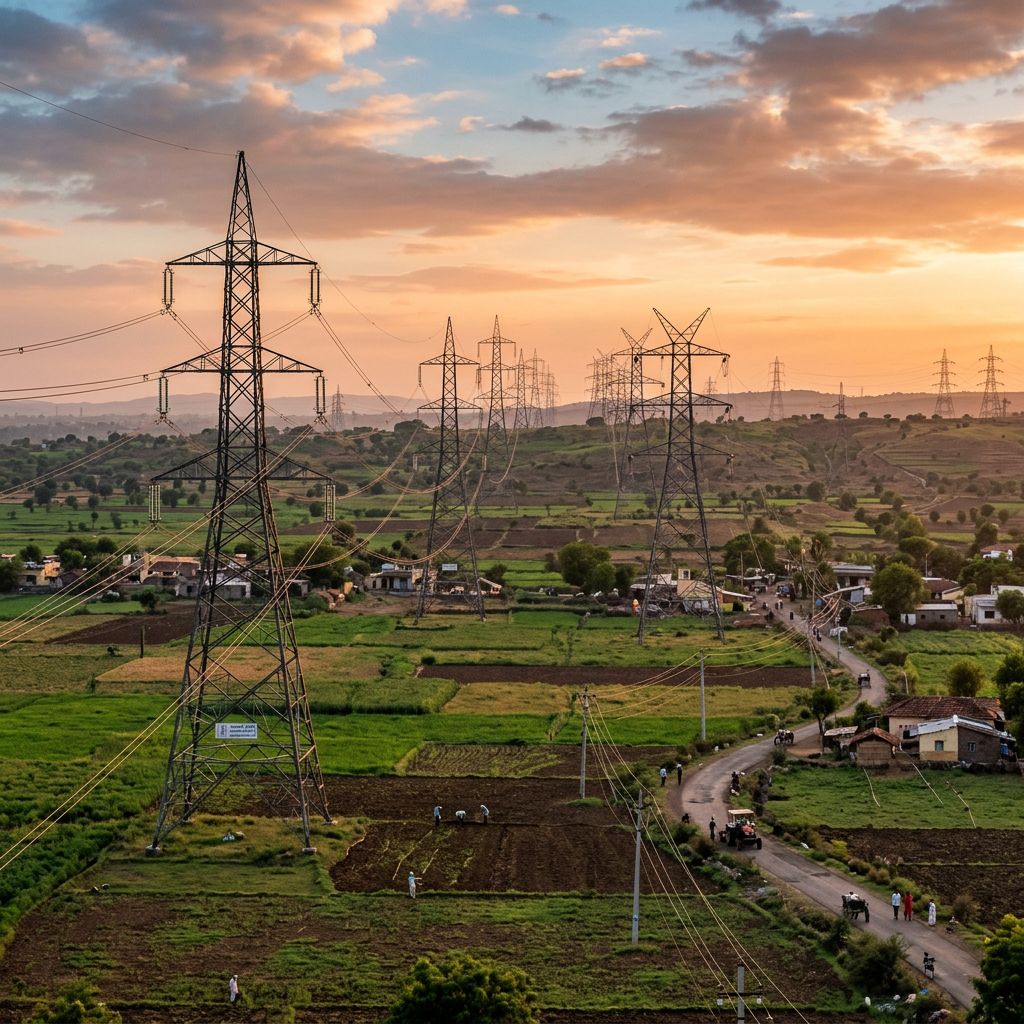
India’s power transmission sector is expected to witness capital expenditure of ₹5-6 trillion between FY27 and FY32 as the country strengthens its grid infrastructure to support the rapid expansion of renewable energy capacity, according to ICRA.
The rating agency said the planned investments will focus on upgrading existing transmission infrastructure, adding evacuation capacity, and developing new transmission corridors to integrate the government’s target of over 900 GW of non-fossil fuel capacity by 2035-36, including approximately 548 GW of solar and wind power.
Ankit Jain, Vice President and Co-Group Head at ICRA, said the sector would require annual additions of around 20,000 circuit kilometres (ckm) of transmission lines and 120 gigavolt-amperes (GVA) of substation capacity to meet the targets outlined in the National Electricity Plan.
ICRA noted that outstanding orders and order inflows for key transmission equipment manufacturers in FY26 have more than doubled compared with FY22, reflecting the expected surge in transmission investments. However, limited manufacturing capacity, shortages of skilled manpower, and supply chain constraints could delay project execution unless equipment suppliers expand their production capabilities.
The report also highlighted persistent execution challenges, including land acquisition, right-of-way (RoW) issues, and regulatory approvals, which continue to delay transmission projects awarded through the tariff-based competitive bidding (TBCB) route.
According to ICRA, only about 12% of transmission projects commissioned by March 2026 under the TBCB model were completed within their scheduled commissioning dates. The remaining projects experienced delays ranging from two months to three years, with a median delay of more than 10 months.
The delays have increased the risk of renewable energy curtailment by restricting timely power evacuation from generation projects. Since the previous fiscal year, renewable energy developers in high-generation states have experienced significant curtailment due to inadequate transmission infrastructure.
As of May 2026, around 33% of the recently commissioned 54.8 GW of renewable energy capacity was being evacuated through the Temporary General Network Access (T-GNA) mechanism, with curtailment levels reaching 50-60% during solar generation hours. The issue is particularly pronounced in Rajasthan and Gujarat, while southern states have experienced relatively limited curtailment.
ICRA further noted that approximately 107 GW of solar, wind, hybrid, hydro, pumped storage, and thermal projects with granted grid connectivity are expected to be integrated into the interstate transmission system (ISTS) between FY27 and FY31. However, delays in transmission infrastructure development could continue to impact renewable energy commissioning schedules and project returns if grid expansion fails to keep pace with generation capacity.
Subscribe to get the latest posts sent to your email.












)