The International Renewable Energy Agency (IRENA) has launched a new Solar PV Supply Chain Cost Tool to help governments, investors, and industry players better understand the economics of solar manufacturing. The tool, developed in Excel format, is designed to support strategic planning and policy decisions through 2030 as countries work to expand renewable energy capacity and strengthen local manufacturing.
The launch comes at a time when many nations are trying to reduce their dependence on imported solar equipment and build domestic industrial capacity. According to IRENA, the global solar market is facing a difficult balance between keeping solar power affordable and ensuring that manufacturers can operate sustainably. Low-cost imports, especially from China, have played a major role in accelerating solar deployment worldwide. However, current market prices for solar components are often below the true cost of sustainable production. This has created financial pressure across the supply chain and made it harder for new domestic manufacturers to compete.
The tool shows that manufacturing costs vary widely from one country to another. Vietnam stands out as one of the most competitive locations in Southeast Asia. Its production costs are close to those in China, mainly due to lower labour and electricity expenses. On the other hand, countries such as Germany and the United States face much higher manufacturing costs. Expensive electricity, higher wages, and smaller production volumes increase their overall costs. Australia also faces challenges, with domestic solar module production costs estimated at $0.256 per watt-peak, compared to $0.180 per watt-peak in Viet Nam.
Electricity and raw materials are identified as the main cost drivers in the solar manufacturing process. This is particularly true for upstream segments like polysilicon production, which is highly energy-intensive. Producing one kilogram of polysilicon requires around 40 kilowatt-hours of electricity. Although this is a significant improvement compared to about 80 kilowatt-hours per kilogram five years ago, further efficiency gains are expected to be limited in the coming years.
Technology is another important factor shaping future costs. The industry is gradually shifting from monocrystalline PERC technology to Tunnel Oxide Passivated Contact, known as TOPCon. While TOPCon currently involves higher upfront manufacturing costs due to more complex processes, it offers better efficiency. TOPCon modules can reach efficiency levels of around 23.2 percent, compared to about 21.6 percent for PERC modules. As the technology matures and scales up, it is expected to become the most cost-competitive option by 2030.
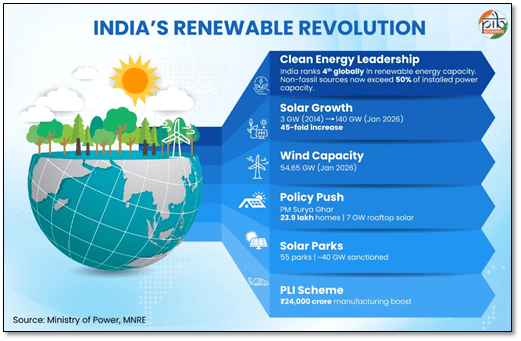
To support the growth of domestic solar industries, IRENA recommends several policy measures. These include lowering operational costs by offering preferential electricity tariffs or supporting on-site renewable energy generation for factories. The agency also highlights the importance of certification standards and financial support to build buyer confidence. For example, India’s Production Linked Incentive scheme is mentioned as a model that can help attract investment and improve competitiveness. In addition, IRENA suggests that some countries may benefit from hybrid strategies, such as importing advanced upstream components like wafers while focusing local efforts on final module assembly and specialized innovations.
Overall, the new tool underlines that there is no single solution suitable for all countries. Each nation must design a balanced strategy that keeps solar energy affordable for consumers while creating fair and sustainable conditions for manufacturers to grow and compete.
Subscribe to get the latest posts sent to your email.