Harwell was established in 1946 as Britain’s first Atomic Energy Research Establishment. The site accommodated five research reactors of various types. Harwell also had a number of other nuclear research facilities, together with plutonium handling facilities, radioactive laboratories, nuclear waste treatment and storage facilities.
Harwell is progressing through a programme to safely decommission its historic facilities. Significant advances have already been made, including the removal 11 of its 14 reactors and the release of around 25% of the original site for redevelopment as part of the growing Harwell Campus. Current work is focused on plans to demolish 16 redundant buildings and continuing to reduce the site’s nuclear materials inventory.
Nuclear Decommissioning Authority (NDA) subsidiary Nuclear Restoration Services (NRS) has now completed its largest ever land remediation project at Harwell, restoring land on which the former Liquid Effluent Treatment Plant (LETP) and neighbouring Sewage Farm Area once stood.
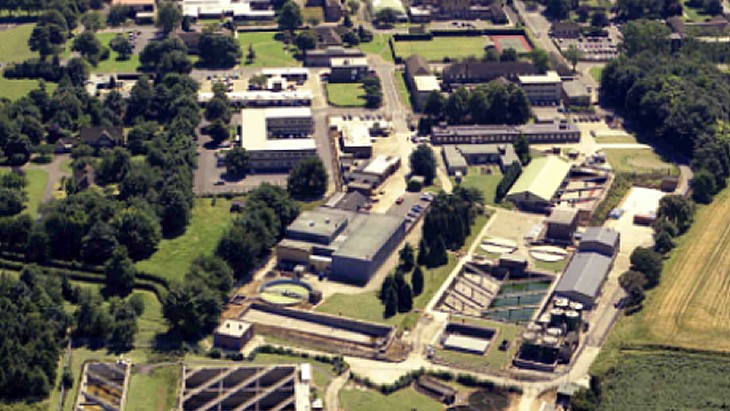
The LETP, pictured around 1999 (Image: NRS)
The LETP was constructed in 1948 to treat liquid waste generated by Harwell’s pioneering nuclear research programmes. At its peak, active and trade drainage systems from across the site flowed to the facility, where waste was treated before being safely discharged through a dedicated pipeline to the River Thames. The plant also handled higher activity liquid waste, supporting decades of scientific research and innovation at Harwell. Alongside the LETP, the former Sewage Farm Area had an even longer history. Originally constructed in the 1930s to serve RAF Harwell, it was later expanded as the site developed. Following the end of LETP operations in 2013, attention turned to safely decommissioning the ageing facilities and restoring the land.
NRS said that more than 97,000 tonnes of material have been removed during the project, which tackled an extensive network of buried tanks, pipelines, pumping stations, reinforced concrete structures and treatment infrastructure, some located up to 10 metres below ground.
A new sustainable drainage system pond has been created within the former Sewage Farm Area, providing a natural way to manage surface water while also creating new habitat for wildlife.
NRS said that, with physical remediation complete, work is now progressing through the final regulatory stages to delicence the land and surrender the environmental permit.
“This is a hugely significant milestone for Harwell and one our teams should be incredibly proud of,” said Harwell Site Director Gary Reid. “Restoring an area that supported more than 60 years of pioneering nuclear research has been a complex undertaking, requiring years of careful planning, specialist expertise and collaboration across NRS, the NDA and our supply chain. But the real measure of success is what we leave behind. Returning this land for potential future use at Harwell Science and Innovation Campus means an area that once enabled pioneering nuclear research can continue to support science, innovation and wider economic benefit for generations to come.”
NDA Chief Nuclear Strategy Officer Clive Nixon added: “This is a significant achievement, made possible by the expertise, commitment and collaboration of everyone involved. Transforming this historically important land into an asset for future use is a clear example of the lasting benefits we aim to deliver through the NDA mission.”