Despite the extreme summer temperatures in the Middle East, LEAPTING continues to demonstrate high-efficiency operations through its Automatic Navigation PV Module Mounting Robot(hereinafter referred to as the “MMR Robot”)—an advanced robotic solution for PV energy automation. Recently, the company, a global leader in intelligent robotic solutions for solar energy, achieved a major milestone: its self-developed MMR Robot has successfully secured a GW Scaled PV power station project. According to the agreement, a total of over 40 MMR Robots will be deployed to the Middle East in two batches. The first batch of 25 units has been fully assembled at the Huzhou Smart Manufacturing Facility and was officially shipped. This successful project acquisition not only demonstrates LEAPTING’s robust capabilities in R&D and production, but also highlights its excellence in efficient execution and large-scale project delivery.

Achieving Scale Expansion & Addressing Industry Challenges
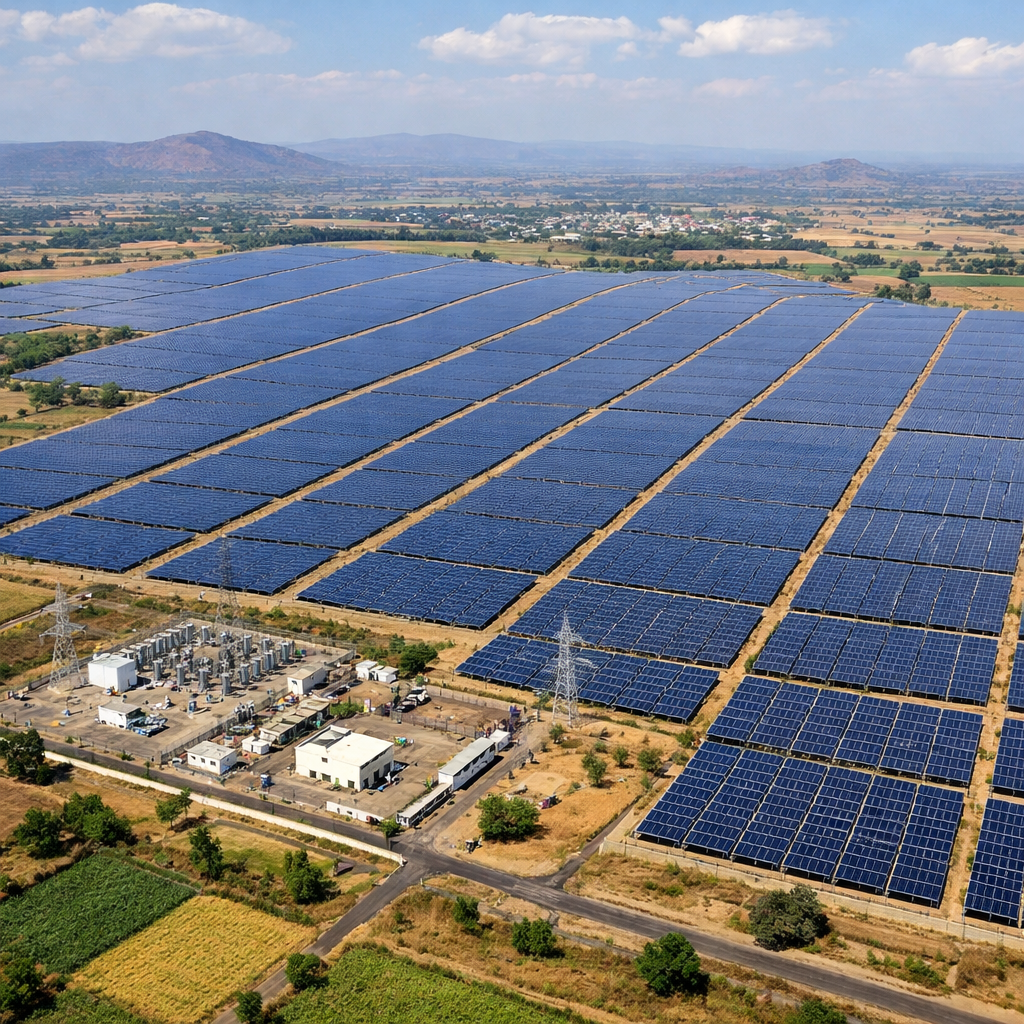
The successful acquisition of the GW scaled level project in the Middle East market marks a critical step forward in LEAPTING’s advancement toward intelligent infrastructure construction for large-scale PV power stations. In the context of constructing PV power stations covering tens of thousands of square meters, traditional manual installation methods often face significant challenges, including tight construction schedules, high labor costs, safety risks associated with high-altitude operations, and inconsistent installation quality. These issues directly impact the overall efficiency, precision, and cost-effectiveness of large-scale power station development.
Based on the deployment of the MMR Robot and previous project implementations, the system demonstrates strong adaptability across diverse terrains with autonomous navigation capabilities and achieves millimeter-level installation accuracy. Its module installation efficiency is 3–5 times higher than manual operations, while ensuring zero module damage and zero operational accidents. Furthermore, it can reduce the overall project timeline by up to 25%. This technical solution precisely addresses client needs, effectively resolving the aforementioned industry challenges and delivering an efficient, safe, and scalable automated solution.

Deepening Intelligent Construction, Empowering a Sustainable Future
As a pioneer in intelligent infrastructure for PV energy, LEAPTING remains committed to advancing the deep integration of intelligent robotic technology with industry site applications. The successful execution of this GW-level project serves as a strong validation of the maturity and reliability of LEAPTING’s products, further highlighting its pivotal role in driving cost reduction, efficiency enhancement, and high-quality development across the PV and broader clean energy sectors.
“The first batch of 25 MMR robots has completed customized container loading and has been dispatched to the project site. Upon arrival, the MMR Robots will be able to exit the containers and immediately commence module installation operations, signaling the official commencement of large-scale commercial application for GW-level projects,” said Vincent, Overseas Sales Director of LEAPTING. “We are confident that large-scale, intelligent PV robot construction will become the mainstream trend in future power station development. LEAPTING will continue to invest in R&D, expand application scenarios, refine solution offerings, and strive to build a more efficient and secure intelligent construction ecosystem, contributing intelligent innovation toward achieving the ‘dual carbon’ goals.”
Subscribe to get the latest posts sent to your email.