By
18 hours ago 3 min read
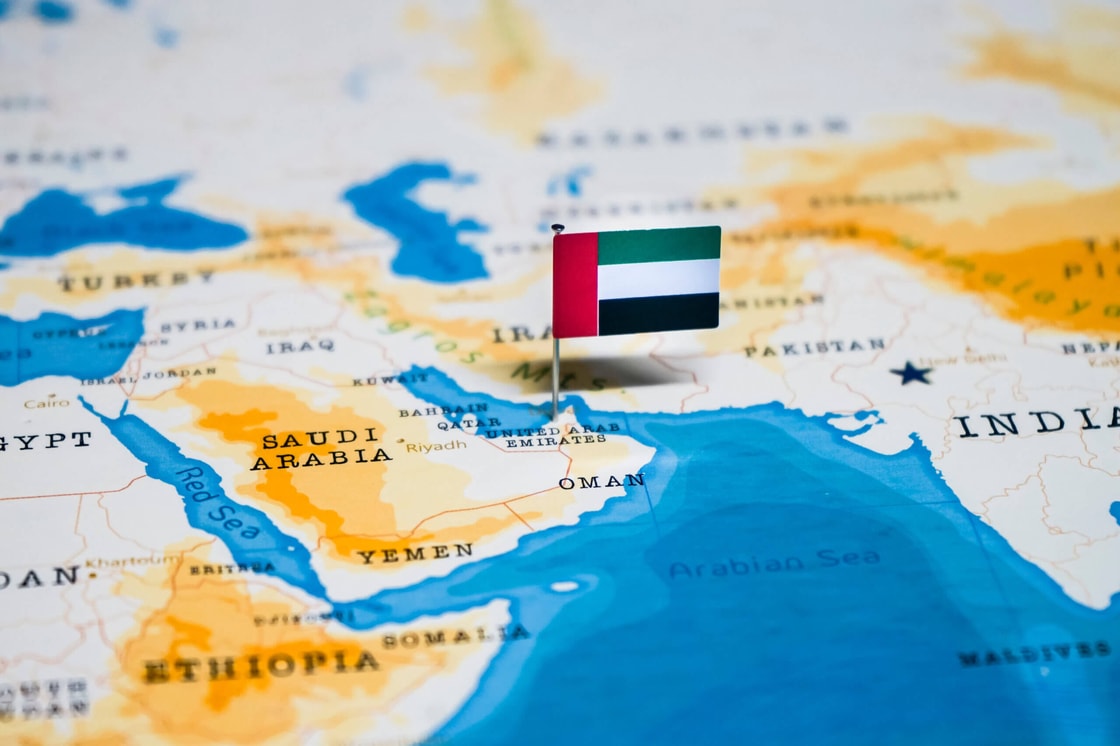
The UAE has announced it will leave the Opec and Opec+ group of major oil producing nations on 1 May after nearly 60 years of membership.
The move, while primarily an oil sector event, will have indirect but meaningful implications for the LNG sector where prices are partially correlated with crude oil markets, particularly in regions relying on oil-indexed long-term contracts, such as Asia.
The UAE’s departure could exert downward pressure on oil-linked LNG contracts, increasing flexibility for the UAE to expand its LNG exports, possibly intensifying competition, and may create market volatility in LNG linked to cross-commodity prices movements and geopolitical signaling.
The UAE’s strategic autonomy and production flexibility could also reshape LNG pricing and supply strategies.
Its decision is unlikely to have an immediate impact on global energy supply but could lead to a longer-term boost in output. Abu Dhabi has often felt constrained by group quotas.
Opec was formed in 1960 by Iran, Iraq, Kuwait, Saudi Arabia and Venezuela to co-ordinate production and provide steady revenue for members. The cartel subsequently expanded, with the UAE, which produces around 2.9 million barrels a day, joining in 1967. Its departure will leave 10 members.
Ian Bremmer, President and Founder of Eurasia Group, the global research and advisory firm, said, “Opec now remains as a Saudi-dominated entity … so it’s a pretty significant change. [The change] probably would have come eventually, but accelerated and precipitated by the damage that has been caused by the war in Iran for the region, and by the very different strategies and reactions to that by countries across the Gulf. So I do see this as a very significant move.”
Richard Tullis, Natural Resources Analyst at Water Tower Research, said the UAE’s decision to leave Opec next month allows the country to pursue its goal of significantly expanding its oil production without Opec interference.
“The UAE had the capacity to produce an estimated 4 to 4.25 million barrels per day in 2025 but was limited to producing about 3.5 million barrels per day for much of the year due to Opec+ production quotas,” he said.
“It has expressed a goal of reaching 5 million barrels per day production by 2027 and could potentially produce its low unit cost oil at an even higher level by the end of the decade if demand warrants it. For energy investors, the UAE’s move likely helps provide some oil price relief in the medium-term, given the UAE’s goal to significantly increase oil production over the next couple of years and assuming the ability to consistently export its oil.”
Middle East LNG supply shock ‘matched Russia’
Meanwhile the Middle East LNG supply shock matched the scale of Russia’s 2022 curtailment into Europe, according to new data from analysts Wood Mackenzie.
The conflict disrupted 80 million tonnes per annum of Gulf LNG exports, yet power markets absorbed the shock through fuel diversification.
Three factors have contained prices: warmer weather left European storage at 28% capacity at end-March; project start-ups added 40 Mtpa of new LNG supply (on an annualised basis) since the beginning of 2026; and China’s LNG demand plummeted as the country turned to alternatives.
Month-ahead gas prices have so far peaked at just US$19 mmbtu in April 2026, compared to nearly US$70 mmbtu in September 2022. Wholesale power prices across Europe’s five major markets averaged just over €90 MWh in March 2026, largely unchanged from March 2025 and well below the €280 MWh recorded during the first months of the Ukraine crisis.
Spain recorded the lowest wholesale power price at €42 MWh in March, supported by renewables penetration exceeding 60%. Rising solar availability enabled Germany to cut coal and gas generation from 46% in February to 39% in March.