A project led by the Global Centre for Maritime Decarbonisation (GCMD) has secured recognition under two regulatory frameworks that could help accelerate the adoption of onboard carbon capture and storage (OCCS).
Project Captured has secured recognition under the EU Emissions Trading System (EU ETS) and in-principle backing from the International Maritime Organisation (IMO) for carbon mineralisation as a permanent carbon dioxide (CO2) storage pathway.
The EU ETS recognition means verified volumes of CO2 captured onboard ships can be deducted from a vessel’s reported emissions, reducing the number of EU Allowances operators must surrender, provided the CO2 is permanently bound in eligible products.
“The acceptance of the EU ETS deduction gives captured CO2 a compliance value,” said Professor Lynn Loo, CEO of GCMD. “At the same time, IMO’s in-principle support for carbon mineralisation will help clarify how captured CO2 can be treated after it leaves the vessel.”
The twin regulatory decisions strengthen the commercial case for onboard carbon capture by providing greater certainty over both the value of captured CO2 and how it can be permanently stored once offloaded.
The announcements follow Project Captured’s completion of what GCMD describes as the world’s first end-to-end demonstration of an onboard carbon capture value chain.
The pilot saw captured CO2 safely transferred between ships before being transported ashore and converted into stable industrial materials through mineralisation.
The project demonstrated that captured CO2 can be safely transported and converted into construction materials while maintaining CO2 purity above 99.95% at all custody-transfer points.

©GCMD
“Project Captured has demonstrated that captured CO2 can be transferred from ship to ship and converted into construction materials,” said Dr Su Yi, General Manager of SMDERI-QET, one of 11 partners involved in the pilot.
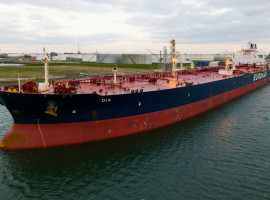
The project began with the MV Ever Top leaving Port Klang, Malaysia before transferring its load of captured CO2 to MV De jin 26 at Yangshan Port in China.
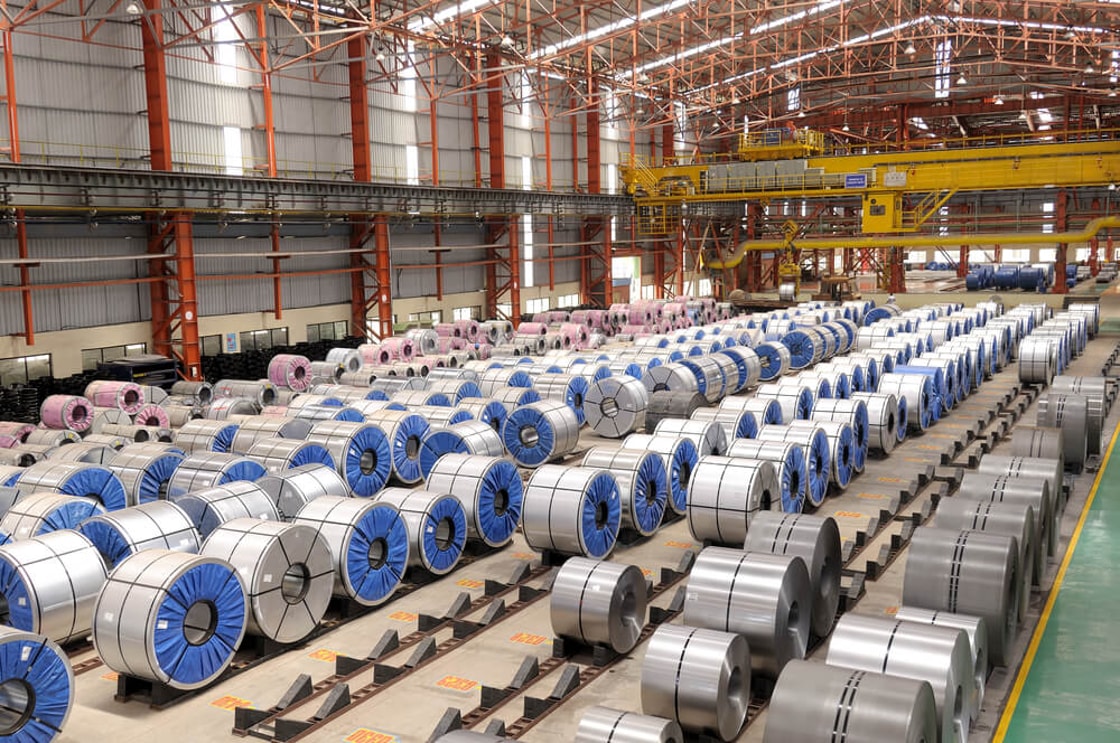
It was then transported and offloaded to a tank truck before being transported overland to Inner Mongolia. The CO2 was used at that point to produce low-carbon calcium carbonate in the Mongolian city of Baotou.
The demonstration also underpinned a proposal submitted to the IMO’s Marine Environment Protection Committee (MEPC 84), which gave in-principle support to recognising carbon mineralisation as a form of permanent CO2 storage.
“The IMO’s support in principle … means that our pathway is repeatable, offering a feasible blueprint for future emissions reductions in the shipping industry.”
GCMD said a life-cycle assessment of the demonstration found the initial project achieved a 7.9% net greenhouse gas reduction with a 10.7% onboard CO2 capture rate. It added that optimising the process could increase overall emissions reductions to 17.8%.
While onboard carbon capture remains at an early stage of commercial deployment, the regulatory milestones provide a clearer pathway for integrating captured CO2 into emerging maritime carbon value chains, complementing other decarbonisation measures such as low-carbon fuels and vessel efficiency improvements.
Various advances have been made in OCCS throughout 2026. In January, classification society DNV published a for measuring and verifying performance of OCCS systems on ships.
This was followed by Japan-based classification society ClassNK issuing for two vessel concepts and advancing its guidance on onboard carbon capture.