By
4 min ago 3 min read
Researchers at the Korea Advanced Institute of Science and Technology (KAIST) and the Massachusetts Institute of Technology (MIT) have developed an electrochemical process that converts carbon dioxide dissolved in seawater into stable minerals.
The technology, known as electrochemical dissolved ocean carbon removal (e-DOC), converts dissolved inorganic carbon in seawater into calcium carbonate. This effectively locks the carbon into a solid mineral form that is prevented from returning to the atmosphere.
The researchers say the approach could strengthen the ocean’s natural role as a carbon sink. Oceans already absorb around 30% of manmade CO2 emissions, and removing dissolved carbon from seawater allows them to take up additional CO2 from the atmosphere.
Published in Advanced Energy Materials, the study was led by Professor Dong-Yeun Koh of KAIST’s Department of Chemical and Biomolecular Engineering in collaboration with Professor T. Alan Hatton’s research group at MIT.
A key barrier to electrochemical ocean carbon removal has been mineral scaling, where calcium carbonate deposits accumulate on electrode surfaces, reducing efficiency and increasing maintenance requirements.
To overcome this, the team developed a hollow fiber electrode assembly, comprising bundles of hollow stainless-steel electrodes that encourage minerals to form away from the electrode surface.
Hydrogen bubbles generated during electrolysis simultaneously help keep the electrodes clean, reducing scaling and enabling continuous operation.
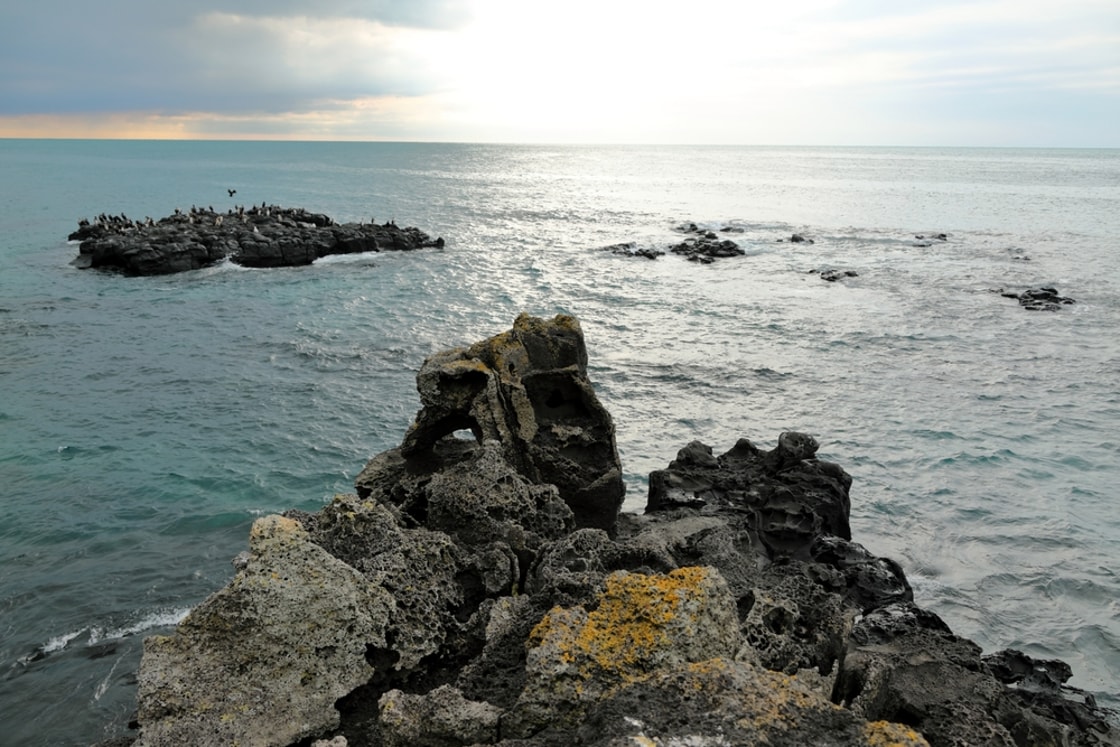
Testing with seawater from Jeju Island, South Korea, demonstrated stable operation for more than 120 hours, with the system removing between 80% and 90% of dissolved inorganic carbon while reducing electricity consumption by up to 54% compared with conventional electrochemical approaches.
Alongside carbon removal, the process also generates high-purity hydrogen and magnesium hydroxide, a material used in a range of industrial and environmental applications.
The modular design is intended for deployment on ships, offshore facilities and other marine infrastructure, with the researchers suggesting it could be scaled into larger marine carbon removal systems.
Professor Koh said the technology permanently stores carbon by converting dissolved CO2 into stable minerals while enabling the ocean to continue absorbing additional atmospheric carbon dioxide.
“We expect this work to accelerate the commercialisation of marine carbon removal technologies and contribute to achieving carbon neutrality,” he said.
The development adds to growing momentum behind marine carbon removal technologies. Earlier this week, gasworld reported on plans by Hitachi, MOL and Japan Airlines to launch using Captura’s seawater CO2 extraction technology.
Unlike DOC, which captures dissolved CO2 for storage or utilisation, the KAIST-MIT system permanently mineralises the carbon into calcium carbonate,.