Nearly 50 Qatar LNG Tankers Sit Idle Across Asia

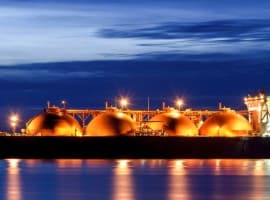
Almost 50 liquefied natural gas carriers used by Qatar to export the superchilled fuel are idled in Asia, Bloomberg has reported, citing data from Kpler. All the vessels are empty, the data shows.

The LNG carriers are accumulated in a handful of locations, including West India, Sri Lanka, close to the Strait of Malacca between Indonesia and Malaysia, and offshore Singapore.

LNG carriers typically have a capacity of 170,000 cu m of natural gas, which translates into 72,000 tons of liquefied gas. The Bloomberg report references “more than four dozen” vessels being idled across Asia, meaning a loss of at least 3.456 million tons of LNG in carrier capacity.

Bloomberg notes that globally, there are about 800 LNG carriers in operation. This number is considered insufficient for projected LNG demand, analysts warned before the latest Middle Eastern war. With Qatar’s LNG production suspended as a result of the war, tanker supply should be a less major issue.

Amid the disruption in global LNG trade, China has been reselling record amounts of liquefied gas to other Asian countries, taking advantage of its solid stockpiles and lukewarm demand. In March alone, China resold up to 10 cargoes of LNG—a record-high for any month ever, according to data from energy analytics firms Vortexa, Kpler, and ICIS, as cited by Reuters last week.

Yet the events in the Middle East have started to sap demand for liquefied gas across Asia, as supply tightness pushes prices higher, helped by competition from Europe. Imports of liquefied natural gas into Asian countries fell last month by the sharpest rate since 2020, when pandemic lockdowns decimated energy demand. The total for the month stood at 20.6 million tons, according to Bloomberg, which represented an annual drop of 8.6%. It was the sharpest demand drop since December 2020.

By Irina Slav for Oilprice.com

More Top Reads From Oilprice.com


  • Related Posts

    China Rare Earth Firms Freeze U.S. Exports Weeks Before Xi-Trump Summit

    Despite having secured export licenses, some Chinese rare earth producers have stopped shipping these materials to the United States over fears of repercussions from China’s authorities, sources familiar with the…

    India Plans Mandatory Battery Storage at Solar and Wind Projects

    India’s authorities plan to introduce, from July 1, 2027 a regulation requiring developers of solar and wind energy projects to have battery storage installed at the sites in a bid…

    Have You Seen?

    China Rare Earth Firms Freeze U.S. Exports Weeks Before Xi-Trump Summit

    • September 4, 2026
    China Rare Earth Firms Freeze U.S. Exports Weeks Before Xi-Trump Summit

    Europe Gas Prices Head for Fourth Straight Weekly Gain

    • September 4, 2026
    Europe Gas Prices Head for Fourth Straight Weekly Gain

    Iran Says It’s Found Ways to Dodge U.S. Oil Blockade

    • September 4, 2026
    Iran Says It’s Found Ways to Dodge U.S. Oil Blockade

    India Plans Mandatory Battery Storage at Solar and Wind Projects

    • September 4, 2026
    India Plans Mandatory Battery Storage at Solar and Wind Projects

    UK must bolster food supply chain resilience

    • September 4, 2026
    UK must bolster food supply chain resilience

    Carbon capture and conversion technology wins Australian science award

    • September 4, 2026
    Carbon capture and conversion technology wins Australian science award

    Nano Nuclear Energy and Howden work on helium circulator nuclear design

    • September 4, 2026
    Nano Nuclear Energy and Howden work on helium circulator nuclear design

    UK Poised to Approve Jackdaw Gas Field as Energy Costs Soar

    • September 4, 2026
    UK Poised to Approve Jackdaw Gas Field as Energy Costs Soar

    Argentina Targets Falklands Oil Drillers With Tougher Sanctions

    • September 4, 2026
    Argentina Targets Falklands Oil Drillers With Tougher Sanctions

    U.S. Diesel Prices Hit All-Time High as Global Fuel Squeeze Deepens

    • September 4, 2026
    U.S. Diesel Prices Hit All-Time High as Global Fuel Squeeze Deepens