By
24 min ago 3 min read
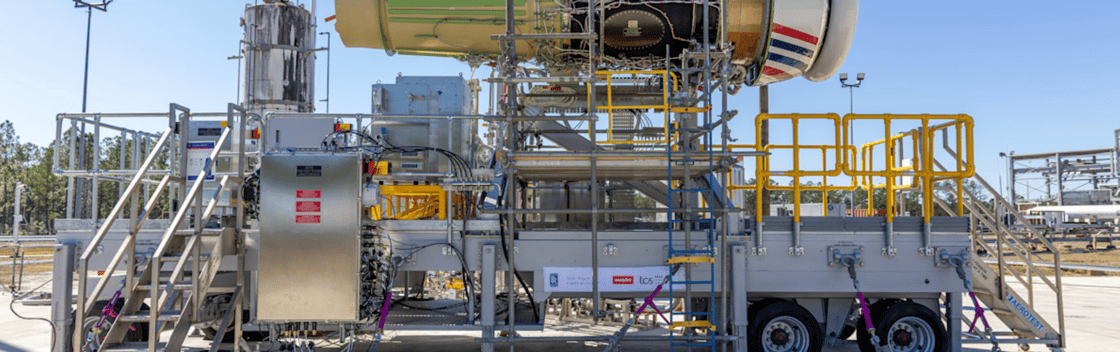
EasyJet and Rolls-Royce have tested a 100% hydrogen-fuelled aircraft engine suitable for single-aisle commercial jets, through a fully simulated flight cycle.
An adapted Rolls-Royce Pearl 15 engine operated at power outputs required during all stages of flight – start-up, cruise, landing, and take-off using 100% hydrogen fuel.
Carried out at NASA’s in Mississippi, the demonstration builds on Rolls-Royce’s 2023 test of an annular combustor operating on 100% hydrogen and the pair’s November 2022 ‘ hydrogen run of a modern aero engine.
Rolls-Royce’s Chief Engineer for its Hydrogen Demonstrator Programme, Adam Newman, said the trial gave the duo the “clearest understanding” of how hydrogen behaves in modern aero gas turbines.
He said the learnings would be applied to the aero-engine maker’s UltraFan programme, where it is demonstrating a 140-inch fan engine, which could be made available for aircraft service by 2030.
Hydrogen combustion differs from conventional jet fuel in that it burns faster and has a wider flammability range. It also introduces challenges around flame stability, nitrogen oxide formation, and fuel handling due to its low volumetric energy density.
In 2022, Rolls-Royce and EasyJet established H2Zero, an initiative aimed at accelerating the development of hydrogen engine technology. Both are members of the Hydrogen in Aviation Alliance, a UK lobby group targeted at green flight funding.
While hydrogen engines are viewed as a promising long-term pathway for decarbonising commercial passenger aviation, with major firms including Airbus investing in propulsion research, widespread adoption likely remains in the distant future.
Hurdles around aircraft design to accommodate the low energy density fuel, airport infrastructure, fuel production, and regulatory approval present potential bottlenecks.
Airlines, governments, and aviation bodies have so far remained primarily focused on sustainable aviation fuel (SAF).
Regionally, SAFs are mandated for adoption in Europe under ReFuelEU Aviation regulation, which requires 10% of fuel to come from SAF by 2030, with a target of up to 70% by 2050.
Gain access to the insights, data, and analysis trusted by hydrogen professionals worldwide.
With a H2 View subscription, you get:
- Unlimited access to 15,000+ articles
- Monthly digital magazine + H2 Review
- Exclusive interviews, webinars and reports
- Expert analysis shaping the hydrogen conversation