RWE Commissions 13.9 MW Solar Farm at Hambach Mine in Niederzier

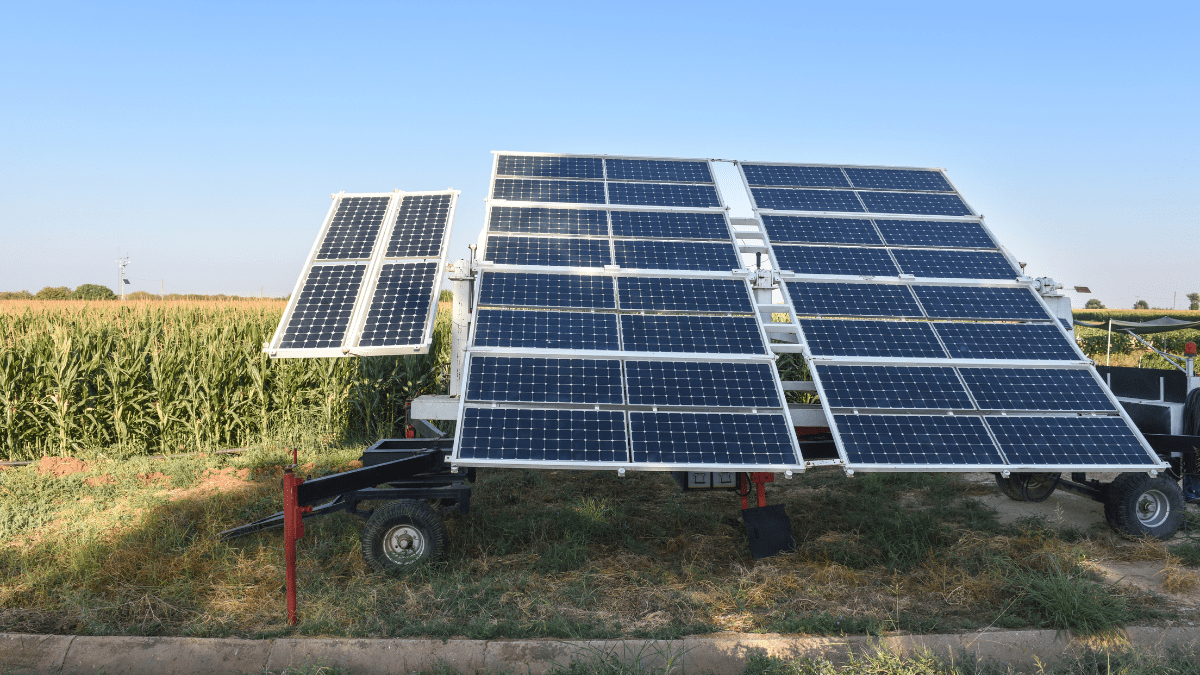
Representational image. Credit: Canva

RWE has commissioned a new photovoltaic plant with a capacity of 13.9 MWp (12 MWac) near the municipality of Niederzier in North Rhine-Westphalia, Germany. Covering around 12 hectares on the western edge of the Hambach opencast mine, the facility comprises more than 22,000 solar panels and will generate enough climate-friendly electricity to supply approximately 4,500 households annually.

Construction of the plant was completed in less than five months. For the first time, RWE deployed an AI-powered monitoring tool during the build phase. By comparing drone images with construction plans, the tool enabled fast and efficient progress tracking and early identification of deviations.

The new installation joins two large photovoltaic plants already operating at the Hambach mine, one of which includes an integrated battery storage system. Together, these facilities provide 47.2 MWp of capacity, supplying the equivalent of around 14,500 households. The 8 MWh battery system ensures a better alignment of power feed-in with demand. Katja Wünschel, CEO RWE Renewables Europe & Australia, said, “Thanks to the tremendous dedication of our team, we were able to commission the new plant near Niederzier ahead of schedule. This is already the third solar park that we have successfully implemented at the Hambach opencast mine. It is important to us to get the people in the region on board – for example by involving the neighbouring municipalities. Our collaboration with the NEULAND HAMBACH organisation is a case in point. The region benefits in two ways: not only do solar plants supply green electricity, but the local communities receive some of the revenue the solar parks generate.”


Subscribe to get the latest posts sent to your email.
 

  • Related Posts

    JinkoSolar Secures 53MW of Tiger Neo 3.0 Modules for a Ground Power Plant in Kazakhstan Powering Central Asia’s Green Energy Transition

    JinkoSolar has recently signed a 53MW module supply agreement with customers in Kazakhstan, with all projects to be equipped with Tiger Neo 3.0 high-efficiency modules. This includes 23MW in the…

    LONGi Academy Hosts Successful Energy Transformation Forum in Amman

    LONGi Academy Hosts Successful Energy Transformation Forum in Amman, Jordan [18 April 2026], through its LONGi Academy platform, successfully concluded the Energy Sector Transformation Challenge Forum, held at Applied Science…

    Have You Seen?

    INOX India sends first cryogenic tanks to Bahamas LNG facility

    • April 21, 2026
    INOX India sends first cryogenic tanks to Bahamas LNG facility

    US-JOINT launched Silicon Valley semiconductor R&D centre

    • April 21, 2026
    US-JOINT launched Silicon Valley semiconductor R&D centre

    GasEntec signs contracts for Dakar LNG terminal

    • April 21, 2026
    GasEntec signs contracts for Dakar LNG terminal

    UK government grants Riversimple £1.7m to deliver lightweight hydrogen car

    • April 21, 2026
    UK government grants Riversimple £1.7m to deliver lightweight hydrogen car

    Gas Prices Dip Below $4 Per Gallon While Oil Prices Reverse Downtrend

    • April 21, 2026
    Gas Prices Dip Below $4 Per Gallon While Oil Prices Reverse Downtrend

    Air Canada Scraps Key U.S. Routes Amid High Fuel Prices

    • April 21, 2026
    Air Canada Scraps Key U.S. Routes Amid High Fuel Prices

    UK to increase electricity levy and plans fixed price contracts for renewables

    • April 21, 2026
    UK to increase electricity levy and plans fixed price contracts for renewables

    UK to increase electricity levy and plans fixed price contracts for renewables

    • April 21, 2026
    UK to increase electricity levy and plans fixed price contracts for renewables

    UK hydrogen-based synthetic gas start-up raises £25m

    • April 21, 2026
    UK hydrogen-based synthetic gas start-up raises £25m

    Analysis: Why helium’s structural constraints are exposed by geopolitical shocks

    • April 21, 2026
    Analysis: Why helium’s structural constraints are exposed by geopolitical shocks