

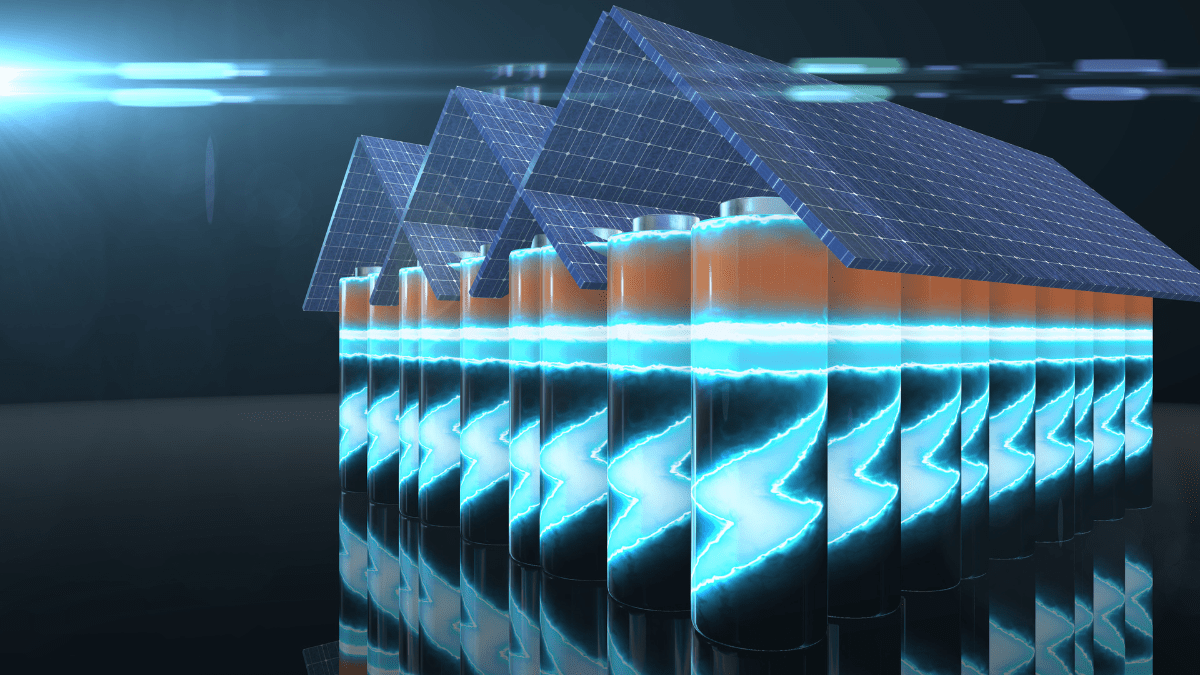
The Central Electricity Regulatory Commission (CERC) has issued its order in Petition No. 234/AT/2025 on October 1, 2025, regarding the adoption of a tariff for 2,000 MW Inter-State Transmission System (ISTS) connected Solar PV power projects along with 1,000 MW/4,000 MWh Energy Storage Systems (ESS). The petition was filed by Solar Energy Corporation of India Limited (SECI) under Section 63 of the Electricity Act, 2003, seeking approval of tariffs discovered through a competitive bidding process conducted as part of SECI-ISTS-XVII.
SECI issued the Request for Selection (RfS) on July 31, 2024, inviting bids for the 2,000 MW project. In response, 14 bidders submitted proposals totaling 4,820 MW capacity. After techno-commercial evaluation and opening of financial bids, 13 bidders were found eligible for the e-reverse auction conducted on December 9, 2024. Five companies emerged as successful bidders: NTPC Renewable Energy Limited (500 MW at ₹3.52/kWh), Sembcorp Green Infra Private Limited (150 MW at ₹3.52/kWh), Solarcraft Power India 8 Private Limited (150 MW at ₹3.52/kWh), Hero Solar Energy Private Limited (270 MW at ₹3.52/kWh), and Reliance NU Suntech Private Limited (930 MW at ₹3.53/kWh). Letters of Award (LoAs) were issued on December 16, 2024, confirming their allotments.
The process was carried out under the Ministry of Power’s guidelines dated June 9, 2023, for the procurement of firm and dispatchable renewable energy with ESS. The guidelines required bidders to provide Earnest Money Deposits (EMD), submit bank guarantees, and ensure installation of ESS equivalent to 0.5 MW/2 MWh per MW of solar capacity. For example, NTPC Renewable Energy Limited furnished an EMD of ₹81.20 crore. Successful bidders must also submit Performance Bank Guarantees (PBG) valued at ₹40.60 lakh per MW before signing Power Purchase Agreements (PPAs).
Subsequently, SECI executed back-to-back agreements with distribution companies. On March 13, 2025, Power Sale Agreements (PSAs) were signed with BSES Rajdhani Power Limited for 1,500 MW (including 750 MW/3000 MWh ESS) and with BSES Yamuna Power Limited for 500 MW (including 250 MW/1000 MWh ESS). This was followed by PPAs between SECI and successful bidders in April and May 2025.
CERC reviewed the entire bidding process and confirmed that it was conducted transparently in compliance with the prescribed guidelines. The commission formally adopted the tariffs ranging between ₹3.52/kWh and ₹3.53/kWh for the allotted capacities. SECI also sought approval for a trading margin of ₹0.07/kWh on the sale of power to distribution companies. However, CERC clarified that in cases where escrow arrangements or irrevocable letters of credit are not provided, the trading margin shall not exceed ₹0.02/kWh, in line with regulatory provisions.
The projects are expected to begin implementation in 2027-28, within 24 months from the signing of PPAs. With a contract duration of 25 years, these projects aim to supply firm and dispatchable renewable energy to discoms, thereby reducing reliance on conventional power sources. The order closes with the adoption of tariffs for the five winning developers and directs all parties to comply with payment security mechanisms and trading regulations.
Subscribe to get the latest posts sent to your email.





)