

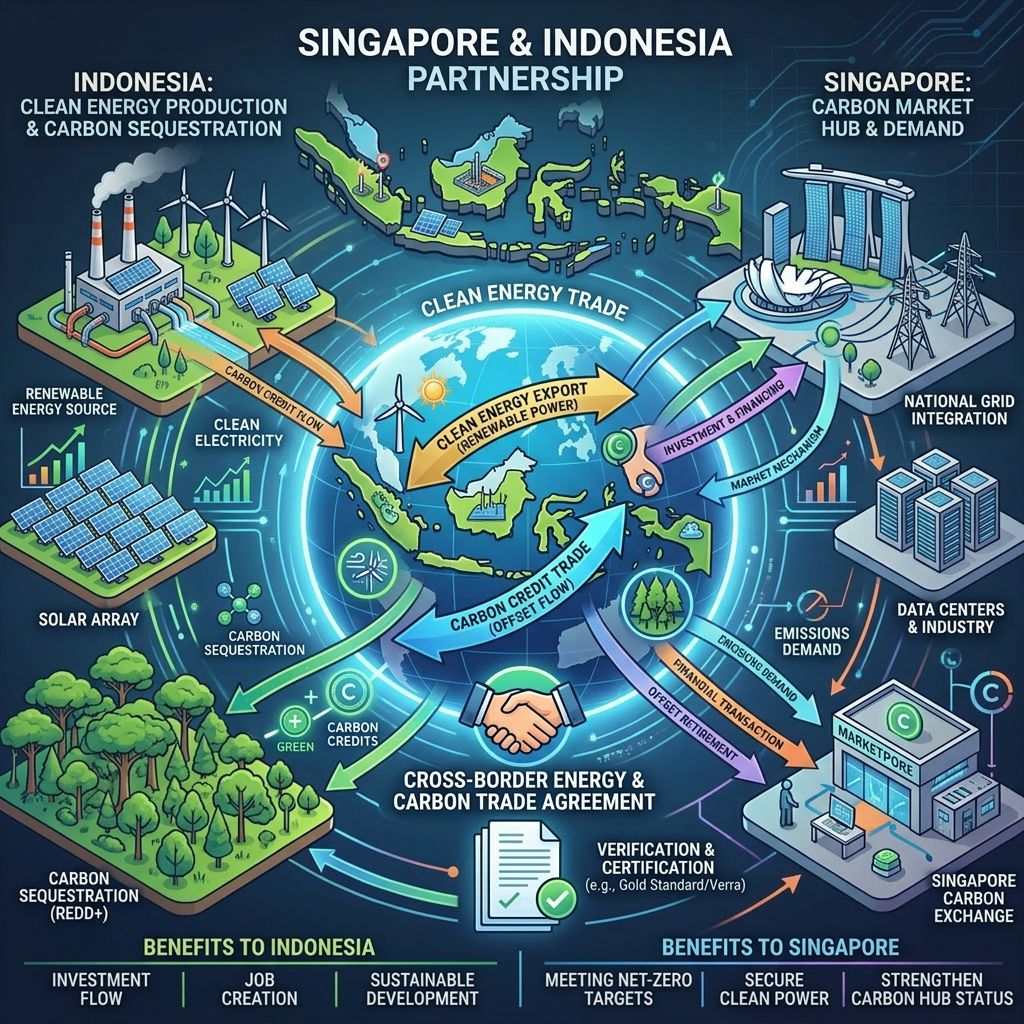
Singapore and Indonesia have agreed to deepen their bilateral partnership through new initiatives focused on carbon markets, clean energy cooperation, and cross-border trade during the second Singapore-Indonesia Leaders’ Retreat held in Jakarta. Singapore Prime Minister Lawrence Wong and Indonesian President Prabowo Subianto reaffirmed their commitment to strengthening economic and environmental collaboration while addressing regional and global challenges.
One of the key outcomes of the meeting was the signing of a memorandum of understanding on carbon credits under Article 6 of the Paris Agreement. The agreement aims to promote cooperation in carbon markets by enabling both countries to exchange technical knowledge, share information, and identify high-quality carbon credit projects. The partnership is expected to support climate action efforts while encouraging the development of credible carbon market mechanisms.
To improve business cooperation, the Singapore Business Federation and the Indonesian Chamber of Commerce and Industry also signed an agreement to support small and medium-sized enterprises (SMEs). The initiative will focus on expanding digital resources, strengthening business capabilities, and making cross-border trade easier and more efficient. The agreement is expected to help businesses from both countries explore new commercial opportunities and improve regional trade connectivity.
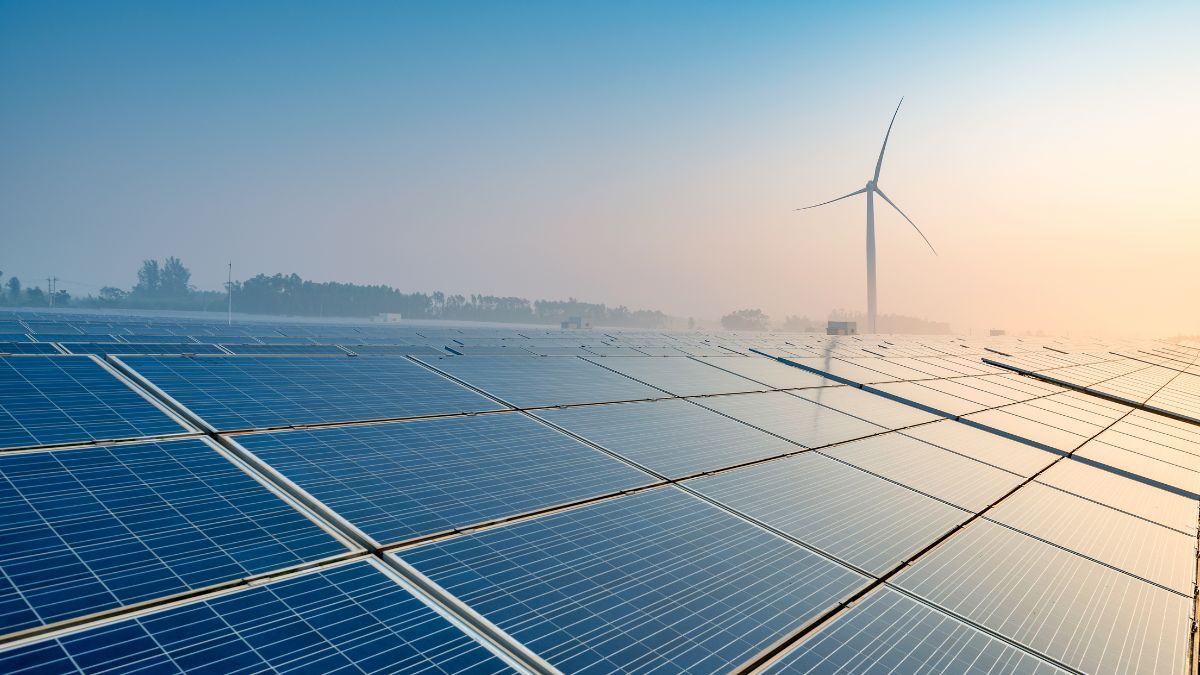
The leaders also advanced cooperation in the clean energy sector. Indonesia’s sovereign wealth fund, Danantara, signed an agreement with Singapore-based companies including Sembcorp Industries, Keppel Electric, and Singapore Energy Interconnections to develop a roadmap for cross-border electricity trading. The collaboration will explore the supply of low-carbon electricity from Indonesia to Singapore. Officials are targeting the development of at least 3.4 gigawatts of commercial clean energy projects by 2025.
Prime Minister Wong described the initiative as beneficial for both countries, stating that it would not only strengthen Singapore’s access to clean energy but also attract investment and create employment opportunities in Indonesia’s renewable energy sector. He added that the project could become an important step toward building a wider ASEAN regional power grid, improving energy security and supporting the region’s transition to cleaner energy.
The two leaders also discussed the impact of global economic uncertainty and rising geopolitical tensions, particularly in the Middle East. They stressed the importance of strengthening supply chain resilience, maintaining open trade routes, and accelerating regional economic agreements within ASEAN. As Singapore and Indonesia prepare to mark 60 years of diplomatic relations, both leaders expressed confidence that closer cooperation would improve regional competitiveness and support long-term sustainable economic growth.
Subscribe to get the latest posts sent to your email.




)