
In utility-scale solar plants, inverter selection is not simply about choosing equipment with the highest conversion efficiency. The inverter architecture determines how DC power is collected, where it is converted into AC, how precisely generation can be managed, and how equipment failures affect plant availability. Two approaches dominate large-scale projects: central and string inverters.
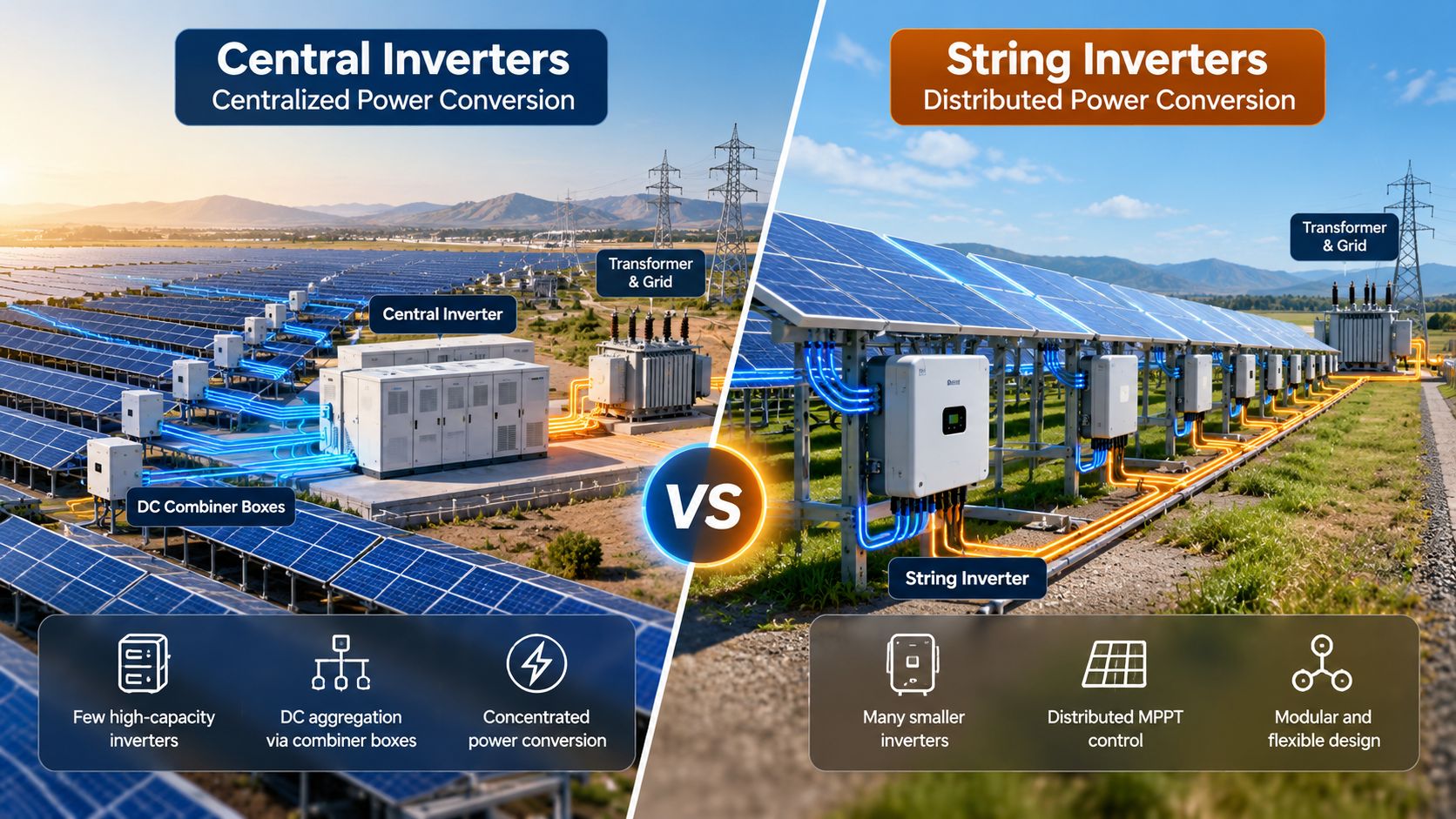
A central inverter collects DC power from many PV strings, typically through combiner boxes, and converts it into AC using a relatively small number of high-capacity inverter units. This concentrates power conversion into larger blocks within the solar plant.
A string inverter uses a distributed approach. Smaller groups of PV strings connect to multiple inverters positioned across the solar field. AC output from these units is then aggregated and connected to the plant’s electrical system.
This fundamental difference—centralized versus distributed conversion—influences several aspects of plant design and operation.
Maximum Power Point Tracking (MPPT) continuously adjusts operating conditions to extract optimum available power from PV strings.
Central inverters generally manage larger groups of strings through fewer MPPT channels. String inverters offer more distributed MPPT control, allowing different sections of the array to respond more independently to variations in irradiance, terrain, orientation or module performance.
A central inverter typically represents a larger power block. If it goes offline, a comparatively larger portion of plant capacity may temporarily become unavailable.
With string architecture, capacity is distributed among many units. Failure of one inverter therefore usually affects a smaller portion of generation, while other units continue operating.
Central systems rely heavily on DC collection infrastructure, routing multiple strings through combiner boxes towards centralized inverter stations.
String systems place conversion closer to the PV arrays, reducing centralized DC aggregation and shifting more of the collection network to the AC side. However, they also introduce a larger number of inverter units distributed across the site, which must be considered in maintenance planning.
Central inverters can suit large, relatively uniform solar sites where centralized equipment and large power blocks align with the project design. String inverters can be advantageous on irregular terrain or sites with varying operating conditions, where modularity and granular MPPT control are valuable.
Neither architecture is universally better. Developers and EPCs must evaluate site conditions, electrical design, energy yield, redundancy, accessibility, O&M requirements and lifecycle economics. Ultimately, inverter architecture is a plant-level engineering decision—not simply a comparison of inverter specifications.
Subscribe to get the latest posts sent to your email.