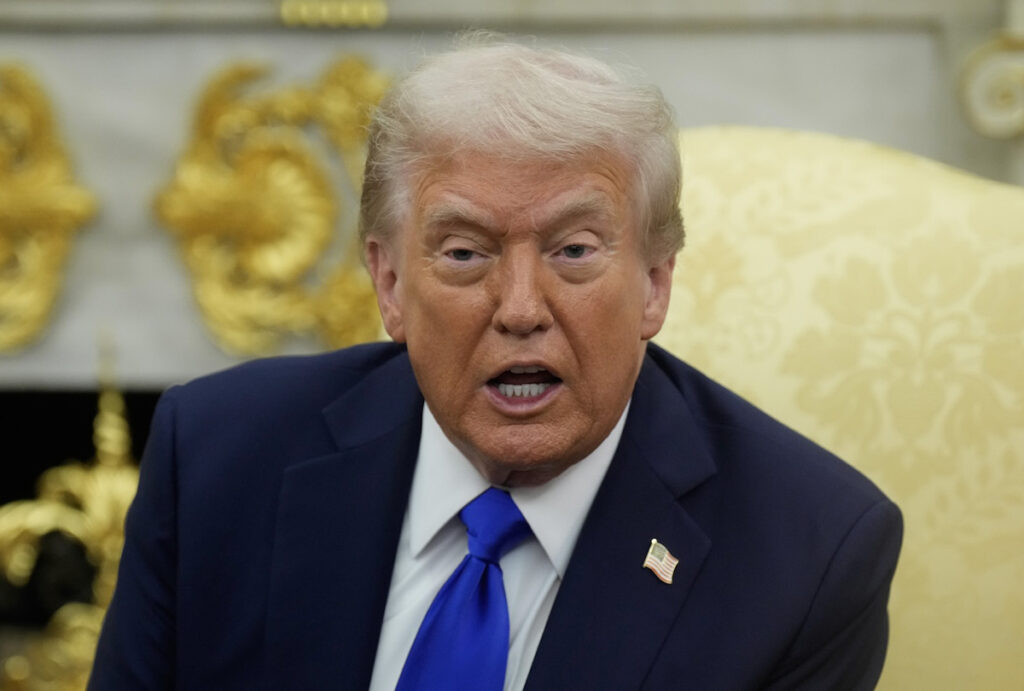
Never bet against Donald Trump? The oil market appears to have made a risky wager from day one of the Iran war: The U.S. president would not allow the conflict to spiral into a full-blown economic crisis. So traders wouldn’t price one in, no matter what was happening with physical supplies.
It was a risky call, but it proved correct.
Oil prices certainly swung during the three-and-a-half-month war, as Iran’s key weapon was the unprecedented closure of the Strait of Hormuz. Tehran was able to choke off a fifth of the world’s oil and liquefied natural gas supplies overnight, gaining significant leverage.
Get the Latest US Focused Energy News Delivered to You! It’s FREE:
Benchmark Brent crude surged from around $70 a barrel before the war to a peak of $118 in late March, before sliding back to $83 after Washington and Tehran announced a preliminary deal on Sunday.
Given that the supply disruption was one of the largest in modern history, these moves were remarkably restrained.
Consider that oil prices surged to $123 a barrel in the aftermath of Russia’s full-scale invasion of Ukraine in February 2022. This reflected market fears about the partial disruption of Moscow’s oil exports, which had totalled around 7.5 million barrels per day (bpd) the previous year. That is around half the effective volume lost during the Hormuz blockade. For decades, a Hormuz shutdown has been treated as the ultimate doomsday scenario for oil markets. Yet when it finally happened, prices jumped, but they didn’t spiral.
BEND, DON’T BREAK
On the surface, the explanation is straightforward: the physical market did its job. The global energy system displayed extraordinary flexibility and resilience. Governments and companies released hundreds of millions of barrels from commercial and strategic stockpiles. Luckily for them, production had been running hot heading into the conflict, with inventories rising quickly, which helped cushion the blow.
Demand also adjusted. Once the war broke out, Chinese imports weakened sharply, and across much of Asia, governments imposed consumption curbs to dampen energy use. That helped prevent a deeper economic shock.
The system bent, but it didn’t break.
But that is only half the story, and arguably not the most important half.
TRUMP PUT
Look more closely, and the market’s response to the drawdown in global inventories tells a different tale.
Stocks were depleted at an unprecedented pace during the war, falling at an average rate of 5.3 million bpd between March and May, according to the U.S. Energy Information Administration. They were nearing dangerously low levels just as the northern hemisphere was entering peak summer demand.
That should have been a flashing red warning sign. Instead, it appeared to reinforce confidence that a deal was near.
What explains this?
The implicit bet was clear: Trump would not let the situation deteriorate to a point where U.S. gasoline prices would surge to unmanageable levels and risk reigniting broader inflation, especially with midterm elections looming. Put simply, investors believed he would blink before the market cracked.
So the lower inventories fell, the closer a deal seemed.
This pattern should be familiar.
During Trump’s second term, markets have repeatedly learned to discount the most extreme outcomes implied by his rhetoric and initial policy moves, whether sky-high tariffs announced on “Liberation Day,” attacks on Federal Reserve independence, or threats to take over Greenland.
His most aggressive moves have invariably been followed by retreats once financial markets began to wobble.
The so-called “Trump put” is no longer just about equities, however. During the Iran war, it shaped commodity markets as well.
Markets weren’t ignoring the risks. They were pricing in Trump’s limits.
YOU CAN ONLY GO SO FAR
But the oil market’s “Trump trade” has boundaries.
Unlike equities, which can be buoyed by sentiment for extended periods, commodity markets are ultimately anchored in physical reality. And reality was catching up with the president – and energy traders.
Despite the market’s remarkably effective response to the Hormuz shock, the loss of around 1.4 billion barrels of supply since the start of the war still punched a vast hole in global inventories. That gap has not disappeared.
Yet the deal announcement has dramatically reduced the risk of a massive spike in oil prices – a warning that was sounded only two weeks ago.
The challenge now is that supply and demand are unlikely to recover in step, pointing to a period of volatility.
On the one hand, demand could spike.
Refiners, traders and governments that drained inventories during the crisis will have to refill them. That will create a new wave of demand that could tighten markets as summer demand peaks and supply buffers remain thin.
The strain is already visible in the United States. After pushing exports to record levels during the crisis, U.S. crude inventories have fallen to their lowest since 2004, while gasoline stocks are at their lowest since 2014.
On the other hand, supply could recover faster than many anticipate as revenue-starved Gulf producers scramble to regain market share. This could ultimately lead to a bigger price drop than traders are currently pricing in.
TRADING THE TRUMP
Throughout the war, Trump’s jawboning of oil markets was effective, repeatedly boosting investor expectations for a quick resolution even as conditions on the ground deteriorated.
The U.S.-Iran deal announced on Sunday was vague and offered limited gains for Washington. But it arrived just as the market was running out of room. Its timing was probably not a coincidence.
Investors understood that Trump’s tolerance for market pain had limits, and those limits mattered as much as pipelines, tankers and storage tanks.
They bet on it. This time, they were right.
(The opinions expressed here are those of Ron Bousso, a columnist for Reuters.)
Enjoying this column? Check out Reuters Open Interest (ROI), your essential new source for global financial commentary. Follow ROI on LinkedIn, and X. And listen to the Morning Bid daily podcast on Apple, Spotify, or the Reuters app. Subscribe to hear Reuters journalists discuss the biggest news in markets and finance seven days a week.
(Ron Bousso; Editing by Marguerita Choy and Anna Szymanski)
Share This:
More News Articles