The US Nuclear Regulatory Commission (NRC) accepted Disa’s application for a licence to use its technology to remediate abandoned mine waste at inactive mine sites in April, when the regulator set a schedule for a detailed technical review and developed and deployed a clear, first-of-its-kind regulatory framework which saw the licensing approval process completed in six months – much quicker than the 18-24 months it might have taken previously.
Disa’s patented High-Pressure Slurry Ablation (HPSA) technology is a mechanical process leveraging collisions between particles. It exploits the difference in Mohs hardness – a scale for measuring the relative hardness of minerals – between a base mineral and target mineral to selectively liberate the target mineral. The process can be used to upgrade critical minerals from both mined ore and legacy waste.
There are more than 15,000 sites associated with abandoned uranium mine waste – or AUM waste – waste across the western USA, largely from Cold War-era mining activities. Many of these sites are located on or near tribal lands. But options to safely treat or contain the contaminated material have up to now been limited and costly, according to Disa.
High-Pressure Slurry Ablation technology offers the first scalable method to remediate this waste safely and economically, the company said, separating and cleaning the material at the source, and making it possible to recycle uranium while dramatically reducing the volume of material requiring long-term disposal.
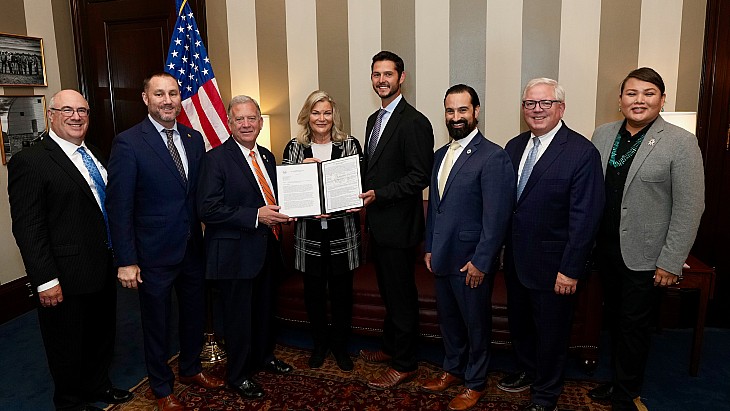
The NRC licence allows Disa to deploy its High-Pressure Slurry Ablation systems under federal oversight to treat abandoned uranium mine waste across multiple states. It builds on years of collaboration among federal and tribal partners, including the Navajo Nation Environmental Protection Agency (NNEPA). Disa also said it had received strong support and engagement throughout the licensing process from a diverse coalition of environmental, nuclear energy, and community stakeholders, including the Navajo Nation and other tribal leaders, ClearPath Action, Good Energy Collective, Third Way, Nuclear Innovation Alliance, Breakthrough Institute, Native Nuclear (formerly the Tribal Consent-Based Coalition), Generation Atomic, academic leaders from several US universities, and numerous bipartisan Members of Congress from both chambers.
Disa CEO, president, and co-founder Greyson Buckingham expressed his gratitude to key stakeholders including the NRC’s Chairman and Commissioners, the senators of Arizona and Wyoming, and Navajo Nation leadership, for their support, saying the licence is “a turning point” in tackling legacy uranium contamination. “For decades, AUM sites have been viewed as a burden too complex and costly to clean up. Today, we have a clear, regulated pathway to do it faster, safer, and at lower cost – while recycling valuable resources that support our nation’s energy future,” he said.
“The Navajo Nation is proud to help with this critical breakthrough,” said Buu Nygren, President of the Navajo Nation. “By combining innovative technology with regulatory leadership, we have a new path to remediate legacy uranium sites to restore our lands to safe, productive use and to protect our precious groundwater resources … I encourage continued discussions at the federal level to ensure a safe legacy cleanup is performed in a timely manner.”