The collaboration brings together two complementary parts of the advanced nuclear ecosystem, Thorizon said.
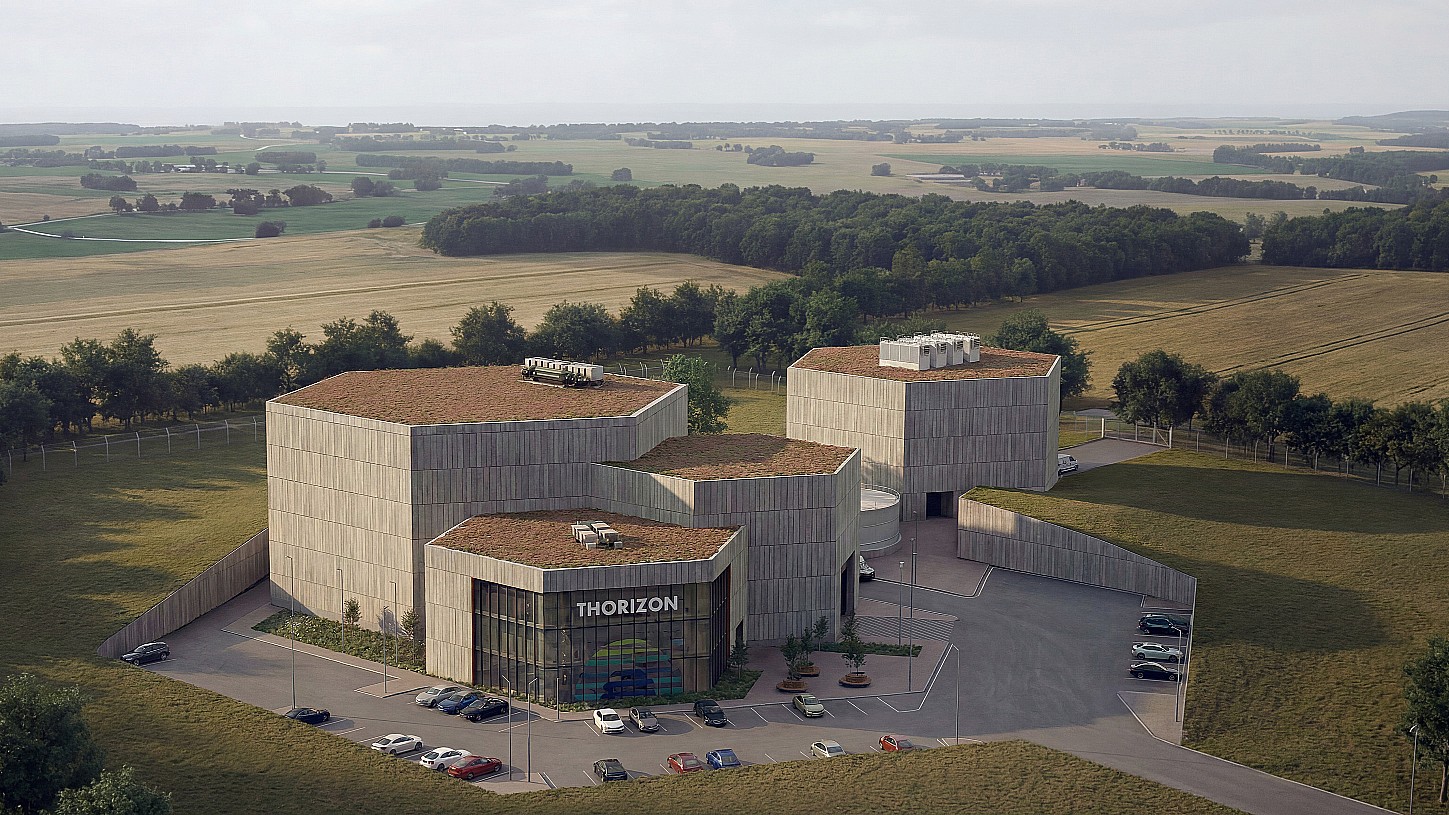
Thorizon – originally a spin-off from the Netherlands’ national nuclear research institute NRG (now NRG-Pallas) – is developing small modular molten salt reactors (MSRs) building on decades of molten salt technology research. The company plans to deliver its first Thorizon One 100 MWe MSR at Borssele in the Netherlands by 2034 – and will need HALEU (high-assay low-enriched uranium, enriched to contain up to 20% of the fissile uranium-235 isotope) in molten salt form to fuel it. The UK-Dutch-German-owned Urenco is expanding its enrichment capacity across its international sites, as well as expanding into advanced fuels for next-generation reactors, including LEU+ (with 5-10% uranium-235) and HALEU. Urenco’s Advanced Fuels Facility at Capenhurst in the UK is expected to produce HALEU from 2031.
MSRs use molten fluoride salts as primary coolant, at low pressure, and can use a variety of fuels ( in World Nuclear Association’s information library). Thorizon says molten salt enables a unique combination of efficient fuel use, inherent safety, and the delivery of both electricity and high-temperature industrial heat and says that with more than 75 years of research and operational experience the technology is proven.
The cooperation will explore potential enrichment services from Urenco, its potential role in the molten salt fuel supply chain and opportunities to improve uranium utilisation across the fuel cycle, Thorizon said. The company’s molten salt technology may also be able to utilise depleted uranium as fuel for future reactors. Depleted uranium is a byproduct of uranium enrichment, containing fissile uranium-235 at even lower levels than the 0.7% concentration found in the natural, unenriched material. Utilising depleted uranium could extract even more value from available uranium resources and contribute to a more efficient nuclear fuel cycle.
“Thorizon’s molten salt technology creates an opportunity to utilise HALEU in a different form, and Urenco is at the forefront of advanced fuels’ production in the Western World,” Urenco Chief Commercial Officer Laurent Odeh said. “Combining innovation in fuels and reactor technology could support the commercial deployment of Thorizon’s reactors and others requiring molten salt solutions.”
“Building the fuel supply chain is as critical as developing the reactor itself,” said Thorizon CEO Kiki Lauwers. “Urenco brings decades of expertise in uranium enrichment and is investing now in the advanced fuels Europe’s next generation of reactors will need. Combining these capabilities with innovation in molten salt fuels can help build a strong European fuel cycle for advanced nuclear.”
With offices in France and the Netherlands, Thorizon collaborates with industry leaders such as Orano, Tractebel and EDF, and its project has been selected by the European Commission and the French government under the France 2030 investment plan. Earlier this year, it signed a strategic memorandum of understanding with South Korea’s Hyundai Engineering & Construction to jointly advance the development and commercialisation of molten salt reactor technology.