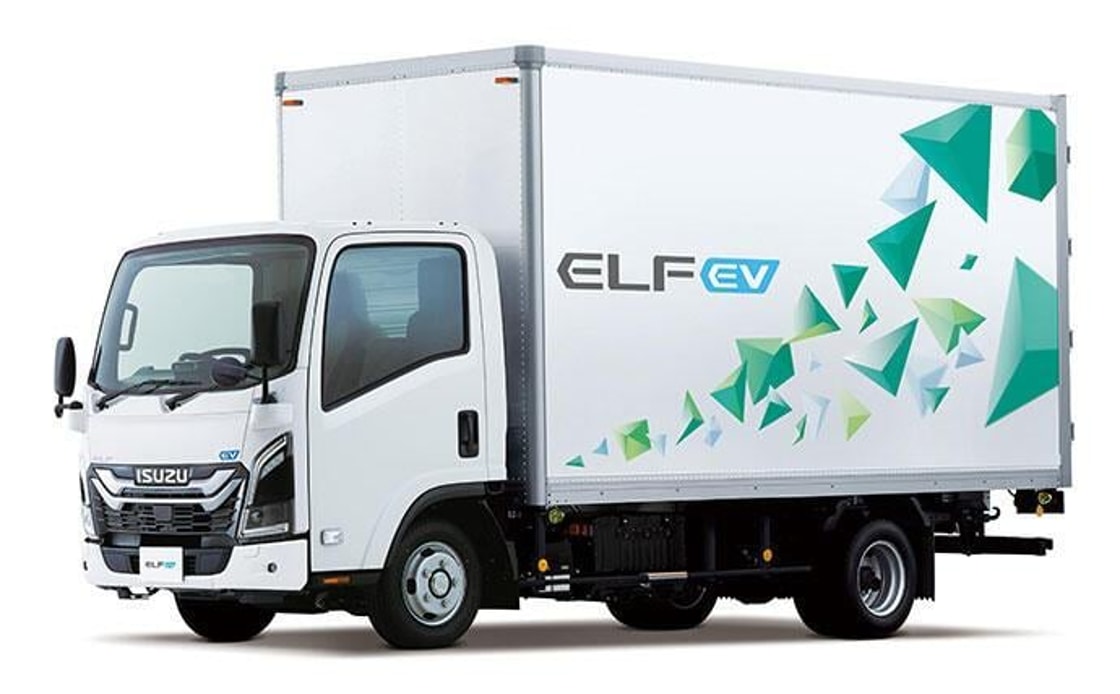
Isuzu’s ELF EV will serve as the platform for the new hydrogen truck © Isuzu
Japanese auto majors Toyota and Isuzu plan to mass-produce a light-duty hydrogen fuel cell truck by fiscal year 2027.
The vehicle will be based on Isuzu’s ELF EV battery-electric truck and use Toyota’s module which it said offers double the durability and improved efficiency over its predecessor.
The duo argues light-duty trucks, often used for deliveries to supermarkets, operate for long hours and travel long distances, requiring “quick energy replenishment.”
They argue fuel cells can help meet these needs due to fast hydrogen refuelling times and long ranges.
No specifics have been revealed on the proposed truck’s hydrogen storage capacity and range.
In the joint statement, the companies acknowledged high-vehicle costs as “one of the challenges to widespread adoption of fuel cell electric vehicles.”
“Isuzu is working to reduce costs by optimising the vehicle body structure and reviewing manufacturing processes,” it said. Toyota is also exploring manufacturing cost reductions for its fuel cells.
The move marks another step into prioritising fuel cells in commercial vehicle applications for Toyota, after limited success with its Mirai passenger car platform.
Last month, the car market announced plans to buy into Volvo Group and Daimler Truck’s hydrogen fuel cell joint venture , focused on developing modules for heavy-duty trucks.
Despite cumulative sales of 28,000 fuel cell cars since 2014, Toyota’s annual sales fell to just 1,200 units last year.
Battery-electric vehicles have dominated zero-emission passenger car sales so far. However, hydrogen proponents argue batteries will struggle to meet the demands of heavy-duty commercial operations.
Fuel cells maintain better efficiency at high-loads – the inverse of battery performance characteristics.
However, concerns still remain about the well-to-wheel efficiency of using green hydrogen to fuel vehicles, in addition to its complex refuelling infrastructure.