President Trump announced a deal that imposes a 15% tariff on imports from South Korea, a move that averts a steeper 25% levy originally threatened by Washington. The agreement, unveiled two days before the August 1 deadline for countries to strike bilateral deals, is similar to those accepted by the EU and Japan.
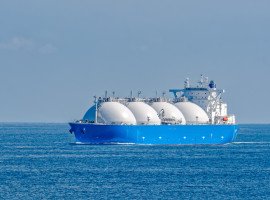
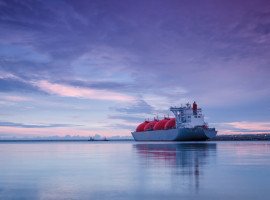
Most significantly for energy markets, South Korea committed to purchasing $100 billion worth of U.S. liquefied natural gas and other energy exports, a move hailed by Trump as a win for American workers and energy producers.
Speaking on Truth Social, Trump described the pact as a “Full and Complete Trade Deal” and claimed it would inject $350 billion into the U.S. economy through Korean investments, which he said would be “owned and controlled by the United States, and selected by myself.”
The South Korean government, led by President Lee Jae Myung, welcomed the deal, emphasizing that it restores a level playing field for Korean exporters now facing similar tariff terms as those of Japan and the European Union, both of whom secured recent deals with Washington. “We have set the conditions to compete with major countries on an equal footing or on better terms,” Lee said, highlighting that the agreement would remove uncertainty from the country’s critical export sector.
Trump also claimed that under the deal, South Korea would eliminate import duties on a range of American goods, including cars, trucks, and agricultural products. However, South Korea later clarified that while U.S. products would see improved market access, highly sensitive domestic sectors like rice and beef remained protected from liberalization due to national food security concerns.
The deal follows a high-profile Korean lobbying campaign, which saw corporate leaders from Hyundai, Samsung, and Hanwha travel to Washington to pledge new U.S. investments in advanced manufacturing. South Korea’s Lee is expected to visit the White House within two weeks to finalize investment details and discuss unresolved issues, including defense and steel tariffs.
While the agreement shores up South Korea’s export competitiveness in the face of Trump’s aggressive tariff policy, critics note the irony that Seoul’s long-standing free trade agreement with the U.S. — under which tariffs were meant to be effectively zero — has now been overshadowed by Trump’s “deal-by-deal” approach. According to Chul Chung, president of the Korea Institute for International Economic Policy, South Korea has preserved parity with its global peers but “lost the competitive advantage they once had.”
With just one day left before the August 1 deadline, markets will be watching closely for any last-minute agreement or extensions. The fate of the U.S.-China trade deal remains unclear, with the trade truce between the two set to expire on August 12 and both countries working to extend that truce for another 90 days.
By Charles Kennedy for Oilprice.com
More Top Reads From Oilprice.com
- EIA Reports Surprise 7.7M Barrel Crude Build
- Turkey Pushes for Full Use of Kurdistan Oil Pipeline
- Trump Says ‘We’ll Just Step It Up’—But Can U.S. Oil Deliver?