President Donald Trump ordered a blockade of sanctioned oil tankers going into and leaving Venezuela, ratcheting up pressure on Caracas as the US builds up its military presence in the region.
“Venezuela is completely surrounded by the largest Armada ever assembled in the History of South America,” Trump wrote on social media Tuesday. “It will only get bigger, and the shock to them will be like nothing they have ever seen before.”
The move threatens to choke off the economic lifeblood of a country that was already under severe financial pressure. But it will have a less profound impact on global markets due to the diminished status of Venezuela’s oil industry.
The OPEC member’s crude output has slumped about 70% through more than 25 years of socialist rule to less than 1 million barrels a day. It could potentially rebound if the governing regime were to change.
Even so, the move represents an escalation of Trump’s pressure on President Nicolas Maduro with the potential to further destabilize the country in the short term. Venezuela condemned the latest measures as a “reckless and serious” threat.
US crude benchmark West Texas Intermediate climbed as much as 1.7% to trade near $56 a barrel, rebounding from the lowest level in almost five years.
“Trump intends to impose, in an utterly irrational manner, a supposed military blockade of Venezuela with the aim of stealing the riches that belong to our homeland,” the government said in a statement published late Tuesday on Vice President Delcy Rodríguez’s Telegram account. “Venezuela reaffirms its sovereignty over all its natural resources.”
Venezuela said in its statement that its ambassador to the United Nations would immediately denounce what it called a “grave” violation of international law.
Trump said he was also designating the Maduro regime as a “FOREIGN TERRORIST ORGANIZATION.” And he accused the “illegitimate” regime of “using Oil from these stolen Oil Fields to finance themselves, Drug Terrorism, Human Trafficking, Murder, and Kidnapping.
By targeting oil, Trump is hitting the linchpin of Venezuela’s economy. The government’s supply of dollars is almost entirely tied to crude sales and oil-trading restrictions imposed by the US earlier this year are already pushing the nation to the brink of hyperinflation.
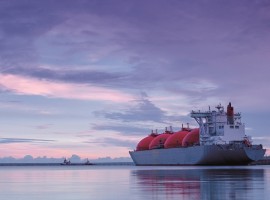
Last week, the US seized a sanctioned oil tanker, named The Skipper, off Venezuela’s coast. A day later, three supertankers originally headed for Venezuela reversed course following the seizure, and a fourth turned around earlier this week.
The Pentagon has also conducted more than 20 strikes against purported drug-trafficking vessels in waters near Venezuela and Colombia, killing dozens, and Trump has suggested numerous times that the US could strike countries on land and that Maduro should be removed from power.
It wasn’t immediately clear what stolen land and assets Trump was referencing in his demand. Venezuela has nationalized the oil industry and many others in recent decades, forcing foreign companies to leave the country. Many of those expropriations were carried out by the late Hugo Chavez, Maduro’s predecessor and mentor.
Rapidan Energy Group said in a note it now sees higher odds of military strikes and a government transition in Venezuela. “The White House’s campaign against Venezuela is still in its early stages, with pressure likely to increase significantly in the coming weeks,” it said.
The Maduro government has characterized the US actions as a grab for Venezuela’s oil reserves, the biggest in the world. While it used to be a major producer, the country’s output has fallen sharply over the past decade. Tankers loaded almost 590,000 barrels a day for export last month, compared with global consumption of more than 100 million barrels a day. Most of Venezuela’s crude goes to China.
Economic strain
The socialist-run country’s economy has been strained since Trump tightened oil-trading restrictions earlier this year. The government’s supply of dollars, almost all tied to crude sales, had already fallen 30% in the first ten months of 2025. The squeeze has pressured the exchange rate and driven up prices, with annual inflation expected to top 400% by year’s-end, according to private estimates from local economists who requested anonymity for fear of reprisal.
While state oil company Petroleos de Venezuela SA, or PDVSA, controls the petroleum industry in the country, it works with international partners including Houston-based Chevron Corp. to drill in many parts of the country. Under the current arrangement, Chevron receives a percentage of the oil produced by its joint ventures with PDVSA. A license issued by the US Treasury exempts the US company from sanctions.
Chevron of Venezuelan crude offered to US refiners following the seizure of The Skipper. The company, in a statement late Tuesday, said its “operations in Venezuela continue without disruption and in full compliance with laws and regulations applicable to its business, as well as the sanctions frameworks provided for by the U.S. government.”
In recent months, Maduro has called on his citizens to unite against what he said were US threats and to enlist in the citizen militia, which he says already has more than 8 million members. He’s also deployed troops, ships, aircraft and drones to the border with Colombia, some states in the coast and an island.