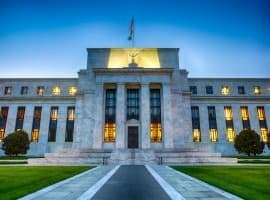
U.S. President Donald Trump has again threatened to fire Federal Reserve Chair Jerome Powell if he does not leave office when his term as chair ends in May. The Trump administration has nominated Kevin Warsh to succeed Powell; however, his confirmation is currently tied up in the Senate.
Historically, Fed chairs typically resign from the board once their leadership term ends; however, Powell stated in March that he has no intention of leaving until a Department of Justice investigation into the Fed’s headquarters renovation is “well and truly over’’.
The consensus is that any attempt to remove Powell before 2028 would encounter legal hurdles. Under the Federal Reserve Act, a president can only remove a governor “for cause”. Legal experts suggest that policy disagreements over interest rates are not sufficient cause, though Trump has cited the Fed’s $2.5 billion office renovation as a potential basis for a corruption or incompetence claim. Trump continues to pursue a criminal probe into these renovations, which a federal judge recently found to be part of a White House pressure campaign. Trump has been pushing for rapid cuts to interest rates (aiming for 1% or lower) in a bid to boost the economy and counter inflation concerns arising from his proposed tariffs.
Last month, the Federal Reserve maintained the federal funds rate at a target range of 3.5% to 3.75%, opting to hold rates steady while monitoring economic stability, limited labor turnover and modest wage growth. High interest rates generally put downward pressure on oil prices by slowing economic growth and strengthening the U.S. dollar, which reduces energy demand and makes oil more expensive for foreign buyers. However, U.S. interest rates are unlikely to dictate oil prices as much as the ongoing geopolitical upheaval.
Oil prices remain more than $20 per barrel above pre-war levels, with the Strait of Hormuz remaining closed. The U.S. Central Command (CENTCOM) confirmed on Wednesday the blockade had become fully operational within 36 hours of the executive order. The blockade was triggered in part by Iran’s attempt to charge tolls for transit through the strait, with the Trump administration threatening to interdict any ship that pays these fees. However, Trump recently stated the war is “very close to over,” suggesting the maximum pressure strategy is intended to force a final settlement.
By Charles Kennedy for Oilprice.com
More Top Reads From Oilprice.com
- Oil Traders Bet on Diplomacy Even as Physical Supply Tightens
- EU Considers Lower Energy Taxes as Hormuz Crisis Drives Costs Higher
- China’s Petrochemical Sector Cuts Output as Costs Climb