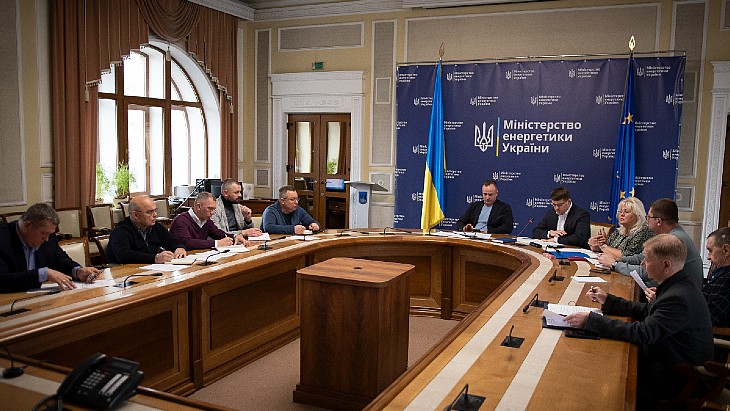
First Deputy Minister of Energy of Ukraine Artem Nekrasov emphasised the strategic role of nuclear energy for Ukraine: “During war, nuclear energy plays an extremely important role, as it remains the basis of the stability of the energy system. At the same time, we see that the world is experiencing a real renaissance of nuclear energy as a source of clean, safe and sustainable energy, which plays a key role in the transition to carbon-free energy for Ukraine.”
Development of the roadmap is aimed at creating the “institutional and technical foundations for the implementation” of the first such projects in the country. He said the draft law, “which has already been submitted to the Verkhovna Rada, creates a legal framework for attracting private investment and simplifying design and construction procedures. Combined with our Roadmap, this document will become a practical tool for implementing Ukraine’s energy strategy for the period up to 2050″.
The aim, he added, was to “create a basis for attracting investors, donors and technological partners and form mechanisms for communication with society at the level of future reactor locations”.
It would look at global best practice, examine possible risks, consider possible sites and financing and investment instruments. It includes proposed measures to allow private sector owners to choose technology and operators from among providers licensed by the country’s nuclear regulator. It also proposes to abolish the current obligation to submit three alternative sites for a possible small modular reactor (SMR).
The presentation highlighted that at the moment there is state ownership of all nuclear fuel so investors do not have ownership rights to the asset, and says the “current regulatory model is a key barrier to attracting private capital”. The suggested solution is to allow private ownership of fuel for SMRs while maintaining the state monopoly on the management of radioactive waste and its repositories.
Next steps highlighted were to “actively work to accelerate and unify the regulatory framework and licensing process … in accordance with best global practices” and the formation of targeted financing mechanisms.
Ukraine is already involved in the development of SMR projects in cooperation with the US’s FIRST Program to identify and assess the suitability of SMRs at decommissioned thermal power plants, in industrial zones and for use in industrial processes.
The Committee on Energy and Housing and Communal Services of Ukraine’s parliament – the Verkhovna Rada – held a presentation of the draft Amendments to Certain Laws of Ukraine Regarding the Principles of Implementing Small Modular Reactors in Ukraine. As well as being attended by Ukraine’s energy giant Energoatom and regulators, there were also representatives from the UK, USA, France and the European Union.
Anatoliy Kostyukh, Chairman of the Subcommittee on Nuclear Energy and Nuclear Safety, presented the bill and said it would create a legal framework for the implementation of SMR projects, help attract private investment, ensure the restoration of energy infrastructure, reduce dependence on gas and coal imports and strengthen Ukraine’s integration into the EU energy market.
Ukraine, one of the world’s leading nuclear energy countries, has established plans for a new fleet of large-scale reactors. And in July Energoatom and Holtec International signed a document outlining the current areas of cooperation between the two companies as well as outlining their intention to implement joint projects to create a plant in Ukraine for the production of components for Holtec small modular reactors, with up to 20 SMRs potentially slated for operation in Ukraine.