Italian university Politecnico di Milano has launched a mobile pilot laboratory for carbon dioxide (CO2) capture in Piacenza aimed at advancing solvent-based carbon capture technologies for industrial applications.
Known as POLICAP, the facility has been developed by the university’s Department of Energy and funded through Italy’s National Recovery and Resilience Plan under the ECCSELLENT project.
The pilot plant forms part of the wider European ECCSEL-ERIC research network, which supports the development of carbon capture, utilisation and storage (CCUS) technologies.
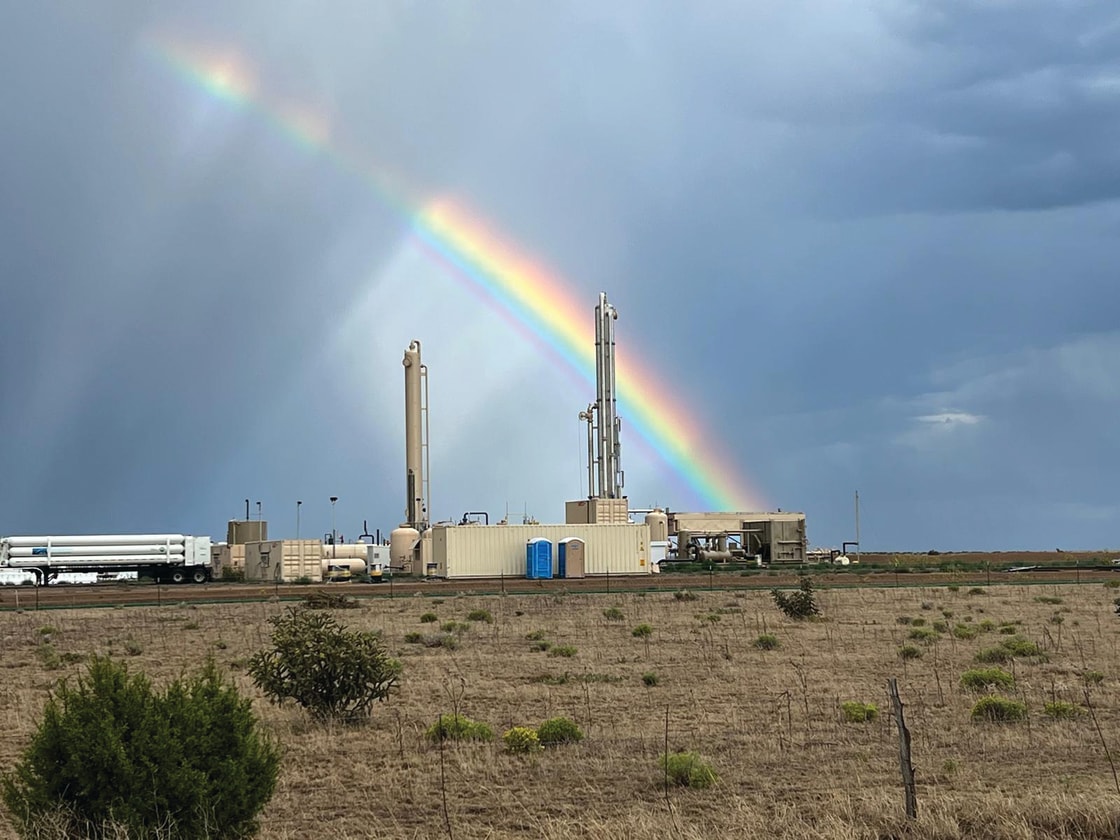
Designed as a transportable research facility, POLICAP can be installed directly at industrial sites to test CO2 capture processes using both synthetic gases and real industrial emissions streams.
The system focuses on solvent absorption technologies and will also be used to trial new materials, components and process configurations aimed at improving technical, economic, energy and environmental performance.
“With POLICAP, we strongly reaffirm that the green transition is no longer negotiable: it is a strategic priority, supported by significant investments,” said Donatella Sciuto, Rector of the Politecnico di Milano.

The mobile CO2 capture facility ©Politecnico di Milano
According to the university, the facility’s main objectives include demonstrating high capture efficiencies under industrially representative conditions, supporting scale-up and industrialisation studies, and developing advanced digital models for CCUS processes.
The project was conceived and will be managed by a research team from the Department of Energy led by Professors Manuele Gatti and Matteo Carmelo Romano, alongside researchers Valeria Venturelli, Riccardo Cremona and Antonio Conversano.
The Laboratorio Energia Ambiente Piacenza also supported installation of the facility.
The launch took place during the fourth stage of City Vision’s 2026 Roadshow, focused on ‘Transformative Energy’, and was attended by representatives from regional and local government including Piacenza Mayor Katia Tarasconi and Emilia-Romagna Vice-President Vincenzo Colla.
Italy’s carbon capture landscape is centered around the flagship Ravenna CCS Hub launched by Eni and Snam.
Phase 1 permanently stores captured CO2 in depleted Adriatic gas fields. With backing from the EU’s Innovation Fund, the country is scaling up to support hard-to-abate industries.
Phase 2 aims to scale up to capture and store up to four million tonnes of CO2 per year by the time it is fully operational before 2030.
While Italy’s carbon capture activity has so far largely focused on CCS infrastructure, the country’s updated National Energy and Climate Plan also identifies CCUS and direct air capture as key technologies for helping energy-intensive industries meet climate targets.