By
5 hours ago 5 min read
The US and Iran have signed a peace deal ending four months of conflict in the region, as talks will continue on securing a final agreement over the next 60 days.
Alongside the immediate and permanent termination of military operations on all fronts, including Lebanon, commercial vessels can pass through the Strait of Hormuz with no charge.
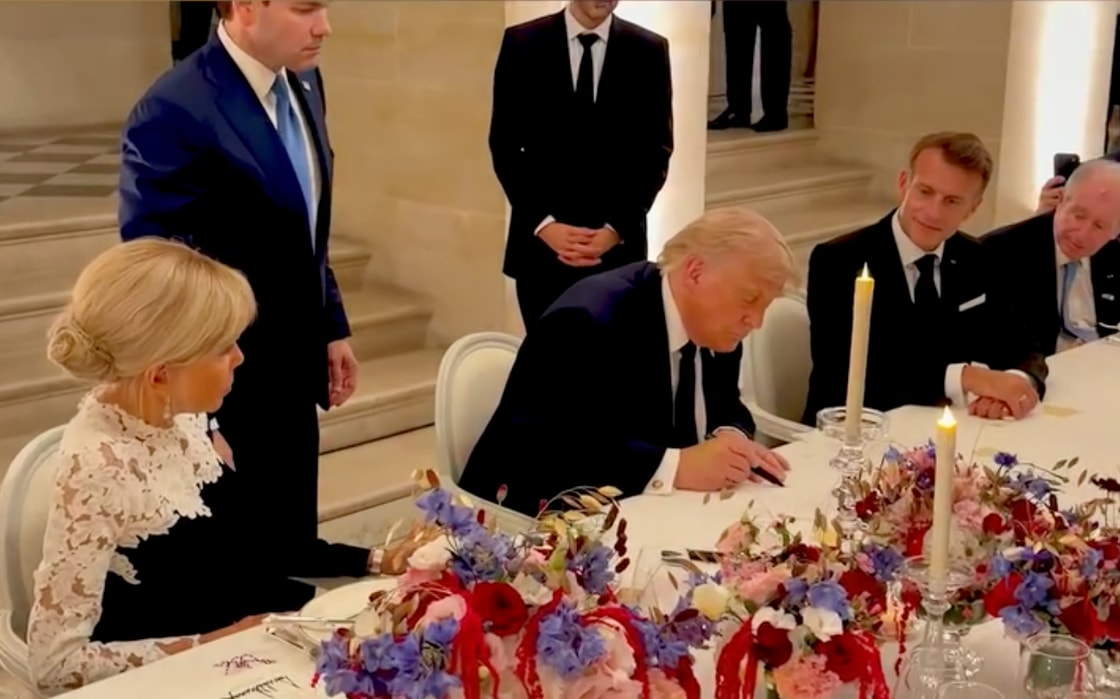
The deal, signed by US President Donald Trump and Iranian President Masoud Pezeshkian, had been expected to be scheduled in Switzerland on Friday, but was completed at the Palace of Versailles on Wednesday evening (17 June).
Such has been the contrasting dynamics of the four-month conflict, both sides are claiming victory.
Iran reaffirms it shall not procure or develop nuclear weapons while the US, with partners, will develop a $300bn reconstruction plan for Iran, drop all sanctions and unfreeze Iran funds and assets. The US will remove its naval blockade fully within 30 days.
The confirmation of the deal will be greeted positively by global markets and particularly GCC states. Qatar has already indicated it intends to , although it is unclear when helium operations will resume; it is equally unclear how long it will take to which is key to the safe resumption of shipping. The International Maritime Organisation has verified at least 46 attacks against international shipping in and around the strait since the conflict began.
Despite assurances from President Trump that there will be no charges to shipping, reports continue to circulate that Iran will impose fees.
Nicholas Hopton, Non-resident Senior Fellow with the Scowcroft Middle East Security Initiative at the Atlantic Council’s Middle East programs, said, “Acceptance of new arrangements governing passage through the Strait of Hormuz may be a price that GCC states are reluctantly prepared to pay to underwrite a sustainable deal and avoid future closures of the waterway.”
“The Gulf states, having been so directly impacted by the unprecedented Iranian response to US and Israeli aggression, seem unlikely to forge close alliances with Tehran any time soon. That said, they will likely seek to increase diplomatic engagement in the hope of reducing the threat of a renewed conflict.”
The strait is not open, nor is it close to opening, according to commentary from Chatham House.
“The process will take time, confidence-building and numerous security assurances. Yet in the meantime, the risk of an even worse chokepoint crisis remains.
“In future, simultaneous disruption to shipping in Hormuz, Bab al-Mandab and the Suez Canal could trigger cascading effects across the global economy. Policymakers should therefore not only focus on protecting these vital waterways, but also on preparing for the systemic consequences caused by multiple chokepoints being constrained at the same time.”
Speed bump or energy pivot?
Wood Mackenzie warns LNG global markets are likely to be tight until the summer of 2027, despite the return of exports from the Gulf.
“Global supply growth will be slower than was projected before the war. Some Gulf LNG facilities have been damaged, and there will be delays to projects currently under construction in the region,” it notes.
Nonetheless, should shipping traffic flows resume in the next few weeks, the outcome will look like a that the research and consultancy firm sketched out last month.
In that scenario, the conflict ends up being just a “speed bump” for the world economy and energy markets. Global GDP growth slows from 3% in 2025 to 2.3% in 2026, with a recession limited to the Middle East. The global economy broadly returns to its pre-conflict trajectory by Q4.
Oil supply from the strongest producers in the Gulf region can be restored relatively quickly. In some cases, a pre-emptive ramp-up has already begun. Shipping and logistics are likely to be the bottleneck in the early phases of the recovery, rather than upstream producers.
Countries with more complex assets, particularly Iraq, will take longer to recover, but could still return close to pre-war levels in six to nine months.
So will that mean this crisis does not cause lasting structural change, a switch from fossil fuel dependency, and hasten a greater push behind renewables? This has been a narrative that has gained momentum as the conflict has gone on.
Certainly will be a lasting legacy after the strait’s closure underlined the , impacting everything from and to and . Asia, in particular, will realise the dangers of having so much tied up in one region.
Pivoting to new industries and supply chains is not a quick fix, and arguably the fundamentals haven’t changed: the Middle East remains an energy powerhouse today, as it did at the end of February.
Ultimately, if energy prices fall and inflationary pressures ease, historians may view it as a blip.
Perceptions have changed though, and trust needs to be rebuilt on all sides. Cautious uncertainty is likely to be the theme for the coming 60 days.
But in the event that the deal leads to a lasting peace, a stable GCC and resurgent Iran, then the region may see a major rebound – which would be welcome not only for the Middle East but all of us.