The U.S. Supreme Court on Wednesday rejected Enbridge’s bid to change the venue of an environmental lawsuit by Michigan seeking to force the Canadian energy company to stop operating an oil pipeline between two of the Great Lakes. The justices unanimously ruled that Enbridge had waited too long to seek to move the lawsuit by Democratic Michigan Attorney General Dana Nessel from state court into federal court, a venue generally considered more friendly to defendants.
Liberal Justice Sonia Sotomayor, writing for the court, said Enbridge had 30 days to try to move the case to federal court, but instead waited 887 days to do so until after developments in related litigation over the Line 5 pipeline. She said allowing courts to extend the deadline governing the removal of cases to federal court “would undermine Congress’s manifest interest in resolving threshold removal questions early and conclusively.”
Calgary-based Enbridge, in a statement, called the ruling “procedural” and said it “is committed to the safe operation of Line 5 and to working constructively with regulators and stakeholders.”
Get the Latest US Focused Energy News Delivered to You! It’s FREE:
Nessel’s office did not immediately respond to requests for comment.
The ruling marked the latest development in Enbridge’s long-running dispute with Michigan over the aging 645-mile-long Line 5 pipeline, which ships 540,000 barrels per day of crude and refined products from Superior, Wisconsin, to Sarnia, Ontario.
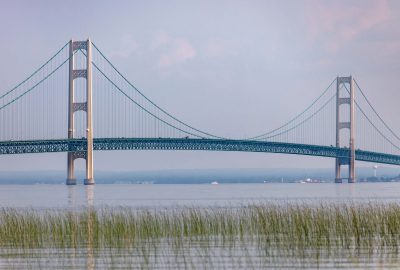
A four-mile (6.4-km) section of the aging pipeline runs underwater through the Straits of Mackinac, which connect Lake Michigan and Lake Huron, and environmentalists have voiced concerns about the risk of an oil leak.
Nessel in June 2019 filed a lawsuit in Michigan state court seeking to block Enbridge’s continued operation of Line 5 based on alleged violations of state public nuisance and environmental laws.
Defendants in state court lawsuits generally have 30 days to seek to move cases to federal court. Enbridge did not try to remove Nessel’s case to federal court until November 2021, following developments in related litigation. A trial court judge granted Enbridge’s request, but the Cincinnati-based 6th U.S. Circuit Court of Appeals reversed it in 2024 and ordered the case back to state court. The company then appealed to the Supreme Court.
The justices on Wednesday agreed with the 6th Circuit. Sotomayor said that a ruling in Enbridge’s favor would mean “the possibility of a late removal would hang over a case, generating uncertainty and risking significant waste of resources in one forum before a possible belated removal to another.” Other litigation over the pipeline remains pending. Michigan Governor Gretchen Whitmer is appealing a December ruling by a federal judge that blocked the state from enforcing a 2020 order revoking a 1953 easement in order to force the pipeline’s shutdown.
The case is Enbridge Energy LP v. Nessel, U.S. Supreme Court, No. 24–783.
For Enbridge: Alice Loughran of Steptoe LLP29dk2902l
For Michigan: Ann Maurine Sherman of the Michigan Department of Attorney General
(Reporting by Nate Raymond in Boston)
Share This:
More News Articles