By
43 min ago 3 min read
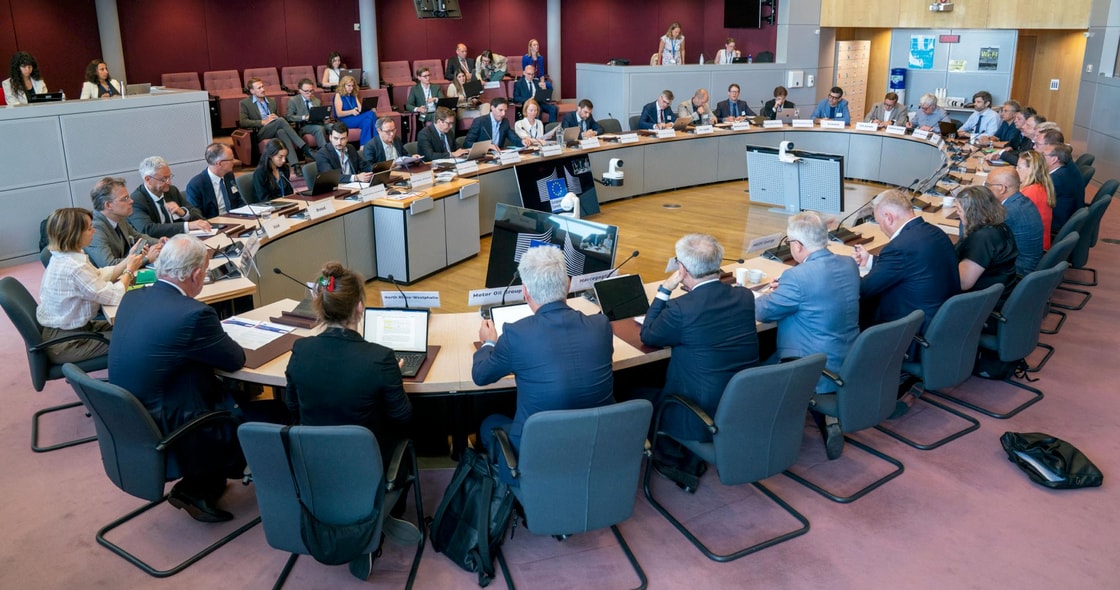
European Union Commissioner for Climate, Net Zero and Clean Growth Wopke Hoekstra recently united industry stakeholders to explore practical solutions for scaling up carbon capture and storage (CCS) across Europe.
The meeting brought together senior representatives from heavy industry, infrastructure and transport operators, startups, trade unions and civil society organisations as well as regional and local authorities.
The EU has set a target of reaching 50 million tonnes of annual CO2 injection capacity in EU geological CO2 storage sites by 2030 to support the decarbonisation and competitiveness of Europe’s industry. To date, progress has been promising but uneven, and project delivery is falling short.
The number of new CCS project announcements in Europe has , according to research from the renewables-leaning Institute for Energy Economics and Financial Analysis.
The Commission reported in May that the first storage sites expected to come into operation this year.
Participants agreed that scaling up CCS requires coordinated action across the entire value chain, and investment in CO2 transport and storage infrastructure is essential to unlock CCS projects across the continent.
Stakeholders called for faster and more predictable permitting, stronger cross-border cooperation, greater transparency and data sharing, and open access to infrastructure to help projects move from planning to deployment.
The discussion also highlighted the importance of creating the right market conditions.
Participants pointed to the Innovation Fund as a key driver of early CCS projects and stressed that stronger demand for low-carbon products, including through public procurement, will be critical to encourage investment and accelerate deployment.
Beyond emissions reductions, stakeholders also emphasised the wider benefits of CCS for Europe’s industrial future. They highlighted its role in supporting the decarbonisation of energy-intensive industries, strengthening competitiveness, developing new skills and creating opportunities for regions in their clean transition.
Closing the dialogue, Commissioner Hoekstra underlined the importance of building an integrated European market for CO2 transport and storage, based on close cooperation between industry, member states and the Commission.
The discussions will feed into the Commission’s work on future measures to support the development of CO2 transport infrastructure and markets, due by the end of 2026 as part of the Energy Union package.
Europe will need by 2050 to meet CCUS goals, according to a new report from energy consultancy Xodus Group.