By
19 min ago 3 min read
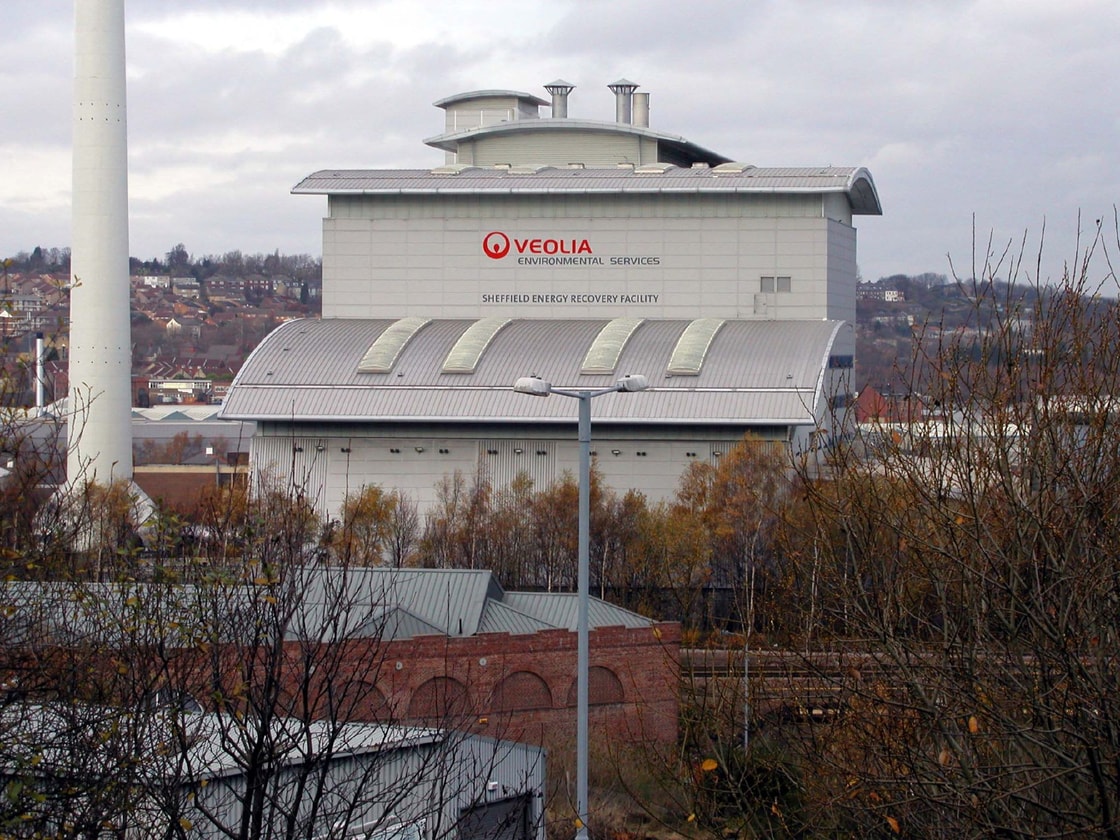
UK-based resource management company Veolia has successfully deployed what it says is the UK’s first non-amine carbon capture system at an energy-from-waste facility, as it looks to reduce the environmental and energy costs associated with carbon dioxide (CO2) capture.
The ongoing two-year trial is using a non-amine solvent to capture one tonne of CO2 per day from the Sheffield Energy Recovery Facility’s flue gas before it is released into the atmosphere.
Unlike conventional amine solvents, non-amine systems typically require less energy for solvent regeneration and avoid forming potentially harmful degradation products.
The project, which is delivered in partnership with clean technology company C-Capture, is currently capturing up to one tonne of CO2 per day from the facility’s flue gas.
According to Donald Macphaul, COO – Treatment at Veolia, the technology is designed to complement, rather than replace, waste prevention, recycling and circular economy solutions to reduce emissions at source.
“This … project is an example of our decarbonisation commitment as part of Veolia’s strategic GreenUp programme and the potential to utilise this carbon locally gives environmental security to our customers and other regional industries.”
The company said wider deployment would depend on CO2 transport and storage infrastructure, supportive regulation and viable business models.
During the demonstration phase, the captured CO2 is released after testing so engineers can assess the system’s performance and solvent regeneration before any future utilisation or storage.
The project uses technology supplied by C-Capture, which has developed a class of carbon capture solvents that are entirely amine- and nitrogen-free.
“[Our technology] demonstrates not only the scalability of our non-amine approach, but also its real-world advantages in energy efficiency, cost, and safety – particularly for challenging applications like energy-from-waste facilities,” said Greg Searle, Commercial Director at C-Capture.
C-Capture says its technology has accumulated more than 4,000 operating hours and has reached the upper end of Technology Readiness Level (TRL) 7, positioning it for commercial-scale deployment.
The UK government has committed up to £21.7bn ($29.2bn) over 25 years to support carbon capture and storage, estimating the sector could contribute £5bn ($6.7bn) annually to the economy by 2050.
While the project demonstrates the technology at operational scale, the current capture rate of around one tonne of CO2 per day represents a pilot rather than full-scale deployment, with any wider emissions impact dependent on future commercial rollout.