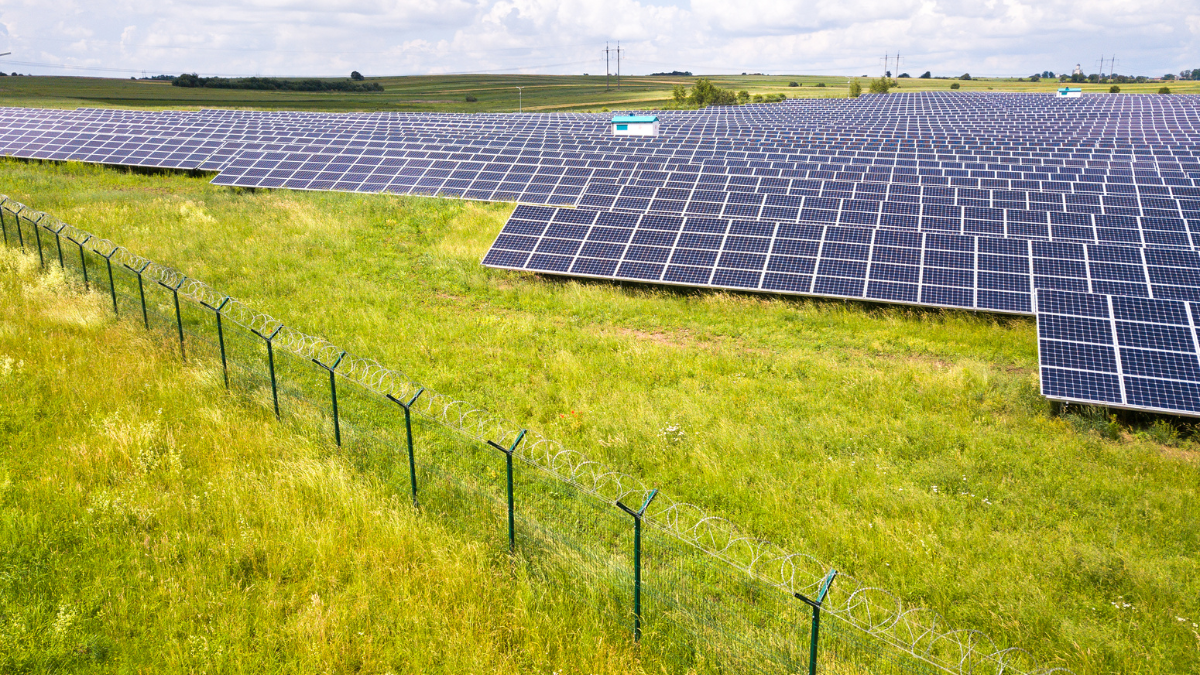
Vietnam has launched its first dedicated research project integrating solar energy with agriculture, aiming to enhance farmers’ incomes while advancing the country’s clean energy goals. The initiative, called the Agri-PV project, was officially inaugurated in Hà Nội on Tuesday by the Ministry of Agriculture and Environment (MAE) in collaboration with the German Development Cooperation Agency (GIZ).
This marks the country’s first solar energy project focused specifically on rural households and farming, combining crop cultivation with solar power generation to deliver economic and environmental benefits.
At the event, Phạm Ngọc Mậu, Deputy Director General of MAE’s International Cooperation Department, underscored the dual benefits of the initiative. “Integrating solar energy with farming on the same land can deliver substantial economic gains, contribute to gender equality, and help farmers boost their livelihoods while supporting Việt Nam’s energy transition,” he said.
Nguyễn Thế Hinh, Deputy Head of the Agriculture Projects Management Board and Director of Agri-PV, highlighted the rapid growth of the country’s solar sector. Installed capacity rose from 272 MW in 2019 to over 16 GW by the end of 2024, with projections estimating 22 GW by 2030 and 168 GW by 2050.
The Agri-PV project is set to deploy at least 10 pilot models of solar-powered agricultural plants during its three-year implementation period from 2025 to 2027. These pilots will provide essential data on how farmers can effectively combine crop production and solar energy generation for greater income stability and land use efficiency.
The initiative also aims to enhance policy development by improving the knowledge of 65% of 20 key policy and sector representatives regarding agri-solar’s current status and potential in Vietnam.
Supported and funded by GIZ, the project addresses existing policy gaps and technical barriers. It will assess the country’s solar potential in agriculture, develop strategies, provide advisory services, and mobilize resources for broader deployment in line with Vietnam’s commitments to a just energy transition, achieving net-zero emissions by 2050, and meeting its NDC 3.0 climate targets.
Sonja Esche, Head of Agriculture and Climate at GIZ Vietnam, emphasized that “agri-solar is not simply about placing solar panels on fields. It’s about creating synergy between energy production and agriculture, optimising both for maximum benefits.” She added that when designed thoughtfully, farmers can enjoy steady incomes from both crops and electricity while making efficient use of available land.
Despite its potential, challenges remain. Vietnam lacks clear national policies to support agri-solar adoption, while technical knowledge and expertise are limited. Studies are fragmented, pilot data is scarce, and no consolidated national database exists to guide replication efforts. Farmers and local authorities also face hurdles in managing such hybrid systems.
Dr Michaela Baur, Country Director at GIZ Vietnam, pointed out that Vietnam could benefit from international experience. “Countries like Germany, Thailand, India, and Brazil have piloted agri-solar models, generating valuable lessons for emerging economies,” she said. “These exchanges of policy and practice are exactly what this project aims to enable.”
With over 30 years of experience in renewable energy and agriculture projects, GIZ is leveraging its global expertise to support Vietnam’s transition toward sustainable energy solutions.
Subscribe to get the latest posts sent to your email.