By
12 min ago 4 min read
The 2026 FIFA World Cup has kicked off and the near-six-week tournament is expected to attract a global cross-platform audience of 6 billion people.
Industrial gases play an invisible but integral role in the world’s biggest sporting event which is being co-hosted by the US, Canada and Mexico.
As Linde , from transporting teams and fans, to hospitality, food and beverages, stadium operations and broadcast technology, industrial gases play a vital role.
“It’s a complex ecosystem that operates largely out of sight but is essential to every part of each tournament,” it noted.
Similarly Messer Americas will be keeping a close eye on events off the pitch by ensuring fans’ fast-food favourites such as hot dogs, sausages, burgers and pizza are kept fresh and plentiful.
“When Kayem Foods, maker of the ‘Fenway Frank’ needed to scale up production, they turned to Messer’s impingement freezer to double their capacity,” it said.
With the new freezer, the surface of the sausage is instantly crust-frozen with a liquid nitrogen spray and high-velocity nitrogen gas, trapping moisture inside the product.
As sausages flow along the belt, it is impinged from all sides with high-velocity nitrogen gas which maximises production throughput and process efficiency.
Climate-affiliated firms and organisations have plenty to get their teeth into too.
Researchers from Scientists for Global Responsibility, the Environmental Defense Fund (EDF) and Cool Down forecast that, in all likelihood, it will be the ‘most polluting World Cup of all time’, generating over 9 million tonnes of emissions.
Carbon accounting firm Greenly agrees that it is set to be the most carbon-intensive World Cup, generating an estimated 7.8 million tonnes of CO₂ equivalent, more than twice the emissions of Qatar 2022. Perhaps not quite the superlative FIFA President Gianni Infantino had in mind when he declared it will be the ‘biggest’ tournament in history.
Since FIFA expanded the tournament to 48 teams, playing 104 matches across three countries, air travel alone accounts for roughly 85% to 87% of total emissions.
On the plus side, by utilising pre-constructed NFL and major league venues, infrastructure emissions account for just 3% of the tournament’s total footprint, avoiding the heavy footprint seen in Qatar 2022 venue construction.
In terms of implementing clean technologies, there isn’t a great deal to cheer about.
One positive move will see hydrogen fuel-cell buses supplied by Ballard Power Systems transporting fans in California via the Riverside Transit Agency.
But direct green hydrogen measures are absent, tournament organisers relying more on solar installations, LEED-certified venues, and public transport integration to mitigate their carbon footprint.
Carbon capture technologies are also thin on the ground. Deploying CCS at large sporting events is impractical due to the massive physical infrastructure, prohibitive costs, and lack of stationary point-source emissions.
Corporate changes are underway behind the scenes. Brewing giant AB InBev (official beer sponsor) relies on carbon capture and recovery systems installed at its large-scale breweries and said it is committed to using “renewable sources of heat, such as biogas or green hydrogen”.
Overall, it all adds up to very small sustainable energy wins.
Globally, concerns remain over CO2 supplies, which could be exacerbated by a hot summer in Europe, driving demand for food and beverages, and meat products.
UK ministers are facing mounting pressure from industry leaders to extend emergency support in Teesside. The initial £100m restart package, triggered by Iran war contingency plans, expires at the end of June.
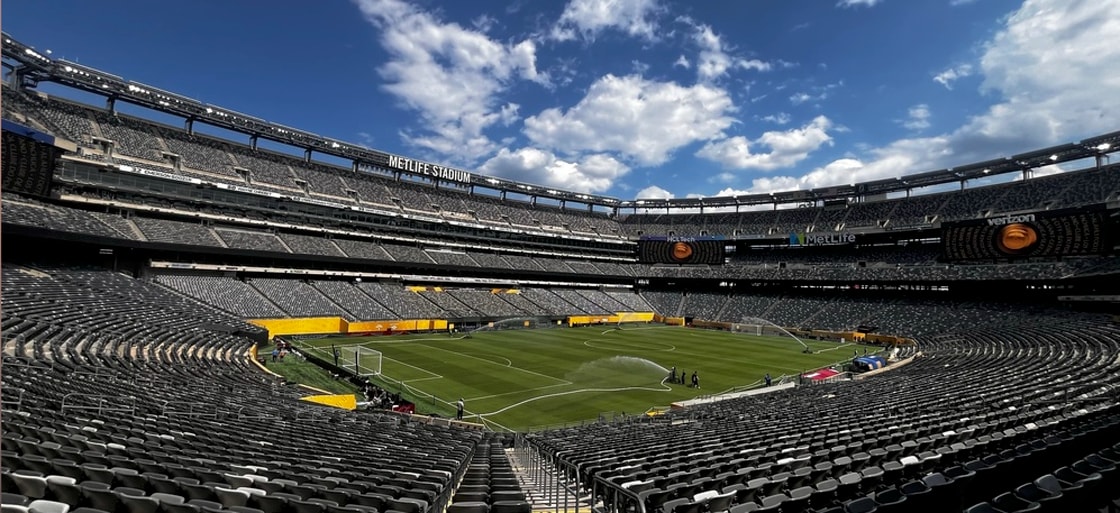
It promises to be a busy month off the pitch, as well as on it. The final will be held in New York on 19 July.