Despite years of investment and innovation, the U.S. energy transition continues to lag. According to Ember, a globally recognized climate and energy think tank, wind and solar accounted for just over 17% of America’s electricity generation in 2024 — far from what’s needed to reach net-zero targets. Transmission bottlenecks, overloaded interconnection queues, and stalled feasibility studies continue to slow progress.
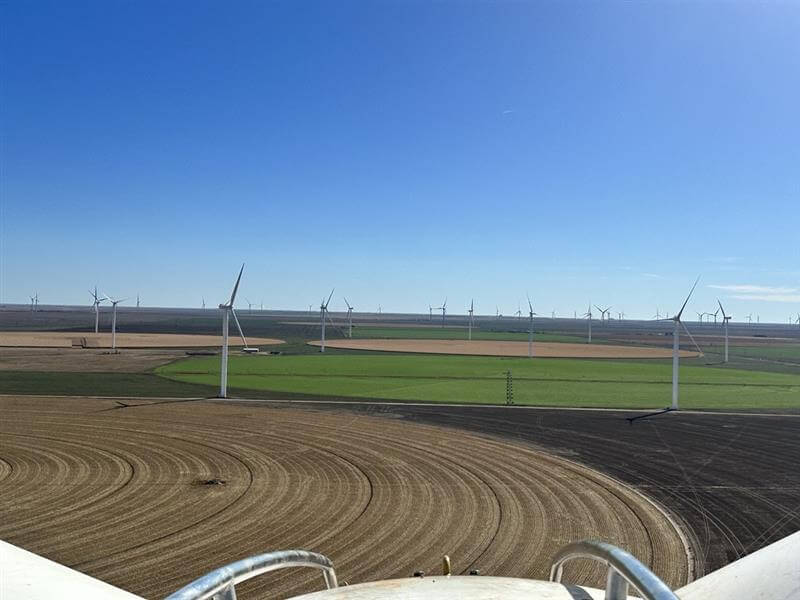
Stockyard Wind Farm, recently repowered
While headlines tend to spotlight new builds and breakthrough technologies, a less glamorous, workhorse solution to these challenges may hold the key to faster, more efficient progress: ‘lite repowering.’
Lite repowering, the practice of upgrading or replacing aging wind turbine components, can extend the life of existing projects by as many as 15 years, boost grid efficiency and avoid many of the hurdles that plague greenfield development. As such, it’s a strategic shortcut hiding in plain sight. Research funded by the U.S. Dept. of Energy affirms that wind repowering can significantly increase energy production at existing sites, reduce maintenance costs and extend project life — making it a critical tool in the energy transition.
At first glance, repowering sounds simple: take an older wind farm and swap in new hardware. But most traditional repowering efforts are led by original equipment manufacturers (OEMs) that typically focus on full-component replacement — blades, gearboxes, nacelles — often requiring proprietary parts that generate substantial waste and lock asset owners into limited, vendor-specific supply chains. This drives up costs, stretches timelines and limits flexibility, as owners become dependent on a single manufacturer for maintenance, upgrades and future replacements.
Such short-term, in-kind refurbishment fixes may improve immediate output, but they fail to consider the bigger picture of how all the pieces of a large-scale wind project interact. Turbine specs, grid interconnection, site layout, landowner agreements, even the weather and wildlife permitting all influence a turbine’s long-term performance. Mastering this takes a unique combination of expertise and agility.
“Everyone knows repowering can boost output. The challenge is doing it right,” said Tim Rosenzweig, CEO of PivotGen, a renewable energy developer based in Chicago. “These projects aren’t simple retrofits. They’re complex, multi-layered undertakings that demand deep expertise across engineering, operations, finance, sourcing, and permitting.”
Companies like PivotGen represent a new generation of smaller renewable energy firms capable of delivering the kind of engineering expertise and retain operational agility needed to truly optimize large-scale repowering projects. The innovation they add to the sector can’t come soon enough.
PivotGen is innovating the repowering process. Rather than replace an entire machine, PivotGen takes a much lighter approach, replacing and refurbishing in a more highly customized way. The company recently repowered eight projects in its Stockyard Wind Portfolio, upgrading 79 turbines to deliver 128.5 MW of clean energy to communities in the Texas Panhandle. And PivotGen did it without scrapping large components that still held meaningful useful life.
The problem with traditional repowers
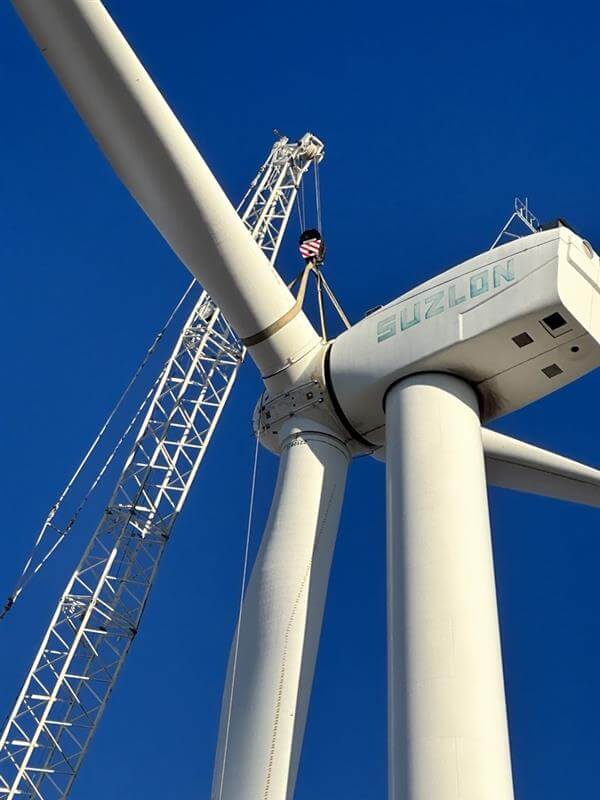
Rotor pitch bearing exchange at the Stockyard Porterhouse site
Today, tens of thousands of turbines across the United States are entering their second decade of service. OEMs are increasingly walking away from legacy models, creating gaps in parts, support and service continuity. Meanwhile, traditional repowering solutions — often “one size fits all” — can’t fully unlock the remaining value of these aging assets.
Why? Because the OEMs don’t take a systems-first, turbine-by-turbine view. And they can’t adapt as quickly.
Consider what engineers face in a typical repowering project. Many turbines might be dealing with locked rotors, obsolete control systems or gearbox failures. Others suffer from yaw bedplate wear beyond conventional repair limits. Each of these factors affects the fair market value and long-term productivity of the asset — yet most repowering approaches fail to account for them dynamically. It’s certainly easier to scrap it all. But is it smarter?
“Standard repowering often means scrapping components that still have life left,” said Bob Grimley, senior VP of engineering at PivotGen. “It’s inefficient and unnecessarily wasteful.”
It’s also environmentally costly. While towers and nacelles are largely recyclable, the blades — made from fiberglass and carbon fiber composites — are notoriously hard to process. A single turbine blade can take up to 45 cubic-yards of landfill space. In one Minnesota repowering project, most of the 65 blades were simply cut up and buried due to the cost of recycling. Multiply that by the more than 235,000 blades that are expected to be decommissioned by 2050 nationwide, and the scope of the challenge becomes apparent.
Why it matters now
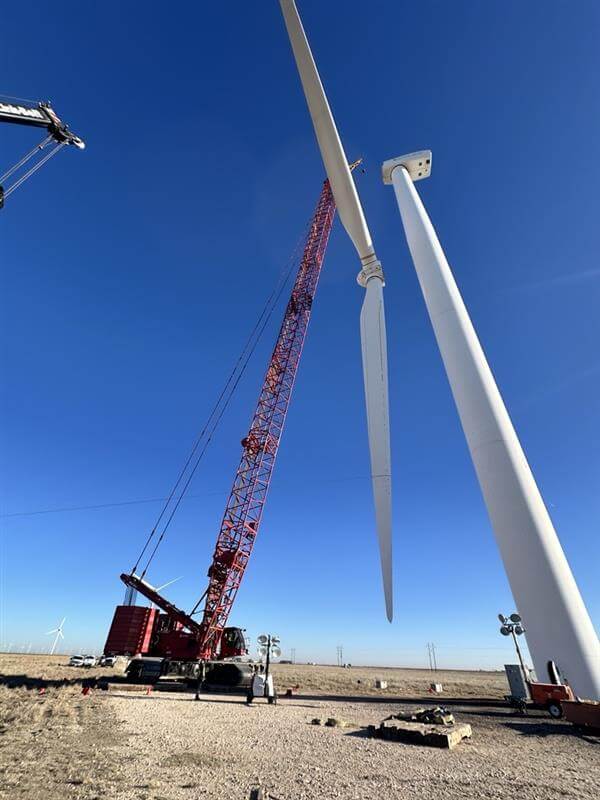
Repowering efforts at Stockyard Porterhouse
More than 45 GW of U.S. wind capacity is already over a decade old. Repowering even a portion of these projects could add the equivalent of 13.5 GW of new capacity — enough to power hundreds of thousands of homes — and nearly double what was installed across all U.S. wind farms in 2023. And this business opportunity hasn’t gone unnoticed.
PivotGen, for example, is so convinced of the business value of repowering in general that earlier this year it launched Repowering-as-a-Service, a business unit dedicated entirely to addressing the complex challenges of repowering aging wind farms.
Jim O. Ludwig, VP of renewables at Integrated Power Services (IPS), said his company has also expanded its capacity to take on large-scale repowering jobs in response to the growing demand. He agreed the traditional whole-machine repowering model needs to evolve.
“We see that our customers are starting to increase their partial repower strategies to mitigate the high cost of replacing an entire nacelle,” he said, adding that this surgical approach is even more relevant in light of ongoing trade tensions. “With tariffs impacting costs on almost every component of a nacelle, [this targeted approach] just makes sense. Even before tariffs, it was sensible to repair, replace or upgrade the items critical to turbine performance. Now, it’s even more logical.”
With owners and operators navigating the impact of shifting tariffs, a process built on iteration offers real, flexible business advantages. And with the Inflation Reduction Act still providing expanded tax incentives for qualified upgrades, the economics are finally aligning with the opportunity.
Customized repowering also offers a workaround to one of the industry’s biggest bottlenecks: interconnection. By leveraging existing land rights, permits, and grid infrastructure, these projects avoid the costly, years-long delays that plague new builds. Changing only what’s critical accelerates schedules and improves ROI.
A surgical, targeted approach
Lite repowering’s method of surgical, site-specific and data-driven repowering offers the industry a unique model for change. Embracing this systems-first mindset will allow companies to evaluate entire wind farms — not just individual components. By combining regulatory fluency, technical expertise and financial modeling, lite repowering can deliver solutions that are both tailored and scalable.
Rather than defaulting to full hardware swaps, lite repowering begins with borescope analysis and sub-component inspection. Some parts are replaced. Others are refurbished. Every decision is evaluated based on fair market value, supply chain conditions and long-term performance.
In many cases, outdated software — not just worn-out hardware — poses the bigger challenge. Obsolete control systems can constrain sourcing options and drag down productivity. Successful practitioners of lite repowering must factor this into their planning to ensure upgrades extend not only turbine life, but also the project’s financial viability.
Real-world results: The Stockyard Project
Take PivotGen’s Stockyard Wind Portfolio: eight projects across the Texas Panhandle with 79 turbines and 128.5 MW of upgraded clean energy.
Instead of following the typical gearbox replacement path, PivotGen conducted subsystem analysis to identify targeted fixes. Locked rotors were repaired. In one case, a yaw bedplate worn beyond repair was replaced not with an OEM part, but with a custom-machined interface — extending the turbine’s life by up to 20 years.
The result? Less waste, less downtime and a more cost-effective outcome for project owners.
Scaling this kind of impact requires strong relationships across the industry and with the communities these projects serve. Ryan Cooper, VP of commercial operations at Panorama Energy Services, partnered with PivotGen on the Stockyard project. He said success at this level comes down to one thing: building the right team.
“[Their approach of] overhauling the existing machine, versus sending a majority of it to a scrap yard, is truly a cutting-edge solution,” Cooper said. “By improving existing systems and engineering out known defects to improve reliability — not rotor diameter — they’re doing something truly innovative.”

Built to evolve
The key to successful repowering isn’t brute-force replacement — it’s iteration and collaboration. By taking an agile, iterative approach developers can move quickly with great expertise but also pivot to updating technical, financial and regulatory variables throughout the project lifecycle. All decisions are optimized for performance and return on investment, while staying in compliance with tax and policy frameworks.
The case for repowering
Repowering isn’t just a maintenance tactic; it’s a strategic lever for accelerating clean energy without the cost, delay, red tape and environmental burden of greenfield projects. Just as important, repowered projects keep delivering for the local communities through continued payments to landowners, good paying local jobs and increased tax revenue. By adopting the precision-first, waste-averse methodology championed by PivotGen and others, repowering becomes a high-impact tool — balancing engineering, finance and sustainability.
It’s not about fixing what’s old. It’s about maximizing what’s already working, addressing the needs of local communities and building a cleaner, smarter energy future on that foundation.
Bryan Reed is Director of Commercial Ops and Strategy at PivotGen, with over 20 years of experience in renewable energy project development and execution. He has led teams at GE Renewable Energy and NYSERDA, with expertise spanning the full lifecycle of wind energy projects from site identification and permitting to construction, operations, and repowering.
Meredyth Crichton is Director of Systems Engineering at PivotGen. A mechanical engineer with over 25 years of experience, she brings deep technical expertise to optimizing the operational efficiency of wind energy projects. She has served as a senior leader in clean energy initiatives at GE Energy and Clemson University’s Dominion Energy Innovation Center.
The post Overlooked and underleveraged: Why ‘lite repowering’ is wind energy’s best near-term bet appeared first on Windpower Engineering & Development.