Tuesday, 8 July 2025
..._58412.jpg)
Conflicts of interest between owners and suppliers?
To minimise the risks caused by project uncertainties, owners and suppliers often establish their plans independently of each other, but their plans inevitably conflict, because they are positioned at the opposite ends of their interest.
Most owners prefer to share risks with suppliers as part of their risk management scheme. The risk allocation strategies that owners often adopt include: sharing risks associated with construction licensing delays with suppliers, requesting equity investment to enhance the supplier’s accountability for the project, and pursuing fixed price contracts to minimise the increase of project costs.
On the other hand, nuclear suppliers do not want to assume any of the licensing risks and prefer turn-key contracts without equity investment while preparing for unexpected cost overruns through variable price contracts. In fact, there are cases where unresolved conflict of interests between owners and suppliers at the negotiation table led to a failure in signing contracts and project cancellation or suspension.
So how to solve these tensions? Well one example that Korea Hydro & Nuclear Power (KHNP) has been involved in was the refurbishment project of Romania’s Cernavoda unit 1, where the owner, Societatea Nationala Nuclearelectrica SA (SNN), and suppliers addressed potentially conflicting interests by taking a new approach between fixed and variable prices and successfully signed a contract, exploring meaningful implications from the project.
The Cernavoda unit 1 example
As stated above, suppliers tend to prefer variable-price contracts to conventional fixed-price contracts. However, the positions of owners differ from those of the suppliers. So what could be the solution?
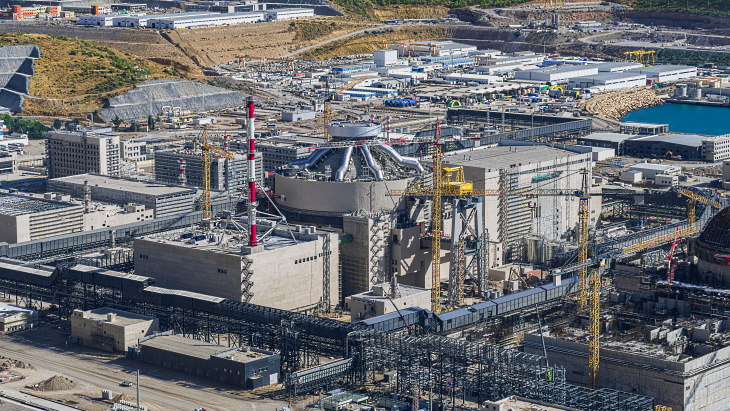
The refurbishment project of Cernavoda unit 1 pursued by Romania’s SNN has aimed to solve this problem, based on a cooperative model which encompasses conflicting interests. The project valued at EUR1.9 billion (USD2.13 billion) is a large-scale refurbishment project which includes engineering, procurement and construction (EPC) as well as the construction of infrastructure such as a radioactive waste storage facility to extend the unit’s operational life by 30 years.
The owner, SNN, negotiated with Candu Energy and Ansaldo Nucleare, the original suppliers of Cernavoda unit 1, based on a fixed-price contract. Yet, the negotiation reached a deadlock due to the differences with Candu Energy and Ansaldo Nucleare who preferred a variable price contract just like the other suppliers.
Under these circumstances KHNP joined, proposing to execute the construction on a fixed-price basis. The participation of KHNP made it possible to balance the proportions of fixed and variable prices, leading to mutual concessions of SNN and suppliers and providing momentum for contract negotiations. As a fixed-price contract was made possible for the construction, which accounts for one-third of the entire EPC, thanks to KHNP, both Candu Energy and Ansaldo Nucleare were able to reduce the risk of fixed prices in the total project cost. As a result, the two companies could secure SNN’s concession of adopting a variable price contract for procurement (including project management) that includes high risks caused by external factors while accepting the fixed-price contract in design/engineering where they have advantages, thus making risk management relatively easier. It was also a favourable outcome for SNN that engineering and construction would be based on fixed-price contracts, considering the additional goal of signing the contract in a timely manner.
Consequently, KHNP’s involvement enabled the balance of variable prices (for procurement and project management) and fixed prices (for engineering and construction) in the contract, providing both the owner and suppliers with justification and practical benefits.
But how could KHNP participate in the project on a fixed-price basis, something which other suppliers tend to avoid,
KHNP is not just the supplier of nuclear power plants but also an operator of 26 units. It has the capabilities to estimate costs and the optimal period of construction based on experience gained from numerous nuclear power plant construction and refurbishment projects, as well as the accumulated data from more than 40 years of operation and maintenance from the same position as a utility like SNN.
KHNP was also confident of responding to unexpected events during construction based on its certified supply chains and has the experience of successfully completing the refurbishment project of Wolsong unit 1, the same model as at Cernavoda. With KHNP’s participation, it formed a tripartite consortium which combined individual expertise with Candu Energy, the IP (intellectual property) holder of Cernavoda nuclear power plant, and Ansaldo Nucleare, which supplied the Balance of Plant at the time of Cernavoda’s construction.
The key takeaway from the Cernavoda unit 1 project is that suppliers established a consortium to effectively share project risks and reach a contract with the balance between fixed and variable prices, creating a solution which satisfied both the owners and suppliers.
A model for the future?
As can be seen in the refurbishment project of Cernavoda unit 1, when a nuclear project becomes large-scale and complex, a single company cannot bear all the risks. Thus, a consortium or a joint venture model where each party takes responsibility for its own specialised area and works together can be an effective solution.
The participation of a company that can gather the capabilities of each supplier and fill the gaps in the project is essential in such a project model. In the example given, KHNP’s capability in project management and project delivery skill has helped to provide a good solution.
As stated at the start of this article, the global nuclear industry operates among geopolitical risks, pressures of carbon neutrality and technological innovation. And in this complicated environment, multiple parties can reduce uncertainties and expand opportunities by leveraging their own strengths and working hand-in-hand. Furthermore, once this cooperative model takes hold, we will be able to turn challenges into new opportunities in the nuclear industry through mutual growth, going beyond mere competition among suppliers.