Minister of State Jitendra Singh set out plans for the deployment of large and small Indian-designed reactors in a 6 August to the Lok Sabha, the lower house of the Indian parliament. He provided a to the upper house, the Rajya Sabha, on 24 July.
Minister of Finance Nirmala Sitharaman announced the Nuclear Energy Mission for Viksit Bharat as part of her budget speech in February (Viksit Bharat is the government’s strategy to make India into a completely developed nation by 2047). The mission is a significant contributor to plans for India to reach net zero carbon emissions by 2070, Singh said.
The main features of the Nuclear Energy Mission are “to augment power production from nuclear energy with least carbon emission and to cater the base load requirement which is currently supported by fossil fuel base power plants,” Singh said. “Nuclear Energy Mission envisages deployment of large as well as small nuclear power plants in green fields, in brown fields, as captive plants and for off-grid applications in remote locations. This initiative aims for an active partnership with private sector, R&D of small modular reactors (SMRs) and enabling measures for new advanced technologies.”
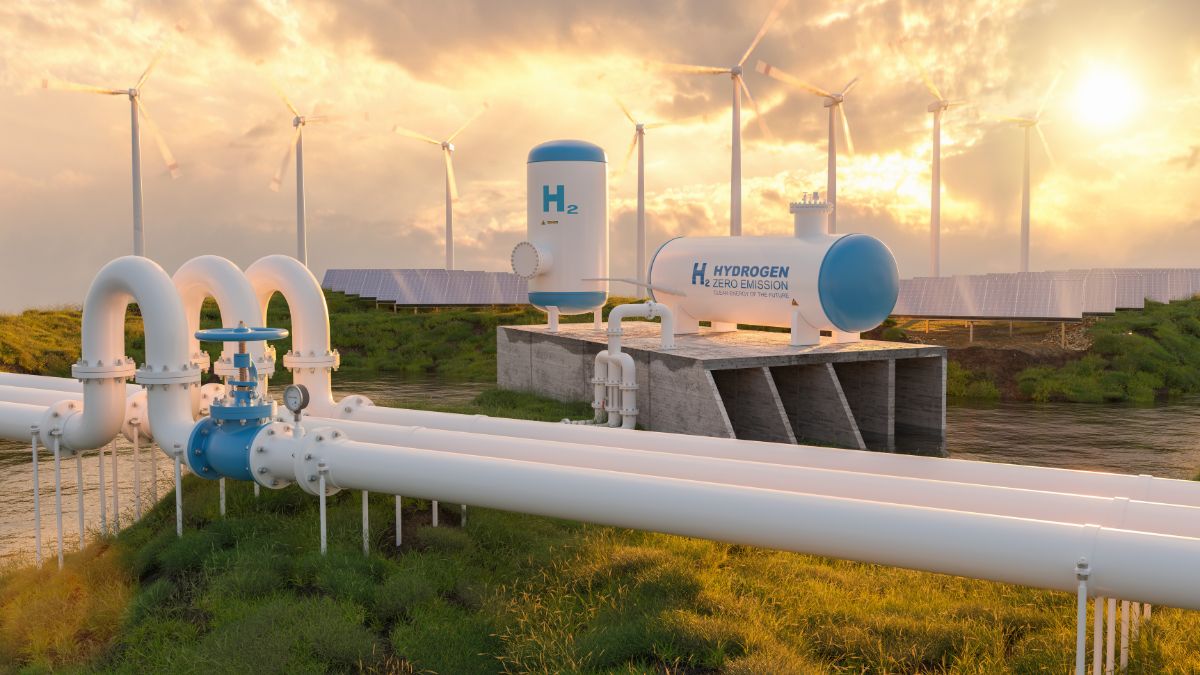
Singh outlined the three types of SMR that are being designed and developed by India’s Bhabha Atomic Research Centre for demonstration: the 200 MWe Bharat Small Modular Reactor (sometimes referred to as BSMR-200); a 55 MWe small modular reactor (SMR); and a 5 MWt high temperature gas cooled reactor for hydrogen production by coupling with suitable thermochemical process for hydrogen production.
In-principle approval has been obtained for construction of the three demonstration reactors, which are likely to be constructed in 60 to 72 months after receipt of administrative sanction of projects, Singh said: “Lead units of BSMR & SMR are planned to be installed at DAE sites in collaboration with NPCIL. These plants are designed & developed considering deployment as captive power plant, for repurposing of retiring fossil fuel-based plants and for hydrogen production to support transport sector with prime objective of decarbonization by increasing the penetration of nuclear energy in industrial & transport sector.”
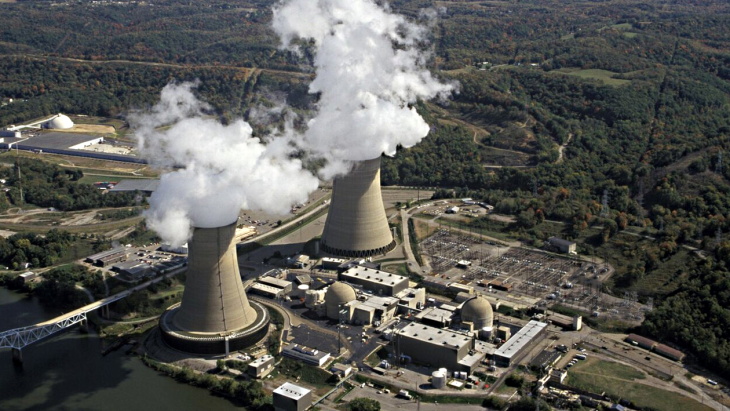
India currently has 24 operating reactors with a total capacity of 8,780 MWe, and 18 reactors, with a total capacity of 13,600 MWe (including the 500 MW Prototype Fast Breeder Reactor, the PFBR) are at various stages of implementation, Singh said. “On their progressive completion, the installed nuclear power capacity will reach 22,380 MW from 8,780 MW at present. The target of 100 GW is planned to be achieved by deploying reactors based on existing and new advanced technologies under development,” he added.
Gorakhpur update
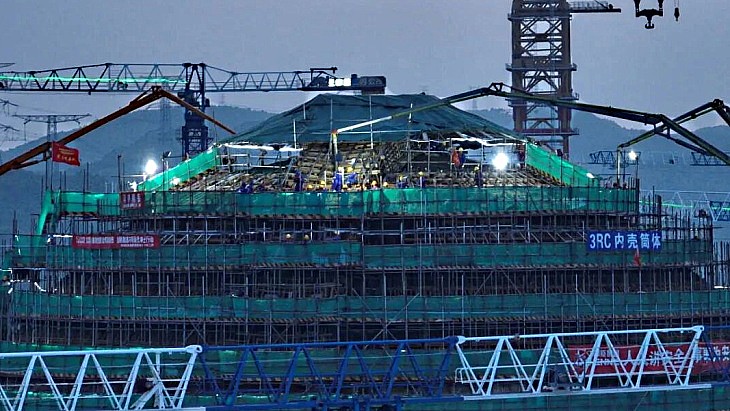
In a separate , Singh said that two of those new units, Gorakhpur 1 and 2, for which the government accorded administrative approval and financial sanction in 2014 – are expected to be completed “by 2031-32”.
Excavations began at the site in Haryana, in 2018, but Singh told the Lok Sabha that remediation of localised weak zones in soil strata discovered during “confirmatory geo technical investigations” had delayed the start of nuclear island construction. Earlier this year, Minister of Power Manohar Lal Khattar said that first concrete for Gorakhpur 1 is expected to be poured in October.
The procurement of long lead-time equipment has begun, and some major equipment has already been received on site, Singh said.
The Indian government describes Gorakhpur units 1 and 2 as “under construction”, although the International Atomic Energy Agency’s PRIS database does not consider a reactor to be under construction until the first major placing of concrete for the base mat of the reactor building is made.