A transformer explosion at Eskom’s coal-fired 3.6-GW Matla Power Station in Mpumalanga, South Africa, on Dec. 12 injured nine employees, including one critically. The incident, caused by a ruptured high-pressure steam pipe, has underscored challenges faced by Eskom’s generating fleet, even as the state-owned maintains its suspension of load-shedding.
The incident, reported at 5 p.m. on Thursday, stemmed from the rupture of a high-pressure steam steel pipe above the Unit 6 transformer. “The incident resulted in a loud bang and a loss of power supply to the Unit 6 area,” Eskom reported on Friday morning, Dec.13. “Significant amounts of dust, combined with the loss of power, prevented a fuller assessment until the first light this morning.”
An investigation is underway, Eskom said. Technical teams remain onsite to assess the extent of the damage, the scope of work, and the time required for repairs and restoration. “At this stage, there is no evidence of sabotage,” it said, citing a preliminary investigation.
“We now begin a disciplined investigation and the painstaking work required to develop a thorough, disciplined understanding of the incident that will lead us to be able to plan when the unit can be returned to service,” said Eskom Group Executive for Generation Bheki Nxumalo.
3.6-GW Matla Has Long Been a Workhorse
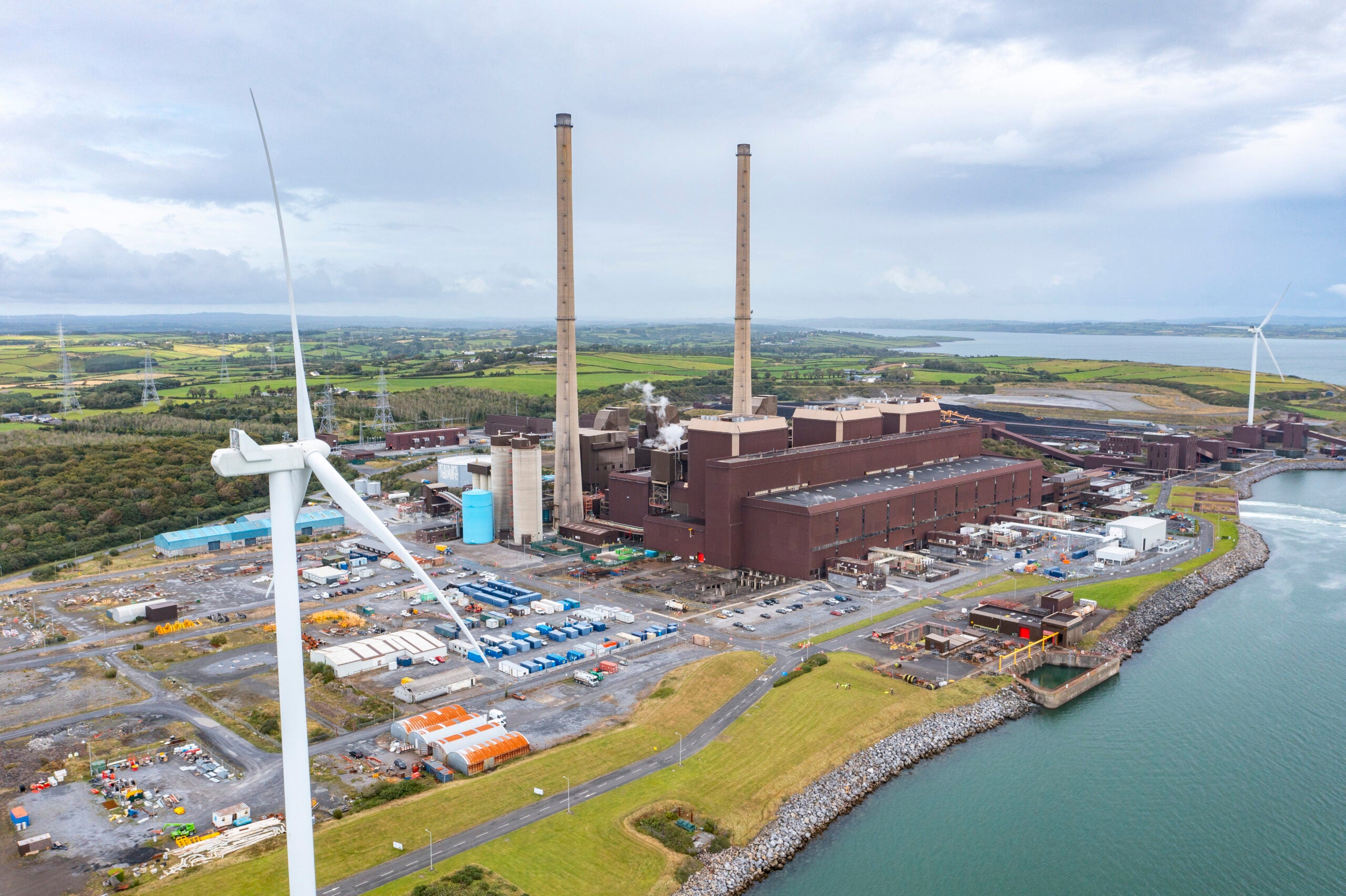
The is one of Eskom’s 15 coal-fired power plants but it plays an important role in ensuring South Africa’s reliability, given its proximity to Mpumalanga’s coal-mining region. Like most of Eskom’s 38-GW coal fleet, the station’s age exceeds 40 years old. Built between 1976 and 1983, the Matla (a Sotho word meaning “strength”) station comprises six units, each with a capacity of 600 MW.
These units utilize 2-pole, 3,000 r/min synchronous generators rated at 688.9 MVA and 20 kV, with water-cooled stators and hydrogen-cooled rotors. Power from each generator is transferred to the national grid via oil-cooled 700 MVA generator transformers, two of which step up voltage from 20 kV to 400 kV, while the remaining four step up voltage to 275 kV. Transformers are typically installed at power stations to increase the voltage of power to a level suitable for transmission over long distances.
The power plant was notably one of the first in the world with a concrete boiler house superstructure, owing in part to a worldwide steel shortage when it was built. However, according to a of Eskom’s coal-fired power plants released in March 2024, the station was designed with an operating lifespan of 30 years. While its continued operation is envisioned another 20 years, a planned rehabilitation mid-life (2010 to 2013) did not occur, though some technical upgrades were carried out.
“In the past, Matla was a reliable and consistently well-performing station, but it has been in steady decline since 2007. This decline started accelerating in 2018, due to deteriorating coal quality and lack of adequate maintenance. From one of the best operating plants in the fleet in 2017 (82.2% energy availability factor [EAF]), it reached 53.3% EAF by the end of FY2022/2023,” the report says.

Urgent Technical and Operational Issues
According to the report, which was conducted by an international consortium led by technical energy plant operator association vgbe, Matla faces several critical technical and operational challenges that require urgent attention. Poor coal quality, exacerbated by delays in securing coal that meets design specifications, has contributed to frequent boiler tube failures, reduced mill reliability, and increased strain on ash handling systems and electrostatic precipitators.
Deferred maintenance has further degraded key components, including steam turbines and feeder systems, while emission control equipment remains non-compliant with particulate matter (PM) standards and requires upgrades to meet tightening SO₂ and NOx regulations by 2025. Despite some recent improvements, including cooling tower upgrades and catch-up on outages, these issues have led to derating of units and a substantial decline in performance, jeopardizing the plant’s reliability and long-term viability. The 600-MW Matla Unit 6, notably, suffered a fire incident in as a result of a fuel oil leak, resulting in damage to electrical cables.
The station’s transformers have also faced reliability concerns due to aging infrastructure and deferred maintenance. The report highlights the need to replace turbine governors, secure spares for medium and low-voltage switchgear, and procure reserve generator rotors and transformers for Units 3–6 to ensure operational stability and mitigate risks of further failures.
The report suggests these issues mirror those at several Eskom coal plants. Eskom, meanwhile, also has a history of transformer explosions. On Dec. 29, 2021, a transformer explosion occurred on Unit 8 of the 1.6 GW Camden Power Station due to an internal fault. While the fire was contained and no injuries were reported, a 200-MW unit was taken offline for investigation to assess the damage and determine its return to service.
Similarly, on Sept. 11, 2021, a generator transformer at Kendal Power Station’s Unit 1 caught fire, causing the unit to trip. The fire also damaged cooling water system cables, leading to the shutdown of Units 2 and 3 as a precaution. While all personnel were evacuated safely and the fire was contained, the incident required extensive investigation to identify the root cause. Units 2 and 3 were subsequently returned to service later that week.
Eskom Has Staved Off Load Shedding for 260-Plus Days—A Five Year Record
Eskom last week said the outage at Matla 6 and a precautionary effort to bring forward a planned outage at Unit 5 is not expected to change its load-shedding outlook. While country, Africa’s most industrial nation, has long grappled with frequent power outages, in five years.
“In August, Eskom shared its Summer Outlook, for the period from 01 September 2024 to 31 March 2025 that predicted a likely scenario of a loadshedding-free summer due to structural improvements in the coal-fired fleet,” the company said.“Eskom has today reached 261 consecutive days of load-shedding suspension,” it added.
“Matla is one of the six power stations we prioritized in the to end loadshedding, and over the past 18 months the employees have delivered an exceptional performance, achieving an Energy Availability Factor (EAF) of 67.12%,” noted Eskom Group Chief Executive Dan Marokane.
“Based on the structural improvements in the generation performance of the coal-fired fleet, week by week Eskom is increasingly able to absorb shocks to the system, even though the generation capacity remains tight,” he said.
Marokane suggested a base case scenario for the summer outlook indicates Eskom will dodge load shedding if unplanned outages stay at 13 GW or below. Eskom’s year-to-date average unplanned outages are at 11,875MW,” he noted.
—Sonal Patel is a POWER senior editor (, ).