China has brought the world’s largest open-sea offshore solar power plant fully online, marking a major milestone in the country’s renewable energy expansion. The 1-gigawatt (GW) photovoltaic (PV) project has been commissioned off the coast of Dongying in Shandong province and achieved full-capacity grid connection in late December 2025.
The offshore solar farm was developed by Guohua Investment, a subsidiary of China Energy Investment Corp. (CHN Energy), a state-owned energy company. The project, known as HG14, is located around eight kilometers from the shoreline and spreads across nearly 1,223 hectares of shallow coastal waters. The water depth at the site ranges between one and four meters, allowing the use of a fixed-pile foundation system.
According to the company, the Dongying installation is the first gigawatt-scale fixed-pile offshore solar project ever completed. It consists of 2,934 solar platforms, each supported by offshore steel truss structures. In total, the farm is anchored by 11,736 steel piles, designed to provide stability in challenging sea conditions.
CHN Energy said the fixed-pile structure has been engineered to handle waves, tides, strong winds, and even seasonal sea ice. Zhang Bo, deputy manager of Guohua Energy Investment’s Kenli project, said the design can withstand strong gales and winter ice while also reducing steel consumption by more than 10 percent. He added that the project offers useful technical experience for future offshore solar development.
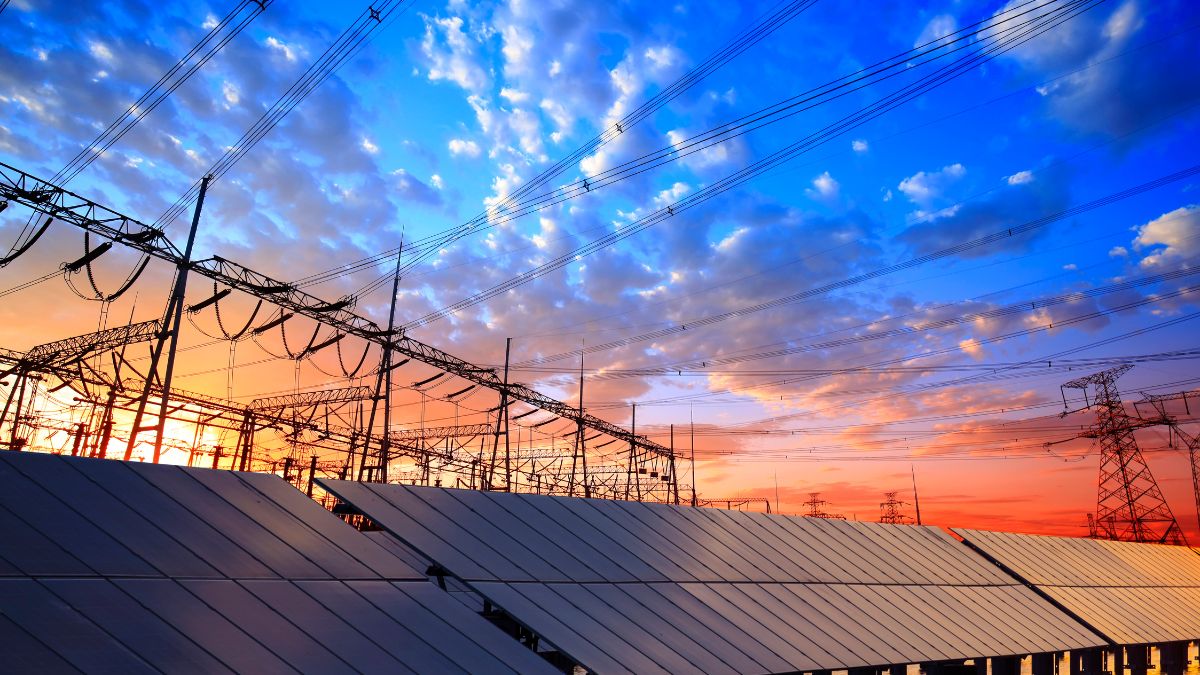
Each platform measures around 60 metres in length and 35 metres in width. The project also introduces a new transmission approach, using a 66-kilovolt offshore cable combined with an onshore cable system to deliver large volumes of electricity over long distances. Power generated at sea is carried through the subsea cable network to land, where an onshore substation steps up the voltage to 220 kV for grid supply.
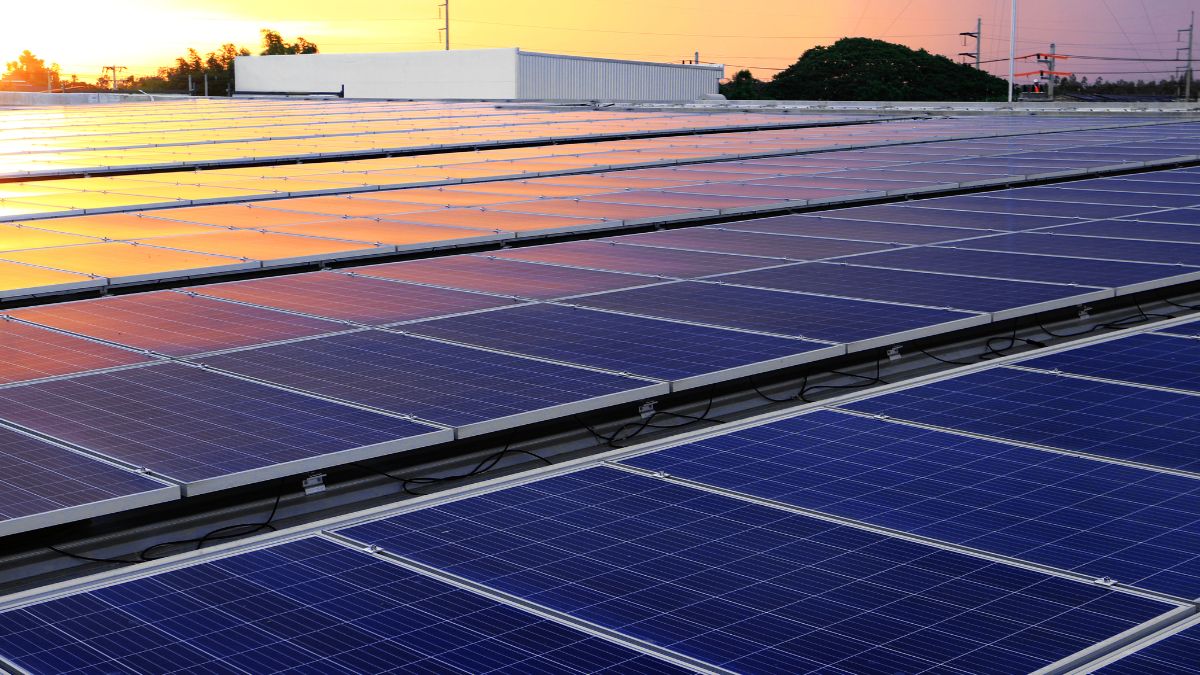
The farm is equipped with more than 2.3 million n-type bifacial solar panels, each rated at 710 watts, mounted at a 15-degree tilt. The offshore location is expected to improve energy output, as cooler air and reflected sunlight from the sea surface can boost generation compared to similar solar plants on land. Project data indicates efficiency may be five to 15 percent higher than onshore systems.
To support stable electricity delivery, the site also includes a 100-megawatt/200-megawatt-hour energy storage system. CHN Energy said the combined transmission and storage design increases effective capacity by about 20 percent and reduces unit costs by around 15 percent.
Once operating at full scale, the offshore farm is expected to generate about 1.78 terawatt-hours of electricity annually, enough to meet the needs of roughly 2.67 million urban residents. The company estimates it could save over 503,800 tons of standard coal and cut carbon dioxide emissions by about 1.34 million tons each year. CHN Energy added that the project also supports a “fishing plus PV” model, combining aquaculture with solar power generation to improve marine space utilization.
Subscribe to get the latest posts sent to your email.