Iran set a massive natural gas field in the United Arab Emirates ablaze as it steps up attacks on key energy sites, while US President Donald Trump appealed to allies and the likes of China to help reopen the Strait of Hormuz.
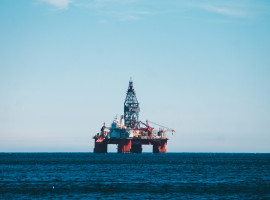
The drone attack on the Shah field, close to the UAE’s border with Saudi Arabia, marks the first time Iran has damaged an oil or gas upstream facility in the country during the war. The UAE government said operations were suspended and that there no injuries at the field, jointly operated by Abu Dhabi National Oil Co. and Texas-based Occidental Petroleum Corp.
Overnight, the UAE shut its airspace as it faced several incoming drones and missiles. Authorities said air traffic operations had returned to normal by early Tuesday. The strikes came a day after Iran hit a fuel tank at Dubai’s main airport – the world’s busiest hub for international travel – creating a large plume of smoke over the city and a short suspension of flights.
The war, now in its 18th day, shows little sign of abating. Iran continues to fire drones and missiles at Arab states in the Persian Gulf and at Israel, and says it’s not interested in ceasefire talks. The US and Israel are still attacking Iranian sites daily, including in the capital, Tehran. Israel, moreover, is stepping up operations in Lebanon, where it’s fighting a parallel war with the Iran-backed Hezbollah militant group.
More than 4,000 people have been killed across the Middle East so far, according to tolls from governments and nongovernmental organizations. The US-based Human Rights Activists News Agency said around 3,100 people have died in Iran, while the Lebanese government says 850 have been killed there by Israeli strikes. Dozens have died in Gulf states and Israel, while the US has lost 13 military personnel.
For the Gulf states, as long as Iran’s strategy remains “inflicting maximum economic disruption, then by virtue of being some of the biggest exporters of oil and gas in the world, they are going to find themselves in the firing line,” Torbjorn Soltvedt, lead Middle East analyst at Verisk Maplecroft, a political risk firm, told Bloomberg TV on Tuesday.
Oil prices have been steady this week, with Brent around $104 a barrel. But they’ve soared since the war started – as have prices for liquefied natural gas, fertilizers, aluminum and other commodities – mainly because of the effective closure of the narrow Hormuz strait between Iran and Oman. It’s a vital waterway, through which a fifth of the world’s oil and LNG supplies normally flow.
Trump reiterated his appeals late Monday for other nations, including those in Europe, to help reopen the chokepoint as pressure grows on his administration to bring down surging US gasoline prices and calm global bond markets.
“Numerous countries have told me they’re on the way – some are very enthusiastic about it, and some aren’t,” Trump told reporters at the White House. “Some are countries that we’ve helped for many, many years.”
Yet no country has publicly said it will send warships to escort commercial vessels through Hormuz. Many military analysts have said that, absent a ceasefire, it will be dangerous to send ships through Hormuz even if they have military escorts.
Iran has attacked around 20 vessels in the Persian Gulf and near Hormuz since the conflict began.
The president is frustrated that nations are so far noncommittal. He said he’d requested that China – among those he’s asked for naval support – delays a March 31-April 2 summit with his counterpart Xi Jinping for about a month. Trump said it was important for him to remain in Washington to oversee the war.
Trump has called out NATO and others, claiming they had leaned on the US for “tens of billions of dollars” in protection yet failed to act when asked.
Asked Monday if the US could end the war this week, Trump responded, “Sure.” He then added: “I don’t think so, but it’ll be soon.”
The effective closure of the Strait of Hormuz has forced the likes of the UAE, Saudi Arabia, Iraq and Kuwait to reduce oil output. Qatar has shut down production of LNG, a fuel of which it’s a top three global supplier.
Only a trickle of vessels is beginning to exit the Persian Gulf through Hormuz, most of them bound for countries such as China and India.
“We’re hammering their capacity to threaten commercial shipping in the Strait of Hormuz, with more than 30 mine-laying ships destroyed,” Trump said. He added US officials weren’t certain whether Iran has actually laid mines in the strait but warned that it would be “a form of suicide” if they did.
The president threatened to expand strikes on Kharg Island to target oil infrastructure. That follows US hits on the island’s military sites over the weekend. The Persian Gulf island is Iran’s main export hub.
Surging oil prices since the start of the war – up about 40 percent in the past two weeks – have pushed up US gasoline prices. That’s bad news for Trump with midterm elections that will decide control of both houses of Congress just months away. The average cost of a gallon of gasoline has risen each day since the conflict began to around $3.70, according to the American Automobile Association.
Underscoring the domestic stakes for Trump, administration officials are asking Americans for patience.
“If there was an easy way to fix Hormuz, it would have been fixed in the Reagan administration,” Caroline Glick, adviser to Israeli Prime Minister Benjamin Netanyahu, said in an interview.
Trump on Monday said he was “very proud” of his decision to start the war, which began with US and Israeli strikes on Iran on Feb. 28. He argued that without US action, Iran would have had nuclear weapons – something the regime in Tehran denies seeking – and that other nations should be “thanking me.”
On Monday, Trump highlighted the uncertainty over any potential ceasefire talks, including who in the Iranian government the US would deal with.
“We don’t know who their leader is,” he said. “We have people wanting to negotiate. We have no idea who they are,” he added, saying it was unclear if the new supreme leader, Mojtaba Khamenei, was even alive.
The war has highlighted divisions within Trump’s base – with many supporters expressing dismay. Trump was joined at an event Monday afternoon by Vice President JD Vance, a potential 2028 presidential contender, who has been a critic of US involvement in extended overseas conflicts.
Pressed on his views, Vance said he had long agreed “that Iran should not have a nuclear weapon” and praised Trump’s handling of the war.