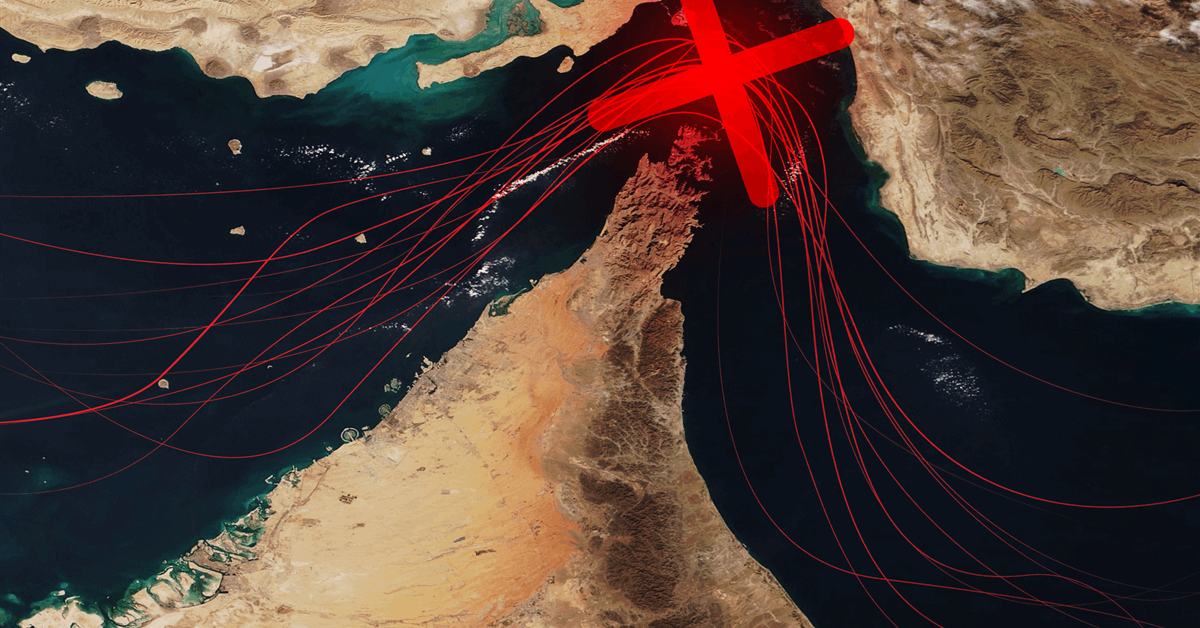
The leaders of the United Kingdom, France, Germany, Italy, the Netherlands, Japan, and Canada condemned the “de facto closure of the Strait of Hormuz” in a joint statement released Thursday.
“We condemn in the strongest terms recent attacks by Iran on unarmed commercial vessels in the Gulf, attacks on civilian infrastructure including oil and gas installations, and the de facto closure of the Strait of Hormuz by Iranian forces,” the joint statement, which was posted on the UK government’s website, said.
“We express our deep concern about the escalating conflict. We call on Iran to cease immediately its threats, laying of mines, drone and missile attacks and other attempts to block the Strait to commercial shipping, and to comply with UN Security Council Resolution 2817,” it added.
The leaders noted in the statement that freedom of navigation is a fundamental principle of international law, including under the United Nations Convention on the Law of the Sea.
“The effects of Iran’s actions will be felt by people in all parts of the world, especially the most vulnerable,” they said.
“Consistent with UNSC Resolution 2817, we emphasize that such interference with international shipping and the disruption of global energy supply chains constitute a threat to international peace and security,” they added.
“In this regard, we call for an immediate comprehensive moratorium on attacks on civilian infrastructure, including oil and gas installations,” they continued.
The leaders expressed their readiness to contribute to “appropriate efforts to ensure safe passage through the Strait” in the statement, adding that they “welcome the commitment of nations who are engaging in preparatory planning”.
They also highlighted in the statement that they welcome the International Energy Agency decision to authorize a coordinated release of strategic petroleum reserves.
“We will take other steps to stabilize energy markets, including working with certain producing nations to increase output,” they revealed.
“We will also work to provide support for the most affected nations, including through the United Nations and the IFIs,” they added.
“Maritime security and freedom of navigation benefit all countries. We call on all states to respect international law and uphold the fundamental principles of international prosperity and security,” they went on to state.
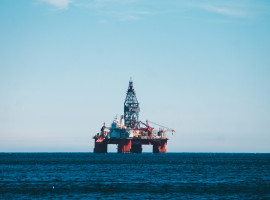
In a statement sent to Rigzone by industry group Offshore Energies UK (OEUK) yesterday, OEUK said the UK offshore energy sector is ready to play its part in boosting supplies.
“We welcome the statement by the UK government and key partners on the threat to international security from interference with shipping, disruption of global energy supply chains, and attacks on civilian infrastructure,” OEUK energy policy director Enrique Cornejo said in the statement.
“The commitment to stabilize energy markets and increase output in ‘certain producing nations’ is also welcome,” he added.
“As the second largest oil and gas producer in Europe, this should include the UK which must play its part in boosting the supply of energy – bringing forward the Oil and Gas Price Mechanism to increase investment, approving key projects such as Jackdaw and Rosebank, and continuing to expand offshore wind production,” Cornejo continued.
Rigzone has contacted the Iranian Ministry of Foreign Affairs for comment on the joint statement. Rigzone has also contacted the UK Department for Energy Security and Net Zero (DESNZ) and HM Treasury (HMT) for comment on the OEUK statement. At the time of writing, none of the above have responded to Rigzone.
In a release posted on its website on March 11, the International Energy Agency announced that the 32 member countries of the organization “unanimously agreed” to make 400 million barrels of oil from their emergency reserves available to the market “to address disruptions in oil markets stemming from the war in the Middle East”.
“The oil market challenges we are facing are unprecedented in scale, therefore I am very glad that IEA Member countries have responded with an emergency collective action of unprecedented size,” International Energy Agency Executive Director Fatih Birol said in that release.
In a statement posted on its site on March 19, the International Energy Agency said “initial volumes of oil from the emergency reserves have already started to be made available”.
To contact the author, email