Summary
- Strait of Hormuz closure disrupts Middle East oil exports, refiners seek alternatives
- Trump threatens further action if Strait remains closed
- Iran allows passage for select vessels
- OPEC+ agrees modest output rise, war limits actual increases
- Russian supply also disrupted
(Reuters) – Oil prices fell in choppy trade on Monday, as investors awaited clarity on the status of talks between the U.S. and Iran and remained wary about sustained supply losses due to shipping disruptions.
Brent crude futures fell 64 cents, or 0.6%, to $108.39 a barrel at 1109 GMT. U.S. West Texas Intermediate crude futures were trading down 1.2%, or $1.33, at $110.21 per barrel.
Get the Latest US Focused Energy News Delivered to You! It’s FREE:
The pricing moves in Asia trading on Monday were dwarfed by an 11% surge for WTI and an 8% rise for Brent during the previous trading session on Thursday, the biggest absolute price increase since 2020.
The U.S. and Iran received the framework of a plan to end hostilities, but Iran rejected immediately reopening the Strait of Hormuz, after President Donald Trump threatened to rain “hell” on Tehran if it did not make a deal by the end of Tuesday.
Iran also said it had formulated its positions and demands in response to recent ceasefire proposals conveyed via intermediaries.
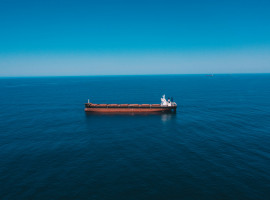
The Strait of Hormuz, which carries oil and petroleum products from Iraq, Saudi Arabia, Qatar, Kuwait and the United Arab Emirates, remains largely closed due to Iranian attacks on shipping after the war began on February 28.
Some vessels, however, including an Omani-operated tanker, a French-owned container ship and a Japanese-owned gas carrier, have passed through the Strait of Hormuz since Thursday, shipping data showed, reflecting Iran’s policy to allow passage for vessels from countries it deems more friendly.
“The market is trying to realise what to expect going forward. The most important headline this weekend has been that some ships passed through the Strait,” said SEB Research analyst Ole Hvalbye.
Hvalbye also highlighted that Europe continued to lose physical barrels and products to Asia due to the market tightening.
SEEKING ALTERNATIVE SOURCES
The Middle East supply disruptions have led to refiners seeking alternative sources for crude, particularly for physical cargoes in the U.S. and Britain’s North Sea. Spot premiums for U.S. West Texas Intermediate crude have jumped to all-time highs on competition between Asian and European refiners.
Indian refiners have also postponed maintenance shutdowns of their units to meet local fuel demand.
On Sunday, OPEC+, consisting of some members of the Organization of the Petroleum Exporting Countries and allies such as Russia, agreed to a modest rise of 206,000 barrels per day for May.
However, that decision will largely exist on paper as several of the group’s key producers are unable to raise output due to the war.
Saudi Arabia also set the official selling price of May Arab Light crude oil to Asia at a record premium of $19.50 a barrel above the Oman/Dubai average, an increase of $17 from the previous month, Aramco said.
Meanwhile, Russian supply has been disrupted recently by Ukrainian drone attacks on its Baltic Sea export terminals. Media reports on Sunday said its Ust-Luga terminal resumed loadings on Saturday after days of disruptions.
Exports from the Black Sea port of Tuapse are set to rise to 794,000 metric tons in April, up 8.7% on a daily basis from 755,000 metric tons planned for March, according to two traders and Reuters calculations.
Reporting by Seher Dareen in London, Katya Golubkova in Tokyo and Sudarshan Varadhan in Singapore; Editing by Thomas Derpinghaus, Susan Fenton and Keith Weir
Share This:
More News Articles